








Where to Start with Arsène Lupin
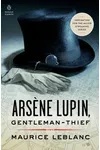
For the best experience, start with the very first collection: Arsène Lupin, Gentleman-Thief (originally published in 1907 as Arsène Lupin, gentleman-cambrioleur). This collection of short stories establishes Lupin's roguish charm, his penchant for disguise, and his theatrical approach to crime. From there, move directly to The Hollow Needle and 813, which are widely considered the peak of Maurice Leblanc's classic mysteries.
Publication Order of Maurice Leblanc's Core Works
Following the publication order lets you experience the evolution of Leblanc's writing style and the character's development. Here is the chronological progression of the original books:
- Arsène Lupin, Gentleman-Thief (1907) – The essential entry point containing the first nine short stories.
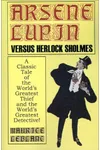
- Arsène Lupin versus Herlock Sholmes (1908) – A humorous clash with a thinly veiled Sherlock Holmes.
- The Hollow Needle (1909) – A classic treasure hunt centered around a secret French royal fortress.
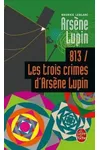
- 813 / Les Trois Crimes d'Arsène Lupin (1910) – A darker, epic novel involving global conspiracies.
- The Crystal Stopper (1912) – A high-stakes adventure of blackmail, revenge, and narrow escapes.
- The Confessions of Arsène Lupin (1913) – A collection of ten classic short stories.
- The Golden Triangle (1918) – A war-era adventure where Lupin steps in to save the day.
- The Island of the Thirty Coffins / The Secret of Sarek (1919/1920) – A gothic, horror-tinged island mystery.
- The Teeth of the Tiger (1920) – Lupin must solve a complex inheritance murder plot.
- The Eight Strokes of the Clock (1923) – A collection of connected stories featuring Lupin under an alias.
- Countess Cagliostro (1924) – A key prequel detailing Lupin's first love and early adventures.
Chronological Timeline & Prequel Caveats
While publication order is recommended, the internal chronology of the series is non-linear. The most notable example is Countess Cagliostro (published in 1924). This novel serves as a prequel, detailing a 20-year-old Lupin's early exploits and the tragic origin of his rivalry with the mysterious Countess. While it is chronologically first, reading it after the initial novels makes its emotional and character reveals much more impactful.
Canon Continuations and Pastiches
Lupin's adventures did not end with Leblanc's passing. The series includes several notable additions and canon-adjacent works:
- The Last Love of Arsène Lupin (written around 1936, published in 2012) – The posthumously discovered final manuscript by Maurice Leblanc, following an aging Lupin in northern Paris.
- The Boileau-Narcejac sequels (1973–1979) – Five authorized pastiches written by Pierre Boileau and Thomas Narcejac that capture Leblanc's signature style with a slightly darker, psychological edge.
Sherlock Holmes and Pop Culture Spin-offs
Leblanc famously introduced Sherlock Holmes to the Lupin universe in 1906. After legal objections from Arthur Conan Doyle, Leblanc wittily changed the character's name to "Herlock Sholmes" and his sidekick to "Wilson." Over the decades, Lupin has inspired numerous spin-offs, including the legendary Japanese manga and anime franchise Lupin III (featuring Lupin's fictional grandson) and the hit Netflix live-action series Lupin.