





How to Read the Boy Fortune Hunters Series
The best way to read the Boy Fortune Hunters series is in publication order, which also serves as the chronological order of Sam Steele's adventures. Starting from his initial voyage as a teenager, Sam grows into a seasoned sailor and explorer over the course of the six books.
Boy Fortune Hunters Publication and Chronological Order
- The Boy Fortune Hunters in Alaska (1908) / Originally published as Sam Steele’s Adventures on Land and Sea (1906)
- The Boy Fortune Hunters in Panama (1908) / Originally published as Sam Steele’s Adventures in Panama (1907)
- The Boy Fortune Hunters in Egypt (1908)
- The Boy Fortune Hunters in China (1909)
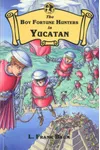
- The Boy Fortune Hunters in Yucatan (1910)
- The Boy Fortune Hunters in the South Seas (1911)
The Identity Crisis: Captain Hugh Fitzgerald vs. Floyd Akers
Modern readers are often confused by the pseudonyms associated with this series. L. Frank Baum, famous for creating the Land of Oz, wanted to branch out into real-world adventure fiction for boys. He first published the initial volume, Sam Steele’s Adventures on Land and Sea (1906), and its sequel, Sam Steele’s Adventures in Panama (1907), under the pen name Captain Hugh Fitzgerald.
When the books achieved only modest success, publisher Reilly & Britton decided to rebrand the series in 1908 under a new pseudonym, Floyd Akers, naming it The Boy Fortune Hunters. The first two books were retitled and reissued, and Baum went on to write four more installments directly under the Akers pen name.
What to Expect from Sam Steele's Adventures
Unlike Baum's whimsical fairy tales, the Boy Fortune Hunters novels are grounded in the real world, taking readers to exotic international destinations. Sam Steele is a resourceful protagonist who faces shipwrecks, hostile forces, and wild treasure hunts. However, Baum couldn't resist adding a touch of his signature speculative flair, incorporating early technological concepts like a "bubble car" and a biplane into the boys' exploits. Readers should note that because these books were written in the early 1900s, they reflect the cultural and racial stereotypes of the era.