
The Recommended Reading Order
The Bright Empires series is a continuous, overarching storyline. Because the narrative unfolds sequentially, there is only one recommended reading path: publication order. Skipping any of the volumes will leave you lost in the multidimensional grid. Here is the order to follow:
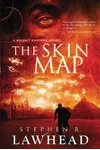
- The Skin Map (2010)
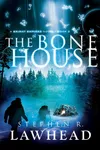
- The Bone House (2011)
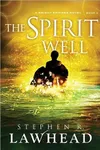
- The Spirit Well (2012)
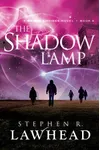
- The Shadow Lamp (2013)
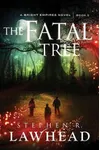
- The Fatal Tree (2014)
Can You Read Bright Empires Chronologically?
While the story features time travel and dimension-hopping—taking characters to prehistoric times, ancient Egypt, Renaissance Prague, and Victorian London—a chronological reading order based on historical settings is virtually impossible. The characters cross paths with different eras multiple times within single chapters. Trying to dissect the novels by their historical settings would completely ruin the character arcs and the grand mystery of the Skin Map. Stick to the publication order to experience the story as Stephen R. Lawhead intended.
The Core Books and Universe Details
The series begins with The Skin Map, introducing Kit Livingstone and his eccentric great-grandfather, Cosimo. Together, they discover that ley lines—earthly lines of power—are actually entryways into a vast omniverse. Kit gets swept into a dangerous race to recover a map tattooed on human skin, which holds the key to navigating all dimensions.
Subsequent books like The Bone House and The Spirit Well expand the lore, introducing new locations such as the titular Bone House (a cosmic repository of human souls) and the mystical Spirit Well. The final books, The Shadow Lamp and The Fatal Tree, raise the stakes as the fabric of the omniverse begins to collapse, forcing the characters to find a way to restore balance to all realities.
Are There Any Spin-offs or Tie-ins?
The Bright Empires series is a self-contained pentalogy. Stephen R. Lawhead has not written any spin-offs, sequels, or tie-ins set in this specific universe. While he has co-authored books with his son Ross Lawhead, and penned other massive fantasy series like The Pendragon Cycle or The Song of Albion, those are completely separate universes and share no narrative connection to the multiversal journey of Kit Livingstone.