












How to Read Danny Boyd: The Quick Answer
If you are looking to step into the smoky, fast-paced world of Danny Boyd, the good news is that you do not need to worry about a complex chronological timeline. Alan Yates, writing under the famous pseudonym Carter Brown, penned these books as episodic pulp novels. Danny Boyd remains relatively unchanged throughout the series, meaning you can pick up almost any book and enjoy it as a standalone case.
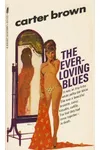
However, the best and most rewarding way to experience the series is in publication order, starting with Danny's debut in Death of a Doll (1956), which was also published under the title The Ever-loving Blues. Starting at the beginning lets you appreciate how the series' style, humor, and pace evolved during the height of the pulp paperback era.
Publication Order vs. Chronological Order
Because the Danny Boyd series is highly episodic, there is no separate chronological order that differs from the publication order. The character does not experience major multi-book story arcs or significant personal development that requires strict chronological tracking. Instead, the biggest challenge readers face is the confusing landscape of alternate titles.
Due to different publishers releasing these novels across the US, UK, and Australian markets, many Danny Boyd books were retitled. For instance, the very first book is known as both Death of a Doll and The Ever-loving Blues depending on the edition. Similarly, other entries like Savage Sisters have alternate French releases (such as Les Frangines en folie) and European printings like Cash-sex (the French release of 1981's Kiss Michelle Goodbye). When tracking down physical copies, it is always a good idea to verify the plot summary or original publication date to avoid buying the same book twice under different titles.
The Danny Boyd Book List in Order
Here is the list of Danny Boyd novels in their general order of publication, keeping in mind the alternate titles and regional variations that collectors often encounter:
- The Ever-loving Blues / Death of a Doll (1956) – The essential introduction to Danny Boyd. He investigates a starlet's murder, diving deep into the New York underworld.
- Terror Comes Creeping (1959) – A fast-paced mystery that mixes classic noir tension with Yates' signature humor.
- Nymph to the Slaughter (1960) – A quick, punchy tale featuring a dangerous case and even more dangerous dames.
- The Savage Salome (1960) – A classic example of the series' playful tone mixed with high-stakes crime.
- Wayward Wahine (1960) – Takes Danny away from his typical New York turf for an exotic mystery.
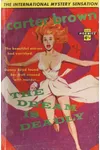
- The Dream Is Deadly (1960) – A dreamlike case where clues lead to sudden twists.
- Sad-Eyed Seductress (1961) – Danny pursues a killer tied to a mesmerizing femme fatale.
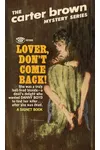
- Lover Don't Come Back! (1962) – Danny mixes action with a tongue-in-cheek vibe, taking him all the way to Australia.
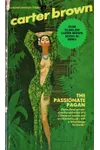
- The Passionate Pagan (1963) – Blends orientalist intrigue with classic mid-century noir.
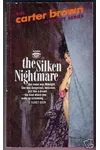
- Silken Nightmare (1963) – A stylish mystery loaded with snappy dialogue and high-society secrets.
- The Sometime Wife (1965) – A twisty investigation involving complicated marital secrets.
- Catch Me a Phoenix (1965) – Danny searches for a missing target while dodging bullets.
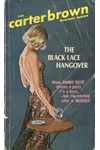
- The Black Lace Hangover (1966) – A martini-soaked mystery full of banter and dangerous turns.
- House of Sorcery (1967) – Danny tackles a case with a slightly unusual, mysterious atmosphere.
- The Mini Murders (1968) – Reflects the late-1960s fashion and cultural shift while keeping the hard-boiled roots intact.
- Ice Cold Nude (1969) – Also published as The Ice-Cold Nude, this installment throws Danny into a chilly case of art-world betrayal and stolen diamonds.
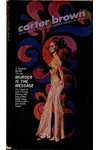
- Murder Is the Message (1969) – A satirical nod to the late-60s counterculture and media landscape.
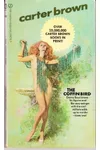
- The Coffinbird (1970) – Danny starts the 1970s with a dark, atmospheric mystery.
- The Sex Clinic (1971) – A classic pulp title that leans heavily into the era's cheeky, suggestive humor.
- Manhattan Cowboy (1973) – Danny navigates a clash of cultures when a Western-style conflict hits the streets of New York.
- The Early Boyd (1975) – Despite the title, this is the 25th book, following a missing girl case in the fictional locale of Santo Bahia.
- Savage Sisters (1976) – Also published in French as Les Frangines en folie, this book delivers classic pulp action.
- The Pipes Are Calling (1976) – An overseas adventure taking Danny to Europe.
- Rip Off (1978) – A late-70s entry filled with double-crosses and modern criminal rackets.
- The Strawberry Blonde Jungle (1978) – Danny Boyd navigates the corporate jungle of glamour and murder.
- Death to a Downbeat (1980) – A music-themed mystery that shows Danny's enduring love for the jazz scene.
- Kiss Michelle Goodbye (1981) – A hunt for a missing woman named Michelle, commissioned by a client who is already dead.
- Cash-sex (1981) – The French title/edition of the late-series Boyd novels (specifically associated with the French translations of the late-era horizontal pocket books).
What to Know Before You Start
Before you dive in, it is helpful to understand the context of the pulp era. Alan Yates wrote these books at a grueling pace under a Horwitz Publications contract that required a novel and two novelettes every month. To meet this demand, Yates developed a highly streamlined, fast-paced style that prioritized snappy dialogue, fast action, and immediate entertainment over deep psychological realism.
Additionally, although Danny Boyd is a quintessentially American private eye operating out of New York, Alan Yates was an English-born writer based in Sydney, Australia. He had never lived in the United States when he started writing the books, instead constructing a mythical, stylized version of America from movies, jazz records, and pulp magazines. This gives the books an appealingly dreamlike, retro-cool quality.
The Carter Brown Universe
While Danny Boyd is a standout, he is not the only detective in Alan Yates' literary arsenal. Carter Brown also wrote separate, highly successful series featuring:
- Lieutenant Al Wheeler – A Pine City, California homicide detective who uses unconventional methods.
- Rick Holman – A Hollywood-based private eye who specializes in helping troubled movie stars.
- Mavis Seidlitz – A bubbly, humorous blonde private investigator whose stories lean heavily into comedy.
The Legacy and Collecting Danny Boyd
Danny Boyd's adventures sold millions of copies worldwide, helping Alan Yates win a posthumous Ned Kelly Award in 1997 for his lifetime contribution to Australian crime fiction. Beyond the books, Yates' creations spawned comics, radio adaptations, and French films (including Maurice Cloche's 1960 adaptation Touchez pas aux blondes and Maurice Labro's 1963 film Blague dans le coin).
Today, Danny Boyd paperbacks are highly prized by collectors. Much of this interest is driven by the iconic cover art. Famous illustrators like Robert McGinnis created stunning, vibrant covers featuring glamorous women and sleek mid-century aesthetics that perfectly encapsulated the series' blend of mystery, danger, and cheekiness. Whether you read them on a vintage paperback or a modern digital edition, Danny Boyd's cases remain a delightfully nostalgic window into pulp's golden age.