
The Magic of the Doll Hospital
For young readers who love history, mystery, and the quiet magic of old toys, Joan Holub's Doll Hospital series is a beloved classic. Spanning six books published between 2002 and 2004, the series follows sisters Rose (age 10) and Lila (age 8). When their parents, both doctors, travel to Africa for a year-long medical mission, the girls are sent to live with their eccentric grandmother, affectionately known as "Far Nana."
Far Nana is no ordinary grandmother. She runs a doll hospital, restoring damaged and forgotten toys to their former glory. But her true gift is extraordinary: Far Nana can "read" the memories of the dolls she repairs. As she and the sisters mend each doll, they unlock the doll's historical backstory, taking the reader on a dual-narrative journey that blends modern-day sisterhood struggles with rich, empathetic historical fiction.
The Recommended Reading Order: Publication Order
While the historical flashbacks in each book jump to different eras, the modern framing story following Rose and Lila progresses chronologically. As the sisters adjust to living with Far Nana, cope with missing their parents, and learn to work together, their emotional growth builds from book to book. For this reason, we recommend reading the series in publication order:
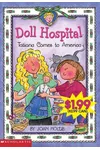
- Tatiana Comes to America: An Ellis Island Story (2002) — Sets the stage as Lila and Rose arrive at the doll hospital. They help restore Tatiana, a doll who witnessed a young Jewish girl's escape from Russia to Ellis Island in 1907.
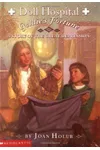
- Goldie's Fortune: A Story of the Great Depression (2002) — The sisters help Far Nana mend Goldie, a doll belonging to a young girl enduring the hardships of the 1930s Great Depression.
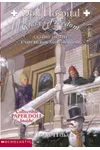
- Glory's Freedom: A Story of the Underground Railroad (2003) — Lila and Rose learn about the mid-19th century as they work on Glory, a doll who accompanied a brave girl escaping along the Underground Railroad.
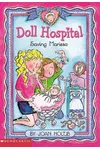
- Saving Marissa (2003) — This story centers on Marissa, a cherished baby doll from the 1950s. The sisters discover that Marissa once belonged to their very own babysitter when she was a young girl, bridging the past and present.
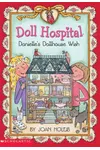
- Danielle's Dollhouse Wish (2003) — Far Nana and the girls restore an exquisite 1890s dollhouse family from Paris, exploring friendship and jealousy at a girls' boarding school.
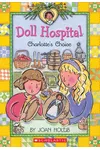
- Charlotte's Choice (2004) — The final book brings the sisters to a Shaker village. They hear the story of Charlotte, a doll belonging to a young girl named Daisy who was taken in by a Shaker community in 1832 after surviving a New York cholera epidemic.
The Chronological Historical Order
Because the core of each book is a standalone historical tale, readers who are especially interested in a linear history of the world can also read the books chronologically based on the doll's era. If you choose to follow this historical timeline, the order changes significantly:
- Charlotte's Choice (Set in 1832 — Shaker Village era)
- Glory's Freedom (Set in the mid-19th century — Underground Railroad era)
- Danielle's Dollhouse Wish (Set in the 1890s — Belle Époque Paris)
- Tatiana Comes to America (Set in 1907 — Ellis Island immigration era)
- Goldie's Fortune (Set in the 1930s — Great Depression)
- Saving Marissa (Set in the 1950s — Mid-century childhood)
If you choose this path, keep in mind that Lila and Rose's framing narrative will feel disjointed, as characters are introduced and relationships develop out of sequence.
What to Know Before You Start
Designed for readers in grades 3 to 5 (ages 7 to 11), the Doll Hospital books are gentle, accessible introductions to complex historical topics like slavery, immigration, economic hardship, and religious communities. Joan Holub tackles these heavy subjects with sensitivity, making them highly relatable by filtering the history through the eyes of a child and their beloved doll. Each book is under 200 pages and features beautiful illustrations by Anne Iosa.
As of today, the series is out of print in English, though it remains a popular choice in libraries and is still in print in Japan. If you are looking for physical copies, you will likely need to search secondhand bookstores or library catalogs. The original paperback printings also included collectible paper dolls, which are a nostalgic treat for collectors who manage to find intact copies.