
The Recommended Reading Path for the Domesday Series
If you want to experience the Domesday series by Edward Marston (the pseudonym of Keith Miles) at its absolute best, you should read the books in their official publication order. Because the books follow a linear chronological timeline that matches the dates they were published, reading them in sequence allows you to naturally watch the main characters grow, track the shifting political landscape of Norman-occupied England, and enjoy the evolving banter between the two lead investigators.
While every single novel in the series is structured as a self-contained, standalone mystery—meaning you can technically pick up any book and understand the immediate plot—there is a subtle but rewarding overarching character progression. Relationships deepen, marriages occur, and the protagonists build a shared history that makes the later books much more satisfying when read in order.
Domesday Books in Publication and Chronological Order
The Domesday series comprises 11 novels published between 1993 and 2000. Because the narrative timeline moves forward chronologically alongside the release dates, this list serves as both the publication and chronological reading order:
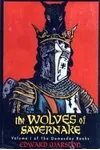
- The Wolves of Savernake (1993) – The adventure begins in Wiltshire, where Ralph and Gervase investigate a brutal murder in Savernake Forest.
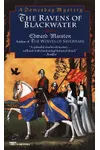
- The Ravens of Blackwater (1994) – Set in Essex, our commissioners must uncover who murdered the son of a prominent Norman lord at Maldon.
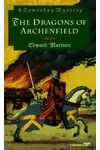
- The Dragons of Archenfield (1995) – A journey to the turbulent Welsh border, where a wealthy Saxon is burned alive and a mysterious dragon is carved into the grass.
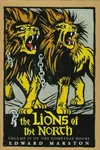
- The Lions of the North (1996) – The investigators head to war-torn Yorkshire, where a royal emissary is murdered inside a secured castle guarded by real lions.
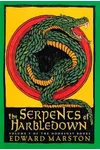
- The Serpents of Harbledown (1996) – Set near Canterbury in Kent, focusing on a suspicious death originally attributed to a simple snakebite.
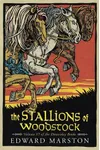
- The Stallions of Woodstock (1997) – Ralph and Gervase travel to Oxfordshire to resolve property disputes and find themselves untangling a web of local greed.
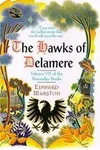
- The Hawks of Delamere (1998) – Set in Cheshire, where the commissioners probe a death linked to the royal forests and falconry.
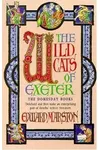
- The Wildcats of Exeter (1998) – The duo goes to Devon to settle a contentious land survey, only to find the local population gripped by fear and murder.
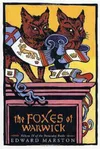
- The Foxes of Warwick (1999) – In Warwickshire, a nobleman's suspicious hunting accident leads to a deeper conspiracy.
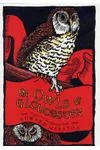
- The Owls of Gloucester (2000) – Tensions boil in Gloucestershire as a monk is murdered in a local abbey, bringing superstition and local politics to the forefront.
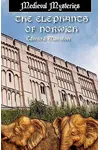
- The Elephants of Norwich (2000) – The final book in the series, set in Norfolk, bringing the duo's royal commission to a memorable conclusion.
What to Know Before You Start
Edward Marston's Domesday mysteries are set in 1086 and 1087, exactly twenty years after the Battle of Hastings. The historical backdrop is William the Conqueror's ambitious project: the Domesday Book. This was a massive, detailed survey of England's land, resources, and livestock, designed to secure taxes and resolve ownership disputes. The survey itself was highly unpopular among the native Anglo-Saxons, who saw it as the ultimate symbol of Norman oppression, while Norman lords frequently lied or disputed boundaries to increase their wealth.
To resolve the inevitable irregularities and land disputes arising from the survey, King William appointed groups of royal commissioners. Our protagonists are two such commissioners. As they travel from county to county to inspect records and hear testimonies, they repeatedly stumble upon local murders, thefts, and conspiracies that they must solve to restore royal order.
Characters and Camaraderie
The true heart of the Domesday series is the dynamic partnership between the two main characters, who represent the dual identity of post-conquest England:
Ralph Delchard is a battle-hardened Norman knight. A veteran of Hastings, Ralph is action-oriented, brave, and sometimes impatient. He is a soldier who respects strength and is fiercely loyal to King William. Despite his position as a conqueror, Ralph possesses a strong sense of fair play and justice.
Gervase Bret is a young Saxon lawyer. Of mixed Saxon and Breton ancestry, Gervase is the intellectual engine of the partnership. He is cautious, highly observant, and fluent in the legal systems of both the Saxons and the Normans. His background allows him to empathize with the oppressed Saxon peasantry, bridging the gap between the rulers and the ruled.
Alongside the duo travels a small entourage of recurring supporting characters who keep the operations running, including the pious but practical Canon Hubert and the observant monk Brother Simon. As the series progresses, the domestic lives of the characters also play a larger role, particularly Ralph’s relationship with his wife, Golde, adding a warm, human element to the gritty medieval investigations.
Practical Reading Guidance
If you are new to the series, the best starting point is undeniably The Wolves of Savernake. It establishes how Ralph and Gervase are thrown together, details the scope of their royal commission, and explains the mechanics of the Domesday Book survey. While you can read the books out of order without getting lost in the mysteries, skipping around will cause you to miss the gradual development of their friendship and the changing domestic situations of the supporting cast.
Unlike other sprawling historical series, Domesday does not have any complicated spin-offs, short story collections, or co-authored entries. It is a tight, self-contained 11-book run. If you enjoy the blend of historical detail and detective work, Marston has written other long-running series set in different eras, such as his Elizabethan Theater series (featuring Nicholas Bracewell) and his Victorian-era Railway Detective series, which share a similar atmospheric tone and dedication to historical accuracy.