
The Recommended Reading Order for the Red Sparrow Series
Written by retired CIA veteran Jason Matthews, the Red Sparrow series is a tightly woven spy trilogy that must be read in its chronological publication order. Because the narrative follows a continuous, high-stakes character arc with deep psychological development and evolving geopolitical tensions, jumping out of order will spoil major plot points, character deaths, and operational outcomes.
Here is the recommended reading path for the trilogy:
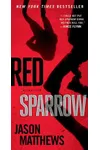
- Red Sparrow (2013) – The debut novel that introduces Dominika Egorova and Nathaniel Nash, launching their dangerous game of cat-and-mouse.
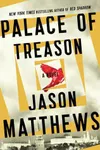
- Palace of Treason (2015) – The second installment, following Dominika as a double agent working within the highest levels of the Russian intelligence apparatus.
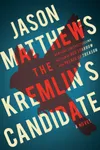
- The Kremlin's Candidate (2018) – The dramatic conclusion to the trilogy, where the secrets of the past catch up to both Nate and Dominika in a race against exposure.
Breaking Down the Trilogy
1. Red Sparrow (2013)
In the opening novel, readers are introduced to Dominika Egorova, a talented Russian classical ballerina whose career is cut short by a devastating, orchestrated injury. With her family's livelihood threatened, she is coerced by her ambitious uncle into joining the SVR (Russia's Foreign Intelligence Service). She is sent to "Sparrow School," a secret facility where operatives are trained in the art of sexual entrapment and psychological manipulation, known in the trade as "sexpionage."
Meanwhile, Nathaniel "Nate" Nash is a young, dedicated CIA operations officer working in Moscow. Nate is the sole handler of "MARBLE," a highly placed, invaluable Russian mole within the SVR. When a close call in Moscow forces Nate to evacuate, the SVR is desperate to discover the identity of this traitor. Dominika is assigned to target Nate, extract the identity of the mole, and compromise him. Instead, their meeting sparks a forbidden mutual attraction, leading to a complex web of double-crosses, loyalty tests, and dangerous choices that threaten both of their lives.
2. Palace of Treason (2015)
Picking up where the first book ends, Dominika is now fully integrated into the SVR while secretly working as a double agent for the CIA under the codename "DIVA." Operating in Moscow, she must navigate the lethal paranoia of the Russian intelligence agency and the scrutiny of its director. Her mission is made even more precarious by her proximity to the inner circle of Vladimir Putin, who is depicted as a key figure in the background of the political landscape.
Nate Nash remains her primary handler, but their ongoing relationship must be kept entirely hidden from both sides to ensure their survival. As the CIA works to extract intelligence from Dominika, a disgruntled counterintelligence officer inside the U.S. government threatens to expose her identity to the Kremlin, leading to a frantic, nail-biting race to protect her cover before she is arrested and executed.
3. The Kremlin's Candidate (2018)
The final book in the trilogy raises the stakes to a global scale. Dominika and Nate are still working together in the shadows, but their long-running operation is nearing its breaking point. The plot centers on a deeply embedded Russian sleeper agent who is on the verge of being promoted to a high-ranking position within the United States defense hierarchy. If this "Kremlin's Candidate" is successfully positioned, the flow of American intelligence will be permanently compromised.
As Dominika works to identify and stop this infiltration, the Russian counterintelligence division closes in on the CIA's network. The novel features a pulse-pounding climax that resolves the romantic and professional fates of Dominika and Nate, bringing a definitive end to the three-part saga.
Unique Elements: Tradecraft, Synesthesia, and Recipes
What sets the Red Sparrow series apart from typical espionage fiction is the unparalleled realism brought to the page by the author's real-life history. Jason Matthews spent 33 years as an operations officer in the CIA's Directorate of Operations, recruiting and handling national security sources around the world. Because of this background, the trilogy is packed with authentic intelligence tradecraft, from dead drops and surveillance detection runs to the psychological pressures of leading a double life.
Another distinguishing feature is Dominika's synesthesia. She possesses a rare neurological condition that allows her to perceive human emotions as colored auras around individuals. For example, she sees blue for honesty, red for lust, and a sickly yellow for deceit. This ability becomes a covert weapon, allowing her to gauge the truthfulness and intentions of targets in ways other officers cannot.
Additionally, Matthews introduced a quirky and beloved structural choice: ending every single chapter in all three books with a culinary recipe. These recipes correspond to a meal, snack, or drink consumed by the characters in that chapter. They range from traditional Russian dishes like "Old Lady’s Beet Soup" (Borscht) and blinis to global cuisines like Turkish coffee, Finnish salmon soup, and classic American dishes, reflecting the international settings of the novels.
Practical Reader Advice
Where to Start
You must start with the first book, Red Sparrow. The series is not episodic; it functions as a single, continuous narrative arc across the three books. Reading them out of order will result in significant confusion and spoil major plot outcomes.
Can They Be Read as Standalones?
No, these books cannot be read as standalones. Each novel builds directly on the character relationships, geopolitical consequences, and unresolved plot lines of the previous book. The trilogy is designed to be read as a complete, multi-part story.
The Film Adaptation
In 2018, Red Sparrow was adapted into a major motion picture starring Jennifer Lawrence as Dominika Egorova and Joel Edgerton as Nate Nash. While the movie captures the dark and violent tone of the first book, it makes several major deviations from the source material—including changes to characters' nationalities, the exclusion of Dominika's synesthesia, and a rewritten ending. Readers of the trilogy will find the books offer a significantly deeper look at the tradecraft, character psychology, and political intrigue than the movie adaptation.