


The Recommended Reading Order for Dortmunder
For the absolute best experience with the Dortmunder series, you should read the books in publication order. While each novel functions perfectly well as a standalone crime caper, reading them sequentially allows you to watch John Dortmunder’s quirky, non-violent criminal crew slowly expand and develop. Running jokes evolve, secondary characters find permanent roles, and the camaraderie of the luckless gang deepens over the course of the series.
The Core Dortmunder Bibliography
Here is the complete order of the Dortmunder novels and collections, along with details on their plots and where the shorter stories fit in:
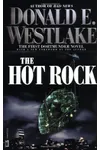
- The Hot Rock (1970) - The legendary debut. Dortmunder and his newly assembled crew are hired to steal a priceless African emerald. The heist succeeds, but they lose the gem immediately—forcing them to pull off heist after heist to steal the exact same stone back.
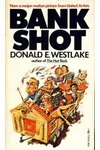
- Bank Shot (1972) - Instead of breaking into a bank, Dortmunder decides it is much easier to steal the entire bank building itself, which happens to be operating out of a temporary mobile home.
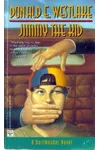
- Jimmy the Kid (1974) - The gang attempts a kidnapping by using a hard-boiled crime novel written by "Richard Stark" (Westlake's real-life alter ego) as an step-by-step instruction manual.
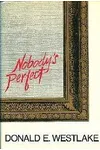
- Nobody's Perfect (1977) - An art-theft scheme turns into a bizarre blackmail tangle where the crew is forced to steal a painting that is actually a fake.
- Why Me? (1983) - Dortmunder accidentally pockets the Byzantine Fire, a legendary ruby that happens to be the target of the FBI, the NYPD, and multiple international terrorist groups.
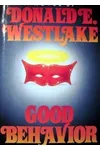
- Good Behavior (1985) - After falling through the roof of a convent while fleeing the police, Dortmunder is blackmailed by the resident nuns into rescuing a kidnapped sister from a high-security skyscraper.
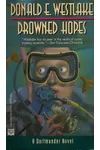
- Drowned Hopes (1990) - An old cellmate enlists Dortmunder to help retrieve a stash of stolen cash. The catch? The money is buried under a newly created, deep-water reservoir.
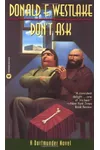
- Don't Ask (1993) - A bizarre dispute between two tiny, newly formed Eastern European nations leads to Dortmunder being hired to steal a sacred relic: the femur of St. Nicholas.
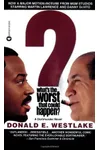
- What's the Worst That Could Happen? (1996) - When a wealthy tycoon steals Dortmunder's lucky ring during a home burglary, the thief takes it personally and launches a series of revenge heists to get it back.
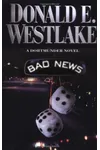
- Bad News (2001) - A complex scheme involving a disputed Native American casino ownership and a double-swapped corpse leads Dortmunder's crew into upstate New York.
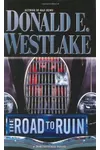
- The Road to Ruin (2004) - A wealthy corporate executive who has gotten away with massive financial fraud becomes Dortmunder’s target as the crew plots to steal his fleet of vintage cars.
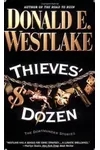
- Thieves' Dozen (2004) - A crucial short story collection. Despite the title implying twelve stories, it contains eleven humorous short capers featuring Dortmunder and his regular cohorts.
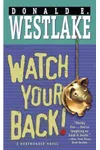
- Watch Your Back! (2005) - Dortmunder tries to rob a wealthy art fence who is vacationing in Western Canada, only to find himself dealing with local mobsters who take over his favorite meeting spot, the O.J. Bar & Grill.
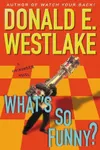
- What's So Funny? (2007) - The gang is blackmailed by a retired cop into stealing a legendary, heavily guarded gold-and-jewel-encrusted chess set.
- Get Real (2009) - The final novel of the series. The gang is hired to star in a reality television show that films them planning and executing their actual heists, leading to the ultimate meta-fictional comedy.
How to Start: The Best Entry Points
Without question, you should start your journey with The Hot Rock (1970). It is not only the book that introduced John Dortmunder to the world, but it also establishes the comedic formula and introduces critical supporting cast members like Andy Kelp and Stan Murch. If you cannot find a copy of the first book, Bank Shot (1972) and Good Behavior (1985) also serve as excellent entry points because their premise-driven plots immediately highlight the signature humor of the series.
A Hapless Origin: From Grim Parker to Funny Dortmunder
The origin of the Dortmunder series is one of the most famous anecdotes in crime fiction. Donald E. Westlake was already highly successful writing the dark, violent, and cold-blooded "Parker" heist novels under the pen name Richard Stark. Westlake began writing a new Parker novel with a premise where the thief had to steal the same emerald multiple times because of bad luck.
However, Westlake quickly realized that the frustration of repeatedly losing the loot was inherently comedic. A ruthless professional like Parker would have resorted to extreme violence out of sheer anger, which would ruin the story's tone. Westlake realized he needed a protagonist who was intelligent and professional, but completely luckless—someone who would simply sigh, accept his terrible luck, and build a new plan. Thus, John Dortmunder was born, trading Parker’s brutal efficiency for a non-violent, hangdog charm.
The Meta Connection: Jimmy the Kid and Richard Stark
Westlake loved to play with his dual identity as a writer. In Jimmy the Kid (1974), he created the ultimate meta-joke. In the novel, Andy Kelp discovers a pocketbook in prison written by "Richard Stark" featuring Parker. Believing that Stark's fictional heists are so perfect they can serve as real blueprints, the Dortmunder gang attempts to pull off a kidnapping using Stark's fictional novel Child Heist as a guide. The chapters of Jimmy the Kid alternate between the comedic bungling of Dortmunder's real-world crew and excerpts from the fictional Stark thriller they are trying to copy.
Where Do the Short Stories Fit?
In addition to the fourteen novels, Westlake wrote several shorter Dortmunder works. The bulk of these are gathered in the collection Thieves' Dozen (2004). This collection contains eleven stories, including favorites like "Too Many Crooks" and "Ask a Silly Question." Another notable piece is the novella "Walking Around Money", which was published in the 2005 multi-author anthology Transgressions edited by Ed McBain. Chronologically, you can read Thieves' Dozen and "Walking Around Money" at any point after the first few novels, as they require no prior knowledge other than basic familiarity with the crew.
What to Know Before You Start
Before you dive in, keep these structural and stylistic elements in mind:
- A Gentle Criminal: Unlike traditional hard-boiled crime fiction, the Dortmunder books feature zero graphic violence. Dortmunder hates guns, avoids physical fights, and runs his heists relying strictly on misdirection, lockpicking, and planning.
- The Quirky Crew: Much of the joy of the series comes from the recurring characters who hang out at the O.J. Bar & Grill. These include Andy Kelp (the eternally optimistic planner), Stan Murch (a getaway driver obsessed with New York road maps), Tiny Bulcher (the muscle who terrifies Dortmunder), and May (Dortmunder's supportive, chain-smoking partner).
- New York as a Character: The books are love letters to a gritty, pre-gentrification New York City, filled with seedy bars, shady locksmith shops, and local neighborhood dynamics.