






How to Read the Dr. Gideon Fell Mysteries
Dr. Gideon Fell, the larger-than-life, beer-drinking sleuth created by John Dickson Carr, is one of the most iconic figures of Golden Age detective fiction. Famously modeled after the English writer G.K. Chesterton, Dr. Fell combines a jovial, Father Christmas-like warmth with an unparalleled genius for dissecting "impossible" crimes—particularly locked-room mysteries.
With 23 novels and several short stories published between 1933 and 1967, the series offers a rich feast of Gothic atmosphere, bizarre clues, and ingenious puzzles. Since the books are almost entirely self-contained, you do not need to adhere strictly to a chronological timeline. However, following the publication order is highly recommended to appreciate how Carr refined his style, atmospheric depth, and meta-commentary on the mystery genre.
Where Should You Start?
If you want to experience the very best of Dr. Fell, you have three primary entry points depending on what you are looking for:
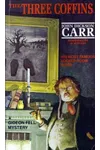
- The Cornerstone Masterpiece: The Hollow Man (published as The Three Coffins in the United States). Voted in 1981 by a panel of mystery writers as the greatest locked-room mystery of all time, this 1935 novel is famous for Dr. Fell's "Locked Room Lecture," where he break downs the mechanics of impossible crimes.
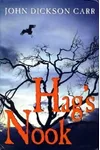
- The Debut: Hag's Nook (1933). Starting here lets you see the series' foundation. It features a dark, Gothic atmosphere set around a ruined prison, introducing Fell's unique personality and methodology.
- The Atmospheric Pinnacle: He Who Whispers (1946) or The Crooked Hinge (1938). Both of these combine seemingly supernatural occurrences with rigorous logic, representing Carr at the height of his storytelling powers.
Publication Order of Dr. Gideon Fell Books
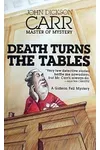
Here is the complete list of Dr. Gideon Fell novels in publication order. Note that several books were published under different titles in the United States and the United Kingdom. In particular, the local database contains a minor duplication regarding the 1941/1942 novel released as Death Turns the Tables in the US and The Seat of the Scornful in the UK—these are the same book.
- Hag's Nook (1933) – The eerie debut involving a family curse and a ruined jail.
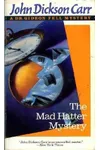
- The Mad Hatter Mystery (1933) – A London-based mystery involving stolen hats and a murder near the Tower of London.
- The Eight of Swords (1934) – A lighter, more satirical mystery set at a country estate.
- The Blind Barber (1934) – A high-spirited farce set aboard an ocean liner, showing Carr's comedic range.
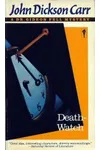
- Death-Watch (1935) – A dark mystery focused on clockmaking and a bizarre murder in a London house.
- The Three Coffins / The Hollow Man (1935) – The absolute classic featuring two impossible murders and the famous Locked Room Lecture.
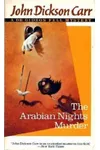
- The Arabian Nights Murder (1936) – An intricate puzzle set in a museum, told from multiple perspectives.
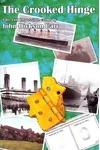
- The Crooked Hinge (1938) – A chilling story involving a Titanic survivor, witchcraft, and an automaton.
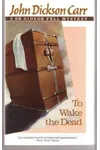
- To Wake the Dead (1938) – A fast-paced mystery dealing with hotel murders and impersonations.
- The Problem of the Green Capsule / The Black Spectacles (1939) – A brilliant investigation focusing on eyewitness psychology and filmed murder.
- The Problem of the Wire Cage (1939) – A murder on a clay tennis court with no footprints in the surrounding mud.
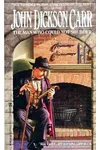
- The Man Who Could Not Shudder (1940) – A haunted house setting where a gun hanging on a wall mysteriously shoots someone.
- The Case of the Constant Suicides (1941) – Set in Scotland, blending locked-room puzzles with dark humor and Highland history.
- The Seat of the Scornful / Death Turns the Tables (1941) – A high-court judge becomes the prime suspect in a shooting. (Note: These titles represent the same novel published in different markets).
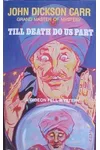
- Till Death Do Us Part (1944) – A suspenseful post-blitz thriller revolving around a fortune teller and poison.
- He Who Whispers (1946) – A post-war French-accented mystery filled with dread and impossible situations.
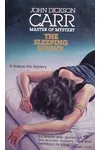
- The Sleeping Sphinx (1947) – A Gothic-toned investigation involving family madness and sealed crypts.
- Below Suspicion (1949) – A darker tale featuring witchcraft and satanism, which also introduces barrister Patrick Butler.
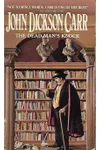
- The Dead Man's Knock (1958) – A late-career entry featuring a locked room in a college town, referencing Sherlock Holmes.
- In Spite of Thunder (1960) – Dr. Fell travels to Geneva to solve a murder involving a fall from a balcony.
- The House at Satan's Elbow (1965) – A return to classic ghost stories and family histories in an old, creaky house.
- Panic in Box C (1966) – Set in the theatrical world, featuring a murder on stage.
- Dark of the Moon (1967) – The final novel, set in the American South, bringing Fell's long career to a close.
Short Stories and Crossovers
In addition to the novels, Dr. Fell featured in several short stories and radio plays. Most of these were collected in the 1947 volume Dr. Fell, Detective, and Other Stories. Key short stories include "The Proverbial Murder," "The Locked Room," and "The Wrong Problem." They offer excellent, bite-sized examples of Carr's puzzle-crafting skills.
For fans looking for crossovers, the 1949 novel Below Suspicion introduces Patrick Butler, a brilliant but pompous defense attorney. While Fell helps solve the mystery in this book, Butler proved popular enough to spin off into his own solo novel, Patrick Butler for the Defence (1956), in which Dr. Fell does not appear.
What to Know Before You Start
Dr. Gideon Fell's mysteries are products of the Golden Age of Detective Fiction, which means they prioritize intellectual fair play, atmospheric setups, and elaborate solutions over gritty realism. Fell himself is not an action hero; he is a scholar and observer who solves crimes by identifying the logical flaws in the killer's illusions.
Readers should be prepared for complex explanations. Carr does not cheat his audience; all the clues are presented, but they are often hidden behind brilliant misdirection. If you enjoy puzzle-solving, Gothic atmospheres, and eccentric detectives, Dr. Gideon Fell is the perfect addition to your reading list.