




The Ideal Medical Drama: Where to Start with Dr. Kildare
Before there was Grey's Anatomy, ER, or House, there was Dr. James Kildare. Created by the extraordinarily prolific pulp fiction author Max Brand (the primary pen name of Frederick Schiller Faust), Dr. Kildare first captured the public imagination in the late 1930s. The series remains a cornerstone of medical fiction, blending intense hospital diagnoses, ethical dilemmas, and classic romantic subplots with the mentorship of the cantankerous but brilliant diagnostician, Dr. Leonard Gillespie.
For modern readers looking to scrub in and explore Blair General Hospital, the path can seem a little complicated. The stories were originally serialized in pulp magazines like Cosmopolitan before being published as novels. Because of this, the order in which the books were published does not match the chronological sequence of James Kildare's career. Below are the two recommended ways to read the series.
Path 1: The Chronological Reading Order (Recommended)
Reading the series chronologically allows you to watch James Kildare grow from a raw, untested intern into a confident, defiant physician. It also establishes the core relationships—particularly with his mentor Dr. Gillespie and nurse Mary Lamont—in the order they actually develop.
- "Internes Can't Take Money" (1936)
Technically a short story first published in Cosmopolitan, this is the absolute beginning. It introduces James Kildare as a scrappy, idealistic intern navigating a gritty urban hospital, working to save a patient with a gunshot wound while trying to keep his code of ethics intact. - Young Dr. Kildare (1941)
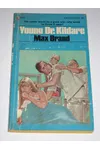
Though published later, this novel serves as the definitive origin story. Kildare returns to his small hometown where his parents and childhood friend expect him to take over his father's local country practice. Instead, he decides to follow his own path, leading him to Blair General Hospital and his first encounter with Dr. Leonard Gillespie. - Calling Dr. Kildare (1940)
In the first novel published, Dr. Gillespie decides to teach Kildare a lesson about the emotional complexities of patient care by reassigning him to a neighborhood clinic. Here, Kildare meets Nurse Mary Lamont and quickly becomes entangled in a dangerous murder case when he treats a gunshot victim in secret. - The Secret of Dr. Kildare (1940)
While Dr. Gillespie battles a serious illness and works on a pneumonia cure, Kildare is tasked with helping Nancy Messenger, the daughter of a wealthy Wall Street tycoon who is exhibiting strange, erratic personality changes. Kildare must navigate the line between physical medicine and psychological distress. - Dr. Kildare Takes Charge (1941)
Kildare continues to balance the daily pressures of Blair General Hospital with his personal life, particularly his growing romance and engagement to Mary Lamont. - Dr. Kildare's Trial (1941)
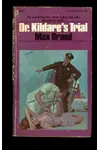
Kildare finds himself in severe professional and legal jeopardy after performing a daring emergency operation that violates hospital policy and the established medical-legal code, forcing him to stand up to the hospital board. - Dr. Kildare's Crisis (1942)
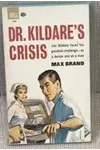
This entry turns personal when Mary Lamont's brother, Douglas, visits New York. His erratic behavior leads Kildare to diagnose him with hereditary epilepsy, triggering a massive ethical and emotional crisis since Mary is unaware that she might also carry the condition. - Dr. Kildare's Search (1943)
The final core installment of the series, often published alongside the novella Dr. Kildare's Hardest Case, brings Kildare's literary journey to a close as he handles a series of complex diagnostic mysteries and personal resolutions.
Path 2: The Original Book Publication Order
If you prefer to read the books exactly as they appeared on bookshelves in the 1940s, you should follow the publication order. Keep in mind that Young Dr. Kildare will feel like a flashback since it details his arrival at the hospital after you have already read his adventures in Calling Dr. Kildare and The Secret of Dr. Kildare.
- Calling Dr. Kildare (1940)
- The Secret of Dr. Kildare (1940)
- Dr. Kildare Takes Charge (1941)
- Dr. Kildare's Trial (1941)
- Young Dr. Kildare (1941)
- Dr. Kildare's Crisis (1942)
- Dr. Kildare's Search (1943)
The Real-Life Inspiration and Origins
Frederick Schiller Faust, writing as Max Brand, was famous for his westerns, but he turned his storytelling talents to medicine after being inspired by his close college friend, Dr. George Winthrop "Dixie" Fish. Dr. Fish was a prominent New York surgeon, and his real-world medical anecdotes, clinical pressures, and ethical struggles gave Faust the raw material needed to create Blair General Hospital. This foundation of real-world inspiration is why the stories, despite their pulpy, dramatic twists, still resonated deeply with the public as a realistic look at the medical profession.
The Multi-Media Legacy: Books, Films, and Television
It is impossible to discuss the Dr. Kildare books without mentioning their relationship to visual media. In 1938, Metro-Goldwyn-Mayer (MGM) acquired the rights to the character. They launched a highly successful series of nine films starring Lew Ayres as Dr. Kildare and Lionel Barrymore as Dr. Gillespie. Many of the novels published between 1940 and 1943 were actually written by Faust concurrently with the screenplays or as novelizations of the films' storylines.
When Lew Ayres left the role during World War II, MGM kept the cinematic universe going by focusing on Dr. Gillespie mentoring other young doctors. Decades later, the franchise was revived for television. The 1961–1966 NBC television series starring Richard Chamberlain as Dr. Kildare and Raymond Massey as Dr. Gillespie became a massive pop culture phenomenon. While the TV series adapted the general premise and characters created by Max Brand, it updated the setting to the 1960s and ran on its own continuous storylines, separate from the continuity of the original 1940s novels.
What to Know Before You Start
Readers diving into the Dr. Kildare series should prepare for a style that combines fast-paced pulp adventure with genuine emotional weight. While modern medical shows rely heavily on complex terminology and high-tech equipment, Brand's books focus on the human element: the doctor's intuition, the patient's psychological state, and the moral choices that defy hospital bureaucracy. Because the books were written during the transition into modern mid-20th-century medicine, they offer a fascinating, nostalgic window into a time when medical ethics and clinical diagnostics were rapidly evolving.