
How to Read Fred Saberhagen’s Dracula Series
Before Anne Rice popularized the sympathetic vampire, and long before modern urban fantasy made monsters the heroes, Fred Saberhagen revolutionized the genre. Beginning in 1975, his Dracula Sequence (also known simply as the Dracula series) flipped the script on Bram Stoker’s classic novel. Instead of a mindless force of evil, Saberhagen presents Vlad Tepes—the historical Wallachian prince turned vampire—as a witty, complex protagonist with a strict personal code of honor.
Spanning ten novels and a handful of short stories published between 1975 and 2002, the series moves effortlessly between the Victorian era, historical flashbacks, and contemporary urban fantasy. Because the books frequently reference recurring characters, evolving supernatural mechanics, and Dracula’s growing network of mortal allies, the most satisfying way to experience the saga is in its original Publication Order.
The Dracula Sequence in Publication Order
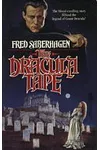
- The Dracula Tape (1975)
The novel that started it all. Dracula uses a modern cassette recorder to dictate his side of the events of Bram Stoker’s 1897 novel to a descendant of the Harker family. He paints Jonathan Harker as a fool, Abraham Van Helsing as a dangerous fanatic, and reveals his deep, genuine love for Mina. It is a brilliant, satirical reframe of classic Gothic horror.
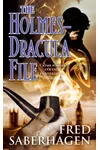
- The Holmes-Dracula File (1978)
Set in London during the same year as the original Dracula (1897), this book alternates perspectives between Dr. John Watson and Dracula himself, who has awakened with temporary amnesia. As they investigate a horrific plot to unleash a plague of giant rats on London, Dracula and Sherlock Holmes discover a shocking, close familial blood connection.
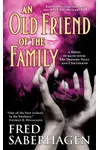
- An Old Friend of the Family (1979)
The series transitions into a contemporary setting. Dracula, adopting the alias Dr. Emile Corday, travels to late-1970s Chicago to assist the Southerland family—descendants of Mina Harker. When the Southerlands are targeted by a ruthless cabal of younger, lawless vampires, Dracula steps in to protect his old love's bloodline.
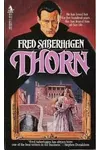
- Thorn (1980)
This entry features a dual timeline. In the contemporary thread, Dracula searches for a lost, centuries-old portrait of a woman who looks identical to his mortal wife. In the historical thread, the story details Dracula’s early days as Vlad Tepes in 15th-century Wallachia, exploring the tragedy and political strife that led to his transformation.
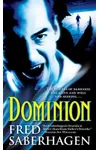
- Dominion (1982)
Saberhagen blends Arthurian myth with vampire lore as Dracula faces the ancient sorceress Morgan Le Fay. Set in the early 1980s, the plot centers on the awakening of Merlin and a clash of ancient magical artifacts, forcing Dracula to use all his cunning to protect his mortal allies.
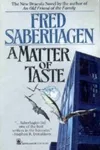
- A Matter of Taste (1990)
Set in Chicago, this installment explores Dracula’s vulnerability. He is poisoned by a rare, ancient toxin designed specifically to target vampires. To survive, Dracula must rely on his mortal relatives, Matthew and young Judy, to find the source of the poison and protect him while he is weakened.
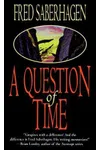
- A Question of Time (1992)
Set in the American Southwest, this atmospheric mystery focuses on a mysterious artist whose paintings have the power to trap human souls and manipulate time. Dracula investigates the bizarre temporal anomalies near the Grand Canyon to stop a predatory force.
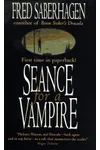
- Séance for a Vampire (1994)
The series returns to the early 2000s... or rather, back to the Edwardian era of 1904. Sherlock Holmes and Dr. Watson are hired to investigate a medium holding séances for a grieving family. The case escalates into a conspiracy involving Russian royalty, Rasputin, and the return of Holmes' vampire cousin, Dracula.
- A Sharpness on the Neck (1996)
Another dual-timeline narrative. In the present day, Dracula’s modern companions are kidnapped by an extortionist who knows his secret. In the historical flashbacks, the novel details Dracula's experiences during the French Revolution in the 1790s, highlighting how historical atrocities often dwarf supernatural horror.
- A Coldness in the Blood (2002)
The final novel in the sequence. Dracula searches for the legendary Philosopher's Stone in the modern American Southwest. He must stop an ancient, primordial deity and a fanatic cult from using the stone to bring about global destruction, concluding the series on an epic, mythic note.
Chronological Timeline of Settings
While the publication order is highly recommended to follow the logical progression of characters and lore, the internal chronology of Dracula's life is non-linear due to the historical flashbacks. If you want to trace Dracula's timeline chronologically through history, the settings fall into the following sequence:
- 15th Century (Wallachia): Historical sequences in Thorn covering Vlad Tepes’ mortal life, rule, and transformation.
- Late 18th Century (1790s France): Historical sequences in A Sharpness on the Neck detailing Dracula’s experiences during the French Revolution.
- 1897 (London): The events of The Dracula Tape and The Holmes-Dracula File.
- 1904 (London & Russia): The events of Séance for a Vampire.
- Late 20th Century to 2002 (Modern Era): The contemporary storylines of An Old Friend of the Family, Thorn, Dominion, A Matter of Taste, A Question of Time, A Sharpness on the Neck, and A Coldness in the Blood.
Reading the books chronologically is not recommended for first-time readers. The modern-day books build a continuous narrative around the Southerland family and Dracula's modern alias, Dr. Emile Corday. Jumping out of publication order will disrupt this emotional and narrative progression.
Tie-Ins, Spin-offs, and Short Stories
In addition to the ten primary novels, Fred Saberhagen wrote two short stories that fit directly into the Dracula Sequence. There is also a famous co-authored novelization that readers should keep separate:
The Short Stories
- "Box Number Fifty" (2001): Published in the anthology Dracula in London (edited by P. N. Elrod). This story is set directly during the timeline of Bram Stoker's original novel and features Dracula navigating the logistics of shipping his earth-boxes into London.
- "A Drop of Something Special in the Blood" (2004): Published in the anthology Emerald Magic: Great Tales of Irish Fantasy (edited by Andrew M. Greeley). This story features Dracula in Ireland, exploring his connection to Irish myths.
The Film Novelization (Separate Canon)
- Bram Stoker's Dracula (1992): Co-authored with screenwriter James V. Hart, this is the official novelization of the Francis Ford Coppola film starring Gary Oldman. Although Saberhagen wrote it, it is a faithful adaptation of the movie's script and does not share continuity with Saberhagen’s own Dracula Sequence.
What to Know Before You Start
Fred Saberhagen's Dracula is a far cry from modern sparkling vampires or brutal monsters. He is portrayed as a noble, sometimes sarcastic gentleman who values loyalty, family, and honor. He does not kill indiscriminately, and he frequently acts to protect humanity from far worse evils, both supernatural and mortal.
As you begin the series, keep in mind that the early books (especially The Dracula Tape) are highly satirical and conversational, while later books lean heavily into contemporary urban fantasy and thriller elements. Because the series was published over nearly three decades, some of the older paperbacks can be difficult to find in print, but the entire series has been preserved in digital and audiobook formats for modern readers.