
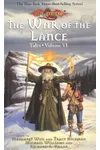

The Recommended Reading Path: The Core Weis & Hickman Saga
With hundreds of novels penned by dozens of authors in the shared Dragonlance universe, the absolute best way to experience the saga is to follow the core storyline written by the universe creators, Margaret Weis and Tracy Hickman. Reading their core books in publication order prevents major spoilers, preserves character mysteries, and maintains a coherent timeline. Follow this step-by-step path to experience the heart of Krynn.
Phase 1: The Original Trilogies (The "Holy Six")
Start your journey exactly where the franchise began. These six novels establish the world, the legendary characters, and the stakes of the War of the Lance.
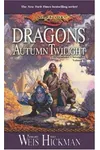
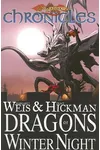
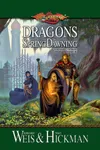
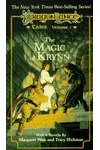
- Dragonlance Chronicles: Begin with Dragons of Autumn Twilight (1984), followed by Dragons of Winter Night (1985) and Dragons of Spring Dawning (1985). This trilogy introduces the Heroes of the Lance—including Tanis Half-Elven, Raistlin Majere, Sturm Brightblade, and Tasselhoff Burrfoot—as they battle the dragonarmies of the evil goddess Takhisis.
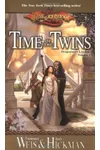
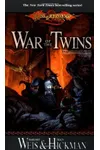
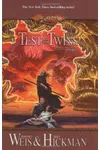
- Dragonlance Legends: Continue with Time of the Twins (1986), War of the Twins (1986), and Test of the Twins (1986). This trilogy shifts focus to the twin brothers Raistlin and Caramon Majere, involving dark magic, time travel, and a quest for godhood.
Phase 2: The Next Generation and the Chaos War
After finishing the original trilogies, the story leaps forward a generation. This phase marks a major transition in the history of Krynn.
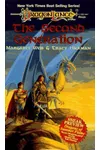
- The Second Generation (1995): A collection of short stories that introduces the children of the original Heroes of the Lance, bridging the gap between old and new eras.
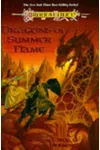
- Dragons of Summer Flame (1995): Originally written as the grand finale of the Dragonlance saga, this novel depicts the Chaos War, which reshapes the magic and gods of Krynn.
Phase 3: The War of Souls and Beyond
Following the Chaos War, the universe enters the Age of Mortals, leading into another epic conflict.
- The War of Souls Trilogy: Read Dragons of a Fallen Sun (2000), Dragons of a Lost Star (2001), and Dragons of a Vanished Moon (2002). This trilogy addresses the state of the world after the gods departed and introduces a mysterious new antagonist.
- The Dark Disciple Trilogy: Though primarily focusing on the character Mina, Margaret Weis's solo follow-up trilogy consisting of Amber and Ashes (2004), Amber and Iron (2005), and Amber and Blood (2008) is highly recommended here to tie up loose ends from the War of Souls.
Phase 4: The Core Additions (Lost Chronicles & Destinies)
Once you are fully caught up with the main timeline, you are ready for the companion and time-altering trilogies.
- The Lost Chronicles: Read Dragons of the Dwarven Depths (2006), Dragons of the Highlord Skies (2007), and Dragons of the Hourglass Mage (2009). These books take place concurrently with the original Chronicles trilogy, filling in gaps and explaining missing adventures. They are best read with the context of the entire saga.
- Dragonlance: Destinies: Finish with the latest trilogy by Weis and Hickman: Dragons of Deceit (2022), Dragons of Fate (2023), and Dragons of Eternity (2024). This series features time travel and heavily references events from the original Chronicles and Legends, making it essential to read them last.
Publication Order vs. Chronological Order
A common debate among fantasy readers is whether to read Dragonlance chronologically or in publication order. While chronological order seems logical, it is highly discouraged for first-time readers.
Reading chronologically would require you to start with prequels like The Legend of Huma (which takes place thousands of years in the past) or The Soulforge (which details Raistlin's childhood). Starting here ruins the dramatic impact, character development, and narrative mystery of the core books. For example, knowing Raistlin's exact backstory before starting Dragons of Autumn Twilight robs his character of his mysterious, unpredictable allure. Stick to publication order for the core novels, and treat prequels as expansion material once you are invested in the world.
The Five Ages of Krynn: Navigating the Timeline
The history of Krynn is officially categorized into five distinct ages, separated by major world-altering events. Knowing these eras helps place spin-offs and standalone books in historical context.
- Age of Starbirth: The creation of Krynn, the gods, and the dragons. No novels are set during this mythic era.
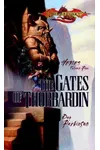
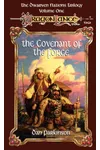
- Age of Dreams: Covers the rise of the first civilizations, early elven and dwarven histories, and the legendary first Dragon Wars. Standalone novels like The Legend of Huma and the Dwarven Nations trilogy are set here.
- Age of Might: An era dominated by the human empire of Istar, characterized by the rise of the Kingpriest and the hubris of mortals. The Kingpriest Trilogy takes place at the end of this age, leading directly to the Cataclysm.
- Age of Despair: Initiated by the Cataclysm—a fiery mountain hurled by the gods to punish Krynn—this era includes centuries of darkness, the return of evil dragons, and the pivotal War of the Lance. The core Chronicles and Legends trilogies are set here.
- Age of Mortals (The Fifth Age): The current era, starting with the Chaos War. Magic is reinvented, the old gods disappear, and giant dragon overlords claim territory. This age hosts the Dragons of a New Age, Dhamon Saga, and War of Souls trilogies.
Essential Spin-offs and Subseries Worth Reading
Beyond the core saga, several companion books and subseries add incredible depth to the lore of Krynn. If you want to expand your reading, these are the most highly regarded collections:
- The Raistlin Chronicles: Written by Margaret Weis, The Soulforge (1998) and Brothers in Arms (1999) explore the early life of the twins Raistlin and Caramon Majere, their trial at the Test of High Sorcery, and their early mercenary days. These are fan favorites and can be read anytime after finishing the Legends trilogy.
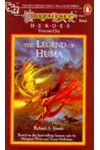
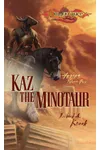
- Dragonlance Heroes: The first book in this collection, The Legend of Huma (1988) by Richard A. Knaak, is widely considered one of the best non-core novels. It tells the story of the legendary Knight of Solamnia who first defeated Takhisis. Its companion, Kaz the Minotaur (1990), is also highly recommended.
- The Kingpriest Trilogy: Comprising Chosen of the Gods (2001), Divine Hammer (2002), and Sacred Fire (2003) by Chris Pierson, this trilogy details the tragic fall of Istar and is praised for its rich worldbuilding and political intrigue.
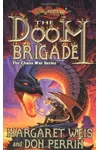
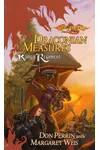
- Kang's Regiment: Written by Margaret Weis and Don Perrin, The Doom Brigade (1996) and Draconian Measures (2000) offer a unique, comedic, and action-packed look at a band of draconians trying to survive after the War of the Lance.
What to Know Before You Start
Dragonlance occupies a unique space in fantasy literature. Conceived in the early 1980s by Tracy and Laura Hickman during a car ride to a job interview at TSR (the publisher of Dungeons & Dragons), it was designed from the beginning to merge tabletop gaming with high-fantasy literature. The original Chronicles novels were heavily playtested as D&D modules, meaning many of the plot points, character actions, and combat sequences were inspired directly by actual dice rolls and player creativity.
As a result, the story features classic D&D elements: defined character classes, alignment struggles, and iconic fantasy races. However, Dragonlance subverts generic tropes by introducing unique creations like the kender (mischievous, fearless, and boundary-ignoring halfling-like people), gully dwarves, and draconians. The magic system is also uniquely tied to the alignment of Krynn's three moons. Understanding this tabletop heritage helps readers appreciate the episodic, quest-focused pacing of the early novels.