
Recommended Reading Order
Although metadata systems and online catalogs sometimes present conflicting information, the best way to read the series is in the narrative sequence intended by the author. This order introduces Liz, Lucy, and the dragons in a logical progression, allowing readers to see how the magical household expands book by book:
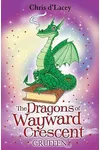
- Gruffen (Book 1) – Introduces the household's first guard dragon and explains how Liz crafts protection for Lucy.
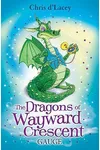
- Gauge (Book 2) – Explores the town of Scrubbley and introduces a dragon designed to sense and measure time.
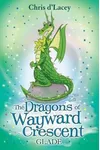
- Glade (Book 3) – Features a mood dragon that helps Lucy process complex feelings about ownership and letting go.
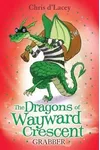
- Grabber (Book 4) – Focuses on a dragon built to catch a local thief, introducing themes of empathy and community.
The Publication Order and Database Quirk Explained
If you look up the series on automated cataloging websites or digital library indexes, you will likely encounter a confusing discrepancy. Many automated databases list Gauge as published in 2008 and Gruffen in 2009, which automatically sorts Gauge as the first volume. In reality, the UK publishing schedule released these stories close together, and author Chris d'Lacey has always officially maintained that Gruffen is the first book in the series. Reading Gruffen first is essential for proper continuity, as it explains Lucy's initial fear of monsters in her bedroom and her mother Liz's decision to craft a living clay dragon to act as her personal guardian. Attempting to start with Gauge skips this foundational world-building and key character introductions.
The Prequel Connection: Scrubbley Before David Rain
For readers already familiar with Chris d'Lacey's bestselling The Last Dragon Chronicles, this series acts as a charming historical record of Wayward Crescent. The events of these four books are set entirely before the arrival of David Rain, the university student who moves in as a lodger in the first book of the main series, The Fire Within. Here, we get to see the daily lives of a younger Lucy and her mother, Liz, living in their quiet home in Scrubbley, England. We also get early glimpses of Bonnington, the lovable, clumsy stray cat who plays a recurring role in the household's adventures. For long-time fans, seeing Liz create her early dragons and watching Lucy interact with them as a younger child adds a layer of nostalgia and deeper lore to the entire Pennykettle universe.
A Deep Dive into the Dragons of Wayward Crescent
Every book in the series centers around the creation of a brand new clay dragon, crafted by Liz to solve a specific household or town dilemma. Unlike normal toys, these dragons are animated by a mysterious spark of life, taking on unique roles and showing distinct personalities:
1. Gruffen (The Guard Dragon)
In the opening volume, young Lucy Pennykettle is terrified that a monster is hiding in her bedroom. To help her feel safe, Liz uses her magical pottery skills to craft a tiny, blue-grey clay guard dragon named Gruffen. Once he comes to life, Gruffen takes his duties very seriously, patrolling Lucy's room and investigating the dark corners. The story is a gentle, comforting exploration of childhood fears of the dark, demonstrating how a little courage (and a loyal dragon friend) can make scary things feel manageable.
2. Gauge (The Timing Dragon)
The second book shifts the focus to the broader town of Scrubbley. When the local town council threatens to demolish a historic, old clock tower, Lucy and Liz know they have to intervene. To assist, Liz designs Gauge, a green timing dragon with an innate understanding of clocks and time. Gauge is sent to help Lucy save the clock, which leads to a whimsical, fast-paced adventure that highlights the importance of preserving history and community spaces.
3. Glade (The Mood Dragon)
In the third installment, Liz creates Glade, a gentle dragon who has the unique ability to sense and reflect human emotions. Trouble arises when Liz decides to sell Glade to a customer, prompting Lucy to grapple with feelings of sadness, attachment, and possessiveness. The story is a beautifully written lesson for young children about the nature of love, sharing, and understanding that some things are meant to bring joy to others rather than being kept all to ourselves.
4. Grabber (The Thief-Catching Dragon)
The final book, which Chris d'Lacey has noted as his personal favorite of the four, introduces Grabber. When a string of burglaries strikes the peaceful neighborhood of Scrubbley, Liz crafts a mischievous, quick-witted dragon specifically to catch the culprit. As Grabber goes on the hunt, the narrative takes an unexpected turn, encouraging Lucy and the readers to look beyond the act of theft to understand the burglar's circumstances, wrapping up the series with a powerful message about empathy, kindness, and redemption.
What to Know Before You Start
A Tailored Reading Experience: Unlike the epic, high-stakes fantasy and complex environmental themes that characterize The Last Dragon Chronicles, the Dragons of Wayward Crescent books are designed specifically for younger readers. With a target age of 7 to 10 years (typically grades 2 to 5), the books feature large, easy-to-read font, short chapters that build reading stamina, and beautiful black-and-white illustrations by Adam Stower that bring the clay dragons to life on the page.
An Unfinished Vision: According to the author's official website, the series was originally conceived to be a massive 16-book collection, with each book dedicated to a different clay dragon (such as Gwillan the writing dragon or Gretel). Unfortunately, due to commercial decisions by the publisher, the series was canceled after the first four books. However, because each book contains a complete, self-contained adventure, readers do not have to worry about unresolved cliffhangers or incomplete storylines.
The Best Starting Point for the Universe: For younger children who are not yet ready for the dense lore and longer page counts of the main 7-book series, Dragons of Wayward Crescent serves as the perfect, low-pressure introduction. It allows them to fall in love with the characters of Lucy, Liz, and the dragons, making the eventual transition to the main series feel natural and exciting.