


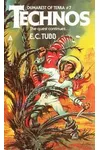

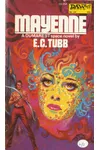

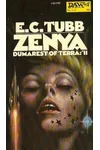
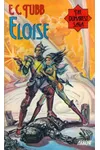


The Recommended Reading Path
If you want to experience the Dumarest of Terra series, the path forward is straightforward: you should read the books in their original publication order. E.C. Tubb wrote the series as a sequential, episodic journey following Earl Dumarest's long search for his mythical home planet, Earth. While individual books often function as standalone planet-of-the-week adventures with their own self-contained conflicts, the overarching plot—Dumarest gathering clues, evading his pursuers, and moving closer to Earth—develops chronologically from the first page to the last.
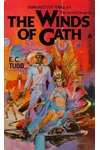
You should start with The Winds of Gath (1967). This short, punchy novel introduces Dumarest stranded on the tourist planet of Gath, establishing the series' gritty atmosphere, the mechanics of space travel, and his burning desire to return to the world of his childhood. From there, follow the numbered sequence all the way to the final volume, Child of Earth (2008).
The Complete Dumarest of Terra Reading Order
Below is the complete list of all 33 novels in the series. E.C. Tubb authored every entry, maintaining a remarkably consistent tone across four decades. Note that some books were released under different titles in the UK and US; these alternate names are noted below.
- 1. The Winds of Gath (1967) - Also published simply as Gath
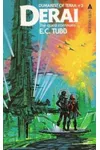
- 2. Derai (1968) - Also published as The Death Zone
- 3. Toyman (1969)
- 4. Kalin (1969)
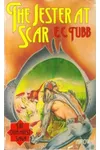
- 5. The Jester at Scar (1970)
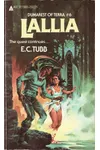
- 6. Lallia (1971)
- 7. Technos (1972)
- 8. Veruchia (1973)
- 9. Mayenne (1973)
- 10. Jondelle (1973)
- 11. Zenya (1974)
- 12. Eloise (1975)
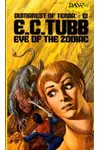
- 13. Eye of the Zodiac (1975)
- 14. Jack of Swords (1976)
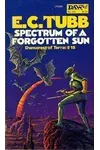
- 15. Spectrum of a Forgotten Sun (1976)
- 16. Haven of Darkness (1977)
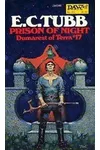
- 17. Prison of Night (1977)
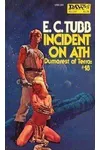
- 18. Incident on Ath (1978)
- 19. The Quillian Sector (1978)
- 20. Web of Sand (1979)
- 21. Iduna's Universe (1979)
- 22. The Terra Data (1980)
- 23. World of Promise (1980)
- 24. Nectar of Heaven (1981)
- 25. The Terridae (1981)
- 26. The Coming Event (1982)
- 27. Earth is Heaven (1982)
- 28. Melome (1983)
- 29. Angado (1984)
- 30. Symbol of Terra (1984)
- 31. The Temple of Truth (1985)
- 32. The Return (1997)
- 33. Child of Earth (2008)
What to Know Before You Start: The Dumarest Universe
Before diving into the saga, it helps to understand the unique characteristics of E.C. Tubb's far-future setting. Unlike many modern space operas that feature sprawling galactic empires or unified interstellar alliances, Dumarest's universe is highly fragmented. There is no central government, and communication between systems is slow and unreliable. Each planet has developed its own isolated culture, technology level, and laws. Some are feudalistic, others are controlled by cold corporations, and many are barely scraping by.
In this universe, Earth is not a grand capital; it is a half-forgotten myth, a fairy tale whispered by drifters. Most citizens of the galaxy do not believe Earth ever existed, assuming humanity evolved on another world or spawned spontaneously. Earl Dumarest, who stowed away on a spacecraft leaving Earth as a young boy, is one of the very few who knows it is real. However, having travelled countless light-years away, he has lost his way back, as no modern starcharts record Earth's coordinates.
Space travel in this universe is a grim and hazardous affair. To travel between stars, passengers who cannot afford high-priced luxury berths must resort to "Low" passage. This involves cryogenic suspension—travelers are frozen for the journey to save space and resources. However, Low passage carries a notorious 15% mortality rate. Those who do not survive the thawing process are simply cremated, a stark reminder of the gritty, uncompromising realism that runs through the series.
The Major Players: Factions and Foes
As Dumarest travels from planet to planet looking for clues to Earth's location, he frequently runs afoul of two major galactic organizations:
The Cyclan
The primary antagonists of the series, the Cyclan, are a chilling order of emotionless humans known as Cybers. They undergo surgical removal of their emotions to achieve absolute, mathematical logic. The Cyclan seek to control the galaxy through cold calculation and information brokerage. They pursue Dumarest relentlessly because he possesses a secret: the formula for the "Affinity Twin," an advanced technology that could grant the Cyclan absolute control over human minds. Their agents, dressed in distinctive red robes, are calculating, patient, and ruthless.
The Universal Brotherhood
In contrast to the Cyclan, the Universal Brotherhood is a widespread monastic organization that offers shelter, medical aid, and spiritual guidance to the weary travelers of the galaxy. Their monasteries are sanctuaries of peace in a hostile cosmos. While they are generally benevolent and oppose the cold domination of the Cyclan, they are not without their own secrets and internal conflicts, providing Dumarest with both temporary allies and unexpected complications.
The Long Publication Gaps and How the Saga Concluded
For decades, readers feared that Dumarest's quest would remain forever unfinished. E.C. Tubb was incredibly prolific, writing the first 31 novels at a rapid pace between 1967 and 1985. The series stopped abruptly after The Temple of Truth in 1985 due to changes in the publishing market, particularly as DAW Books moved away from short, episodic paperback space operas in favor of thicker fantasy trilogies.
A long twelve-year gap followed before Tubb was able to publish book 32, The Return, in 1997 through a small press. Another eleven years passed before the final volume, Child of Earth, was released in 2008, shortly before Tubb's death in 2010. These final two books are critical for fans: they transition away from the episodic planet-hopping formula to resolve the overarching plotlines, bringing Dumarest’s search for Earth to a definitive, poignant conclusion.
The Connection to the Traveller RPG
No discussion of the Dumarest saga is complete without mentioning its massive influence on tabletop role-playing game history. Marc Miller, the designer of the legendary sci-fi RPG Traveller (first published in 1977), has repeatedly cited E.C. Tubb's novels as a primary blueprint for the game's setting and mechanics.
If you play Traveller, you will immediately recognize the DNA of Dumarest: the concept of wandering "travellers" drifting from world to world looking for work, the distinction between High, Middle, and Low starship passage, the risk of freezing to death in low-passage berths, and the decentralized, retro-tech feel of the universe. Reading the Dumarest books is one of the best ways to understand the original mood and aesthetic of classic tabletop space exploration.