




How to Read the Earl Swagger Series
If you want to experience the gritty, high-stakes military and crime thrillers featuring Earl Swagger, you have two primary options. Since Stephen Hunter wrote these novels out of chronological sequence, readers often debate whether to follow the order in which the books were released or the timeline of Earl's life. Here is how to navigate both approaches.
The Recommended Starting Point
For most readers, we recommend starting with Hot Springs (2000), the book that originally introduced the character. Starting here allows you to experience Earl Swagger the way Stephen Hunter first conceptualized him—as a haunted WWII veteran adjusting to civilian life, before later prequels fleshed out his wartime exploits. However, if you prefer a strict chronological progression through Earl's life, beginning with The Bullet Garden (2023) is a perfectly viable and highly satisfying alternative.
Earl Swagger Books in Publication Order
Reading in publication order allows you to see how Stephen Hunter's writing style and his vision of the Swagger family tree evolved over nearly a quarter of a century. It also ensures you encounter the core themes of the series in the sequence the author presented them.
- Hot Springs (2000)
- Pale Horse Coming (2001)
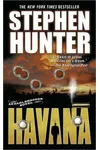
- Havana (2003)
- The Bullet Garden (2023)
- Front Sight (2024) – Collection featuring the Earl Swagger novella "Johnny Tuesday"
Earl Swagger Books in Chronological Order
If you want to follow Earl Swagger's life from his military service during World War II to his later post-war intelligence missions, follow this timeline. This order integrates the retroactively written prequel novel and the historical novella from the 2024 collection.
- The Bullet Garden (2023) – Set in 1944 during the Normandy campaign.
- "Johnny Tuesday" (published in the collection Front Sight, 2024) – Set in 1945 (with some sources noting 1947) immediately following the war.
- Hot Springs (2000) – Set in 1946 during the post-war cleanup of Arkansas.
- Pale Horse Coming (2001) – Set in 1951 in rural Mississippi.
- Havana (2003) – Set in 1953 in Cuba during the rise of Fidel Castro.
Deep Dive into the Novels and Novellas
The Bullet Garden (2023)
Set in 1944, this prequel novel takes us back to the battlefields of France. Earl Swagger is a battle-hardened Marine Gunnery Sergeant who is recruited by the OSS (Office of Strategic Services). His mission is to solve a deadly sniper issue in Normandy where American soldiers are falling to friendly fire. It serves as a fantastic introduction to Earl's raw combat efficiency and sniper tradecraft before he returns to civilian life in Arkansas.
"Johnny Tuesday" (from Front Sight, 2024)
This novella is part of the multi-generational collection Front Sight. Set in 1945, the story follows Earl shortly after his return from the South Pacific. Operating under the alias "Johnny Tuesday," he goes undercover in Chesterfield, Maryland, to investigate a lethal bank robbery. While some secondary reviews list the setting as 1947, the narrative clearly functions as a bridge between his wartime service and his recruitment in Hot Springs.
Hot Springs (2000)
This is the novel that started it all. In 1946, Earl is hired to train a highly specialized, elite group of Arkansas State Troopers. Their objective: clean up the corrupt, mob-ruled gambling empire of Hot Springs, Arkansas. Hunter based this story on real-life political cleanup efforts in post-war Arkansas, giving the book a heavy dose of historical realism, high-stakes political pressure, and intense close-quarters gunfights.
Pale Horse Coming (2001)
Set in 1951, the action moves to a remote, corrupt Mississippi prison camp called Thebes. When Earl's close friend, prosecutor Sam Vincent, goes missing while investigating the facility, Earl goes in to rescue him. What follows is one of the most famous climaxes in modern thriller fiction, featuring a massive shootout where Earl is aided by a legendary group of gunfighters based on real-life historical shooters and writers (often referred to as "The Guild" or "The Association").
Havana (2003)
In 1953, Earl is recruited by the CIA for a highly sensitive international operation: travel to Cuba and assassinate a young, charismatic revolutionary leader named Fidel Castro. Set against the backdrop of Cold War espionage, pre-revolutionary Cuban nightlife, and corrupt intelligence agencies, this book marks the chronological end of Earl's solo adventures before the timeline transitions to his son.
What to Know Before You Start
The Bob Lee Swagger Connection
For readers unfamiliar with Stephen Hunter's work, Earl Swagger is the father of Bob Lee Swagger, the protagonist of Hunter's massive contemporary thriller series that began with Point of Impact (1993) and was adapted into the movie and television series Shooter. While Earl's solo books stand entirely on their own, his legacy, his tragic death in 1955, and the "Swagger gift" for marksmanship are frequently referenced in Bob Lee's books. Reading Earl's stories provides rich emotional context for Bob Lee's character arc.
The Swagger Family Legacy
With the release of Front Sight in 2024, Hunter expanded the family saga into a three-generation epic. The collection contains three novellas: "City of Meat" (focusing on Earl's father Charles Swagger in 1934), "Johnny Tuesday" (focusing on Earl in 1945), and "Five Dolls for the Gut Hook" (focusing on Bob Lee Swagger). If you want to read the entire family history in chronological order, start with Charles's story in Front Sight, progress through Earl's books, and then transition to Bob Lee's series.
Tone and Realism
Stephen Hunter, a Pulitzer Prize-winning film critic, writes with an incredibly cinematic style. The Earl Swagger books are famous for their historical accuracy regarding firearms, tactics, and post-war culture. The violence is frequent and graphic, but it is grounded in Earl's internal struggle with PTSD, his sense of honor, and his devotion to his family. The series serves as both a thrilling action saga and a character study of a man trying to find peace in a violent world.