How to Read the Earth Chronicles
To fully appreciate the sweeping cosmic history Zecharia Sitchin details, you should follow the core series in its original publication order. The narrative is structured as a progressive investigation, with each book building upon the translations, geographical analyses, and hypotheses established in the previous volumes. Starting with the first book is essential for understanding the basic vocabulary of Nibiru, the Anunnaki, and Sitchin's translation methods.
The Core Earth Chronicles Series
The main narrative path consists of seven core books. Here is the recommended reading order:
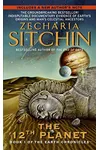
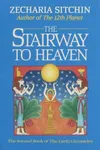
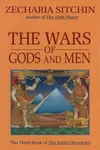
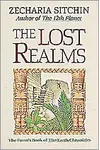
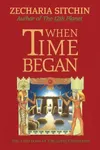
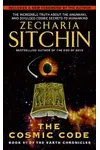
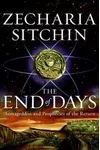
olThe 12th Planet (1976) - The foundational book that introduces Sitchin's theories. It presents the concept of Nibiru, a twelfth planet in our solar system with a 3,600-year orbit, whose inhabitants (the Anunnaki) allegedly arrived on Earth 450,000 years ago and genetically engineered humans to mine gold.The Stairway to Heaven (1980) - This book shifts focus to humanity's quest for immortality, looking at ancient Egyptian myths and proposing that the pyramids of Giza and other ancient monuments were built as Anunnaki spaceports rather than royal tombs.The Wars of Gods and Men (1985) - Sitchin reconstructs conflict within the Anunnaki ranks. He argues that early mythological wars, including the biblical destruction of Sodom and Gomorrah, were actually devastating nuclear conflicts fought between extraterrestrial factions.The Lost Realms (1990) - Sitchin expands his investigation to Mesoamerica and the Andes, linking the ruins of the Aztecs, Mayans, and Incas to Mesopotamian deities and suggesting the Anunnaki established gold and tin mines in the Americas.When Time Began (1993) - A deep dive into ancient calendars, astronomy, and stone monuments like Stonehenge. Sitchin argues that these structures were built under Anunnaki guidance to track celestial alignments and calculate planetary cycles.The Cosmic Code (1998) - This volume connects prophecy, language, and genetics, proposing that the Hebrew alphabet and ancient texts contain encoded cosmic secrets and DNA sequences gifted to humanity.The End of Days (2007) - The final volume of the core series, linking historical events, astrological cycles, and prophecy to discuss the transition of zodiacal ages and the potential return of planet Nibiru./olThe Essential Companion Books
Once you finish the main series, Sitchin's companion books offer deeper explorations into specific aspects of his research. They do not follow a strict narrative timeline and can be read in any order, though reading them after the core series provides the best context.
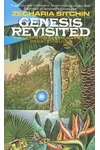
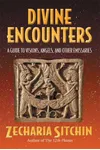
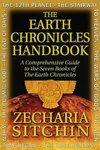
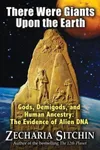
ulGenesis Revisited (1990) - Complements the early core books by comparing modern scientific discoveries in astronomy and genetics with ancient Sumerian creation myths, suggesting ancient texts anticipated modern science.Divine Encounters (1995) - Explores spiritual and religious encounters, reinterpreting visions of angels and interactions with the divine in Judeo-Christian texts as physical encounters with advanced Anunnaki emissaries.The Earth Chronicles Handbook (2009) - A highly practical alphabetical dictionary and reference guide detailing the terminology, names, places, and concepts used across all seven core books.There Were Giants Upon the Earth (2010) - The final book published during Sitchin's lifetime, focusing on legendary demigods like Gilgamesh and urging DNA testing on the remains of Queen Puabi of Ur to prove Anunnaki descent./ulThe Expeditions Travel Memoirs
For readers interested in Sitchin's actual travels and research process, the Expeditions books offer a first-hand travelogue format rather than dense historical speculation.
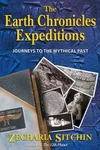
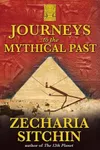
ulThe Earth Chronicles Expeditions (2007) - A photographic record of Sitchin's visits to ancient ruins in the Andes, Sinai, and Egypt, providing visual context to the locations in the main series.Journeys to the Mythical Past (2007) - A personal memoir where Sitchin shares behind-the-scenes details of his explorations, investigating ancient mysteries such as the age of the Sphinx and the treasures of Troy./ulShould You Read Chronologically?
Because Sitchin's saga describes historical events spanning hundreds of thousands of years, some readers wonder if they should reconstruct a chronological timeline. We advise against this. Sitchin's work functions as a research hypothesis. The early books establish the essential translations and arguments; skipping them to read later books first will make the dense discussions of cuneiform tablets and astronomy extremely difficult to follow. Sticking to publication order is the best way to understand the evolution of Sitchin's work.
What to Know Before You Start
It is important to approach the Earth Chronicles with the right expectations. Sitchin's work is widely categorized as alternative history, pseudohistory, and pseudoscience. Mainstream archaeologists, historians, and linguists reject his translations of Sumerian cuneiform, pointing out grammatical errors and selective readings. Astronomers also state that a planet with Nibiru's proposed orbit is physically impossible. Nevertheless, for those fascinated by ancient astronaut theories and cosmic mythology, the series remains an influential and highly imaginative classic.