




Where to Start: The Recommended Reading Path
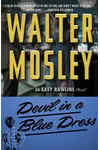
If you are planning to dive into Walter Mosley's iconic hard-boiled detective series, the best place to start is with the book that launched the character: Devil in a Blue Dress (1990). While the series features a prequel, Gone Fishin', which takes place earlier in the internal timeline, starting with the first published book is highly recommended. It perfectly introduces readers to Easy Rawlins as an adult, establishes the moody, jazz-laced noir atmosphere of post-World War II Los Angeles, and details the core motivations of the characters as Mosley originally intended.
For the most rewarding experience, readers should follow the series in publication order. Because Mosley wrote the series over several decades, Easy's voice, the complexity of his relationships, and the historical depth of the setting mature naturally. Reading in publication order also ensures that the shocking character developments and plot twists land with their intended emotional weight.
The Two Reading Orders: Publication vs. Chronological
The main point of divergence in the Easy Rawlins reading order is the prequel novel, Gone Fishin'. Published in 1997 as the sixth book in the series, it is set in 1939—nearly a decade before the events of Devil in a Blue Dress. Here is how both reading paths shape up, including the latest entry in the franchise, Gray Dawn (2025).
Option 1: Recommended Publication Order
This is the sequence in which the books were released to the public. Reading them this way allows you to watch Walter Mosley's writing style evolve alongside Easy's aging process:
- Devil in a Blue Dress (1990) – Set in 1948
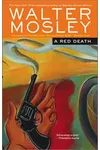
- A Red Death (1991) – Set in 1953
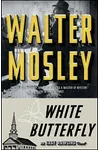
- White Butterfly (1992) – Set in 1956
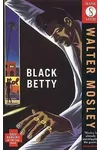
- Black Betty (1994) – Set in 1961
- A Little Yellow Dog (1996) – Set in 1963
- Gone Fishin' (1997) – Set in 1939 (Prequel)
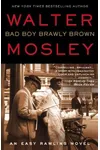
- Bad Boy Brawly Brown (2002) – Set in 1964
- Six Easy Pieces (2003) – Set in 1964 (Short Story Collection)
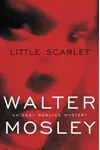
- Little Scarlet (2004) – Set in 1965
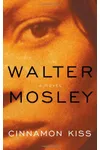
- Cinnamon Kiss (2005) – Set in 1966
- Blonde Faith (2007) – Set in 1967
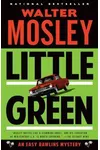
- Little Green (2013) – Set in 1967
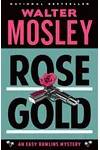
- Rose Gold (2014) – Set in 1968
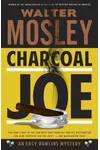
- Charcoal Joe (2016) – Set in 1968
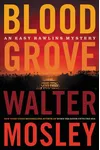
- Blood Grove (2021) – Set in 1969
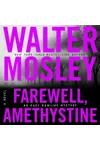
- Farewell, Amethystine (2024) – Set in 1970
- Gray Dawn (2025) – Set in 1971
Option 2: Chronological Reading Order
If you prefer to follow Easy Rawlins's life strictly in the order the events occurred, you will begin with his late-teenage years in East Texas before moving to Los Angeles. Note that Gone Fishin' deals with very dark themes and a younger, less experienced Easy, which feels slightly different from the rest of the hard-boiled detective novels:
- Gone Fishin' (Set in 1939)
- Devil in a Blue Dress (Set in 1948)
- A Red Death (Set in 1953)
- White Butterfly (Set in 1956)
- Black Betty (Set in 1961)
- A Little Yellow Dog (Set in 1963)
- Bad Boy Brawly Brown (Set in 1964)
- Six Easy Pieces (Set in 1964)
- Little Scarlet (Set in 1965)
- Cinnamon Kiss (Set in 1966)
- Blonde Faith (Set in 1967)
- Little Green (Set in 1967)
- Rose Gold (Set in 1968)
- Charcoal Joe (Set in 1968)
- Blood Grove (Set in 1969)
- Farewell, Amethystine (Set in 1970)
- Gray Dawn (Set in 1971)
Understanding Chronological Caveats & Short Stories
While the transition from book to book is mostly linear, readers should pay close attention to a few specific entries in the timeline:
- Gone Fishin' as a Flashback: Although it is chronologically first, Gone Fishin' works much better as a thematic flashback. Reading it after A Little Yellow Dog provides essential context for the traumatic backstory of Easy and his volatile friend, Raymond "Mouse" Alexander, just as the main narrative enters the turbulent mid-1960s.
- Six Easy Pieces: This is not a traditional novel but a collection of six interconnected short stories. It takes place in 1964, immediately following the events of Bad Boy Brawly Brown. It acts as a crucial narrative bridge, resolving several lingering plot points regarding Easy's family life and his association with Mouse. Do not skip it, as the events directly feed into Little Scarlet.
- The Blonde Faith Cliffhanger: When Mosley published Blonde Faith in 2007, it was widely considered the conclusion of the series. The book ends on a dramatic, life-threatening cliffhanger. It took six years before Mosley revived the character in Little Green (2013). If you are reading the series back-to-back, be prepared for a major shift in tone and status quo between these two novels.
What to Know Before You Start: History as a Character
One of the most remarkable aspects of the Easy Rawlins series is how Walter Mosley uses the mystery genre to document the social, cultural, and political evolution of Black Los Angeles. Over the course of the novels, the setting transitions from the post-WWII migration boom to the civil rights movement, the counterculture of the late 1960s, and the dawn of the 1970s. Key real-world events serve as major plot drivers:
- A Red Death explores the paranoia of the McCarthy-era Red Scare and its effects on marginalized communities.
- Little Scarlet is set in the immediate aftermath of the 1965 Watts Riots, where Easy is recruited by the police to solve a murder that could spark further civil unrest.
- Cinnamon Kiss takes place during the Summer of Love in 1966, showing how the hippie movement and changing social morals filtered into Easy's world.
- Gray Dawn brings the series into 1971, dealing with the radical political movements and institutional shifts of the early 1970s.
Spin-Offs and the Broader Mosley Universe
While Easy Rawlins is Walter Mosley's most famous detective, he is not the only one. Mosley has written several other series that capture a similar noir atmosphere but feature different protagonists and eras:
- Fearless Jones Series: Set in 1950s Los Angeles, this trilogy (comprising Fearless Jones, Fear Itself, and Fear of the Dark) follows bookstore owner Paris Minton and his tough-as-nails friend Fearless Jones. While it shares the mid-century Los Angeles backdrop with Easy Rawlins, it is a separate narrative and can be read independently.
- Socrates Fortlow Series: Beginning with Always Outnumbered, Always Outgunned, this series follows an ex-convict navigating modern-day Watts. It shares Mosley's trademark moral complexity but features an entirely different protagonist.
- Leonid McGill Series: For readers looking for a modern-day detective, this series features a contemporary private investigator based in New York City.