
Where to Start Reading the Flashman Papers
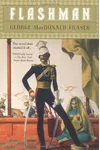
If you are new to the series, there is no need to overcomplicate your entry point. The absolute best place to start is the very first book published, Flashman (1969). This novel introduces Harry Flashman as he is expelled from Rugby School (drawing from Thomas Hughes’s 1857 classic Tom Brown's School Days) and joins the British military. It establishes his cowardly nature, his uncanny knack for survival, and the series’ framing device: the discovery of Flashman's memoirs in a Leicestershire tea chest in 1966.
Starting at the beginning allows you to witness Flashman's initial transformation from a schoolyard bully into an accidental, highly decorated war hero during the disastrous First Anglo-Afghan War. It also introduces the signature style of the series—meticulously researched historical events juxtaposed with satirical, sharp-witted narrative commentary and educational footnotes.
The Recommended Path: Publication Order
Most dedicated fans and literary critics recommend reading the series in the order George MacDonald Fraser wrote and published them. Reading in publication order allows you to experience Fraser's growth as a writer and follow the callbacks and references he inserts into later books, even when those later books take place earlier in Flashman's life.
Here is the publication order for the Flashman Papers:
- Flashman (1969)
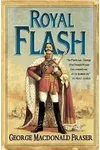
- Royal Flash (1970)
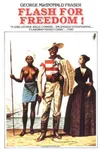
- Flash for Freedom! (1971)
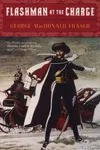
- Flashman at the Charge (1854–1855) (1973)
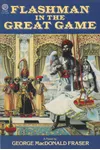
- Flashman in the Great Game (1975)
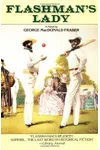
- Flashman's Lady (1977)
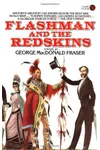
- Flashman and the Redskins (1982)
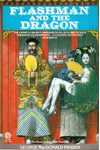
- Flashman and the Dragon (1985)
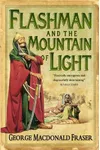
- Flashman and the Mountain of Light (1990)
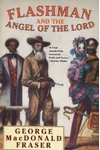
- Flashman and the Angel of the Lord (1994)
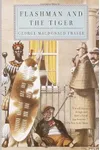
- Flashman and the Tiger (1999)
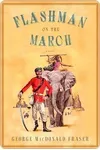
- Flashman on the March (2005)
Reading in this sequence preserves the excitement of discovering the fictional "gaps" in Flashman's life as Fraser chose to reveal them. It also matches the gradual unveiling of the memoirs from the fictional tea chest, maintaining the illusion of a historian slowly editing a massive archive of papers.
The Alternative Path: Chronological Order
For readers who want to follow Harry Flashman's life linearly from his early military career to his old age, the chronological reading order reshuffles the books significantly. This path offers a continuous timeline of British imperial history throughout the Victorian era, spanning from 1839 to 1894.
Here is the chronological order of the books based on the internal timeline of Flashman's adventures:
- Flashman (1839–1842)
- Royal Flash (1842–1843)
- Flashman's Lady (1842–1845)
- Flashman and the Mountain of Light (1845–1846)
- Flash for Freedom! (1848–1849)
- Flashman on the March (1867–1868)
- Flashman and the Redskins (1849–1850 & 1875–1876)
- Flashman at the Charge (1854–1855)
- Flashman in the Great Game (1856–1858)
- Flashman and the Angel of the Lord (1858–1859)
- Flashman and the Dragon (1860)
- Flashman and the Tiger (1878–1894)
Chronological Caveats and Overlaps
While the chronological order is fascinating, it introduces several narrative challenges that readers should be aware of:
- Fragmented Timelines: Flashman and the Redskins is split into two distinct periods. The first half is set in 1849–1850, immediately following the events of Flash for Freedom!, while the second half jumps forward twenty-five years to 1875–1876, covering the Battle of the Little Bighorn.
- Short Story Collections: Flashman and the Tiger is not a single cohesive novel but rather a collection of three distinct stories: "The Road to Charing Cross" (1878 and 1883–1884), "The Subtleties of Baccarat" (1890–1891), and the title story "Flashman and the Tiger" (1879 and 1894). Reading this book strictly in chronology means pausing it to read other works in between, or accepting that you are jumping forward into Flashman's twilight years.
- The Final Novel's Placement: the final book published, Flashman on the March (2005), is set in 1867–1868 during the British Expedition to Abyssinia. Chronologically, this places it right in the middle of the timeline, making it a jarring jump backward in style and tone if read immediately after late-career books like Flashman and the Tiger.
Spin-offs, Crossovers, and Family Ties
George MacDonald Fraser wrote other historical novels that enrich the world of the Flashman Papers. While they are not officially numbered entries in the series, they are highly recommended for completionists:
Mr. American (1980)
This standalone historical novel is a direct crossover work. It follows Mark Franklin, a wealthy American who arrives in Edwardian England in the early 1900s. A ninety-something General Harry Flashman appears as a prominent supporting character. He is depicted as a cynical, sharp-tongued survivor of a bygone era, providing fans with a fascinating glimpse of Flashman in his final years.
Black Ajax (1997)
This novel serves as a prequel of sorts. It focuses on the real-life historical figure Tom Molineaux, a Black bare-knuckle boxer in Regency England. The connection to the Flashman Papers is through Harry's father, Captain Buckley "Mad Buck" Flashman, who plays a major role in the book. Reading this work offers excellent background on the Flashman family dynamics, the source of Buckley's fortune, and the environment that shaped Harry's early life.
What to Know Before You Start
The Flashman Papers are unique because they are told from the first-person perspective of an unrepentant rogue. Harry Flashman is a coward, a liar, a snob, and a womanizer who openly admits his flaws to the reader while maintaining a heroic facade to the rest of the world. Through his cynical eyes, Fraser skewers the self-righteousness of the British Empire and the Victorian class system.
Because Flashman shares the prejudices of his era, the books contain period-accurate language, racial slurs, and imperialist attitudes. However, the tone remains deeply satirical; the narrative consistently mocks the very institutions, commanders, and policies that Flashman exploits to save his own skin. The inclusion of extensive footnotes and historical references written by Fraser (under the guise of an objective editor) ensures that the historical backdrop remains incredibly accurate, helping readers separate historical fact from Flashman's fictional embellishments.