











How to Start Reading Flat Stanley's Worldwide Adventures
Flat Stanley’s Worldwide Adventures takes the beloved, paper-thin hero Stanley Lambchop and sends him on globetrotting adventures. For young readers ready for early chapter books, navigating this collection is simple, but benefits from a little structure. Here is how we recommend approaching the series.
The Crucial Prequel: Start with the 1964 Classic
Before diving into the Worldwide Adventures, it is highly recommended to start with the original 1964 classic, Flat Stanley, written by Jeff Brown. This book establishes the origin story: how a bulletin board fell on Stanley while he was sleeping, flattening him to a mere half-inch thick, and how he learned to travel by mail in an envelope. Without this foundation, the premise of the Worldwide Adventures series might feel a bit sudden to young readers.
Continue in Publication Order
Once readers understand how Stanley became flat, they should begin the 15-book Worldwide Adventures series in order of publication. The first book, The Mount Rushmore Calamity, sets the tone for the spin-off series, introducing recurring character structures and the format of Stanley traveling to a new destination in each book. While the books are largely episodic and can be read out of order, publication order provides the most satisfying progress as Stanley travels from one famous landmark to the next.
The Flat Stanley’s Worldwide Adventures List in Order
Following the passing of original creator Jeff Brown in 2003, HarperCollins revived the character in 2009 with a rotating cast of authors. Here is the complete list of Worldwide Adventures in their recommended publication order:
- Book 1: The Mount Rushmore Calamity (2009) – Written by Sara Pennypacker. Stanley's adventure begins in South Dakota at Mount Rushmore. (Note: Published as The Big Mountain Adventure in some international markets).
- Book 2: The Great Egyptian Grave Robbery (2009) – Written by Sara Pennypacker. Stanley travels to Egypt to assist an archaeologist in a pyramid.
- Book 3: The Japanese Ninja Surprise (2009) – Written by Sara Pennypacker. Stanley travels to Japan, gets folded like origami, and meets a ninja movie star.
- Book 4: The Intrepid Canadian Expedition (2009) – Written by Sara Pennypacker. Stanley goes to British Columbia for a snowy winter vacation.
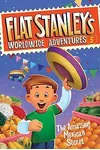
- Book 5: The Amazing Mexican Secret (2010) – Written by Josh Greenhut. Stanley visits Mexico and uncovers a mystery at a bullring.
- Book 6: The African Safari Discovery (2010) – Written by Josh Greenhut. Stanley goes to Tanzania for a safari adventure.
- Book 7: The Flying Chinese Wonders (2011) – Written by Josh Greenhut. Stanley travels to China and meets Olympic athletes.
- Book 8: The Australian Boomerang Bonanza (2011) – Written by Josh Greenhut. Stanley visits the Australian Outback.
- Book 9: The US Capital Commotion (2011) – Written by Josh Greenhut. Stanley goes to Washington, D.C.
- Book 10: Showdown at the Alamo (2013) – Written by Josh Greenhut. Stanley visits Texas and learns about history at the Alamo.
- Book 11: Framed in France (2014) – Written by Josh Greenhut. Stanley travels to Paris and visits the Louvre.
- Book 12: Escape to California (2014) – Written by Josh Greenhut. Stanley visits San Francisco and Hollywood.
- Book 13: The Midnight Ride of Flat Revere (2016) – Written by Kate Egan. Stanley visits Boston and explores American Revolutionary history.
- Book 14: On a Mission for Her Majesty (2017) – Written by Kate Egan. Stanley travels to London, England, and gets caught up in a royal mystery.
- Book 15: Lost in New York (2018) – Written by Kate Egan. Stanley explores the landmarks of New York City.
Chronological vs. Publication Order & Continuity Caveats
Because these books are aimed at early readers aged 6 to 9, they do not feature complex timelines, flashbacks, or heavy continuity. The chronological order matches the publication order exactly. Stanley remains a child throughout his travels, and his family dynamics—including his sibling relationship with his brother Arthur—remain consistent across the books.
However, there is a minor continuity detail to keep in mind regarding how Stanley stays flat. In the original 1964 book, Arthur eventually pumps Stanley back up to normal using a bicycle pump. To explain why Stanley is flat again for these global travels, Jeff Brown wrote a final book in his original run, Stanley, Flat Again! (2003). In this story, a gust of wind and falling boxes flatten Stanley a second time, which directly sets up the premise of the Worldwide Adventures series.
Because the books are structured as standalones, they are highly flexible. If a child is interested in a specific country (like Japan or Egypt) or if a school class is doing a geography unit on Mexico, they can safely pick up that specific book without having read the previous entries.
Spin-offs and Companion Series
The Flat Stanley franchise is split into three main categories. Understanding these helps parents and teachers find the right reading level for their children:
1. The Original Jeff Brown Classics
Before the Worldwide Adventures spin-off, Jeff Brown wrote six core books about Stanley Lambchop. These should be read first if you want the complete background of the character. The titles include:
- Flat Stanley (1964)
- Stanley and the Magic Lamp (1983)
- Stanley in Space (1990)
- Stanley's Christmas Adventure (1993)
- Invisible Stanley (1995)
- Stanley, Flat Again! (2003)
2. The 'I Can Read!' Level 2 Books
For younger, independent readers who aren't quite ready for chapter books, HarperCollins published a series of Level 2 readers. These feature simpler sentence structures and vocabulary, but keep the same fun spirit. Popular titles include Flat Stanley and the Firehouse, Flat Stanley and the Haunted House, Flat Stanley and the Lost Treasure, and Flat Stanley Goes Camping.
What to Know Before You Start: The Flat Stanley Project
In 1995, a schoolteacher named Dale Hubert launched "The Flat Stanley Project." The project encourages school children to create their own paper cutouts of Flat Stanley and mail them to friends, family, or other classrooms around the world. Recipients take photos of the paper Stanley at local landmarks and mail him back along with a travel journal.
This real-world phenomenon became a massive success and directly inspired the creation of the Worldwide Adventures series in 2009. The books are designed to teach children about geography, landmarks, and diverse cultures, making them a perfect companion for students participating in a classroom Flat Stanley project.