

The Recommended Reading Order for the Forerunner Series
When diving into the Forerunner series, the best path forward is to follow the original publication order. Although the series splits into two distinct narrative eras with different protagonists, reading the books in the order they were written allows you to witness the gradual unfolding of the universe’s central mystery: the remnants, technology, and legacy of the ancient, extinct alien race known as the Forerunners. Starting from the beginning establishes the rules of this universe, including the nature of psychic abilities, telepathic animal bonds, and the hostile interstellar factions vying for power.
The Core Five Books in Publication Order
- Storm Over Warlock (1960) – The adventure begins on the planet Warlock, where Terran surveyor Shann Lantee becomes the sole human survivor of a devastating attack by the insectoid Throgs. To survive, he must ally with a fellow officer, genetically enhanced wolverines, and the mysterious, telepathic native Wyverns.
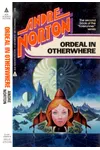
- Ordeal in Otherwhere (1964) – Returning to the planet Warlock, this story follows Charis Nordholm, a young woman who seeks refuge from religious colonists. Because the telepathic Wyverns will only interact with women, Charis becomes a crucial link in galactic trade while uncovering deeper planetary secrets.
- Forerunner Foray (1973) – Shifting away from Warlock to the pleasure planet Korwar, this novel centers on Ziantha, a psychometric thief who can read the history of objects by touch. When she comes into contact with a dangerous Forerunner artifact, she is thrown across space and time.
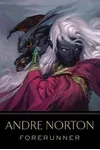
- Forerunner (1981) – Introducing a brand-new story arc, this book follows Simsa, a blue-skinned orphan scavenger living in the ancient ruins of Kuxortal. Alongside her telepathic flying companion, a zorsal named Zass, Simsa embarks on a quest to discover her own mysterious heritage.
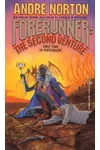
- Forerunner: The Second Venture (1985) – Picking up immediately after the events of the previous novel, this sequel continues Simsa's journey across the stars as she struggles to protect her identity and find the true origin of her ancestors.
Breaking Down the Two Sequences
Although cataloged as a single five-book series, the Forerunner novels are effectively divided into two distinct sequences. Knowing how these stories connect will help you decide how to navigate the books if you choose not to read them all in one go.
The Warlock Sequence (The Lantee Family Arc)
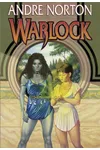
The first three novels—Storm Over Warlock, Ordeal in Otherwhere, and Forerunner Foray—are deeply interconnected through their setting and characters. The first two books take place on the wild planet Warlock and establish the lore of the Wyverns. While Forerunner Foray introduces the psychometric thief Ziantha as the main protagonist, it maintains a direct link to the preceding books by introducing Ris Lantee, who is revealed to be the son of Shann Lantee and Charis Nordholm. For readers who prefer to focus on the Warlock setting, these three books form a complete story arc. They were compiled together by Baen Books in the 2002 omnibus edition titled simply Warlock.
The Simsa Sequence (The Kuxortal Arc)
The final two novels—Forerunner and Forerunner: The Second Venture—shift the narrative entirely to Simsa, an outcast with silver hair and blue-black skin, and her zorsal companion, Zass. This subseries focuses on Simsa's personal quest for self-discovery and her struggle against galactic factions that want to exploit her genetic connection to the ancient Forerunners. This duology is much more tightly focused on the direct mystery of the alien race than the earlier Warlock books. These two novels were later collected in the 2012 omnibus edition titled The Forerunner Factor.
Reading Caveats and Bibliographic Curiosities
Navigating Andre Norton's bibliography can sometimes be confusing due to conflicting information in older databases and fan listings. One of the most common discrepancies involves the publication date of Forerunner. While some digital catalogs incorrectly list the book as being published in 1971, it was actually released in 1981. This release is historically significant in the publishing industry: Forerunner was the very first novel ever published by Tor Books, marking the debut of what would become one of the world's premier science fiction and fantasy publishers.
Additionally, while the local data and some catalogs place Forerunner before Forerunner Foray, the actual publication dates show that Forerunner Foray was published in 1973, eight years before Forerunner came out in 1981. Sticking to the actual publication order (with Forerunner Foray read third, and Forerunner read fourth) ensures that the minor chronological references and character lineages make sense.
The Broader "Forerunner Universe"
It is helpful for readers to understand that the concept of "Forerunner technology" is a recurring theme across almost all of Andre Norton's space-faring science fiction. The mysterious, long-dead alien race left behind relics on countless worlds, which serve as plot devices in other famous series by Norton, including the Janus novels, the Dipple sequence, and the Solar Queen (or Free Traders) books.
However, Norton did not design these connections to form a tightly knit, consistent mega-saga. Instead, she used the Forerunner mythos as a loose background lore to tie her independent adventure stories together. Because of this, you do not need to read her other science fiction series to understand the core five Forerunner books. They stand perfectly well on their own.
What to Know Before You Start
Andre Norton, born Alice Mary Norton, wrote under the gender-neutral pen name "Andre Norton" to successfully navigate the male-dominated science fiction publishing market of the mid-20th century. Her groundbreaking work paved the way for female authors in the genre, earning her the title of "Grande Dame of Science Fiction" and the prestigious Gandalf Grand Master Award in 1977.
Her signature style is heavily reflected in the Forerunner series. Instead of focusing on space battles or cold military technology, Norton's stories emphasize telepathic bonds, emotional empathy, and deep connections with animal companions. Whether it is Shann's loyal wolverines Taggi and Togi, or Simsa's protective zorsal Zass, these creatures are treated as genuine characters with their own agency. If you appreciate classic space adventure mixed with archaeological mystery and a strong respect for nature and identity, the Forerunner series remains a must-read classic of the genre.