
How to Read Isaac Asimov's Foundation Series
Few science fiction universes match the sheer scale and intellectual ambition of Isaac Asimov’s Foundation. Spanning thousands of years of galactic history, the series revolves around "psychohistory"—a mathematical science that can predict the future behavior of massive populations. When mathematician Hari Seldon foresees the inevitable collapse of the Galactic Empire, he establishes the Foundation to preserve knowledge and guide humanity through a looming dark age.
Because Asimov wrote these books over several decades, jumping back and forth across the fictional timeline, readers often find themselves at a crossroads. Below are the three most popular reading paths to help you navigate the galaxy.
Path 1: The Publication Order (Highly Recommended)
For most first-time readers, starting with the order in which the books were published is the most rewarding path. This is how the original audience experienced the universe, and it allows Asimov's complex ideas and universe-building to unfold naturally without spoiling key mysteries.
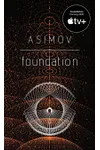
- Foundation (1951) – The starting point, consisting of five interconnected stories that establish Hari Seldon's plan and the early crises of the First Foundation.
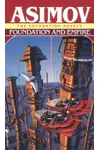
- Foundation and Empire (1952) – The saga continues as the expanding Foundation faces the dying Galactic Empire and a wildcard threat: a mutant psychic known as "The Mule."
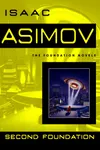
- Second Foundation (1953) – The climax of the original trilogy, focusing on the search for the secretive Second Foundation, established to protect Seldon's plan from behind the scenes.
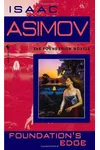
- Foundation's Edge (1982) – Written nearly thirty years later, this sequel expands the universe and introduces new cosmic threats and entities.
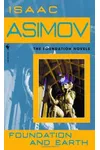
- Foundation and Earth (1986) – The final chronological book in Asimov's timeline, following the search for humanity’s long-lost home planet, Earth.
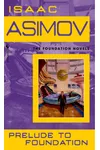
- Prelude to Foundation (1988) – A prequel exploring the youth of Hari Seldon as he begins developing the science of psychohistory on the capital world of Trantor.
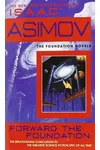
- Forward the Foundation (1993) – The final book written by Asimov (published posthumously), detailing Seldon’s later years as he struggles to bring his grand plan to fruition.
Path 2: The Chronological Order
If you prefer to follow the history of the galaxy in a straight line from start to finish, the chronological path arranges the prequels at the beginning. However, keep in mind that the prequels contain spoilers for the original trilogy and assume you are already familiar with the concepts and terminology introduced in the 1950s books.
- Prelude to Foundation (1988)
- Forward the Foundation (1993)
- Foundation (1951)
- Foundation and Empire (1952)
- Second Foundation (1953)
- Foundation's Edge (1982)
- Foundation and Earth (1986)
Path 3: The Unified Universe "Hybrid" Order
In the 1980s, Asimov decided to retroactively link his separate Robot, Empire, and Foundation stories into one massive, unified future history. If you want the complete, epic experience of Asimov's grand universe, you can read them in this hybrid sequence:
- The Robot Series: Start with the classic robot detective novels: The Caves of Steel (1954), The Naked Sun (1957), The Robots of Dawn (1983), and Robots and Empire (1985). This series introduces crucial elements and characters that play pivotal roles in the late Foundation novels.
- The Empire Series: These looser, stand-alone stories—The Stars, Like Dust (1951), The Currents of Space (1952), and Pebble in the Sky (1950)—document the rise of the Galactic Empire. They are optional but add galactic context.
- The Foundation Trilogy: Foundation, Foundation and Empire, and Second Foundation.
- The Foundation Sequels and Prequels: Finish with Foundation's Edge, Foundation and Earth, and then circle back to the prequels Prelude to Foundation and Forward the Foundation.
The Core Foundation Books: What You Need to Know
The original trilogy (published between 1951 and 1953) is heavily episodic. Because these books were originally published as a series of short stories and novellas in science fiction magazines like Astounding Science-Fiction, they feature fast-paced, dialogue-driven plotting that focuses on grand philosophical ideas rather than deep character studies or physical action. This intellectual style is what earned the trilogy the prestigious Hugo Award for Best All-Time Series in 1966.
In contrast, the books written in the 1980s and 1990s are full-length novels. They feature a more modern narrative style with longer chapters, deeper character development, and a more cinematic feel. This shift in tone can be jarring for readers transitioning directly from Second Foundation to Foundation's Edge, which is another reason why starting with the original trilogy is highly recommended.
The Second Foundation Trilogy (Authorized Spin-offs)
Following Asimov's death in 1992, his estate authorized three prominent science fiction authors—Gregory Benford, Greg Bear, and David Brin (often referred to as the "Killer B's")—to write a trilogy expanding on Hari Seldon's life. These novels are set during the events of Asimov's prequels and are written in a more modern, hard science fiction style:
- Foundation's Fear (1997) by Gregory Benford
- Foundation and Chaos (1998) by Greg Bear
- Foundation's Triumph (1999) by David Brin
While these books are authorized, they are not part of Asimov’s direct canon. Most fans recommend reading them only if you have finished all of Asimov's books and want to dive deeper into the lore of the universe.
What to Know Before You Start
Before diving into the cosmos, here are a few practical tips to keep in mind:
- Do not expect space opera action: The Foundation series is primarily about sociology, mathematics, economics, and politics. Most conflicts are resolved through clever diplomatic maneuvers, trade agreements, and psychological manipulation rather than laser battles or space dogfights.
- Character shifts are frequent: Because the original trilogy spans hundreds of years, characters age, die, and are replaced by new protagonists from one story to the next. The true protagonist of the series is the Foundation itself.
- The Apple TV+ series is a loose adaptation: The television series inspired by the books takes significant creative liberties, introducing new concepts, altering characters, and prioritizing visual action. Reading the books will offer a very different, more intellectual experience.