



The Recommended Reading Order for Francis Tucket
If you are planning to dive into the rugged frontier world of Francis Tucket, the path forward is straightforward: you must read the books in chronological order. Unlike some series where you can skip around or read prequels later, Gary Paulsen structured The Tucket Adventures as a single, continuous narrative. The events of each book immediately follow the preceding one, capturing Francis's year-by-year growth from a naive fourteen-year-old into a seasoned, resilient survivalist on the American frontier.
Here is the recommended chronological reading order for the series:
- Mr. Tucket (1994) – Francis is captured by Pawnee warriors and rescued by the one-armed mountain man, Jason Grimes.
- Call Me Francis Tucket (1995) – Now fifteen, Francis travels alone, refines his survival skills, and takes two orphaned children under his wing.
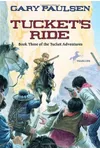
- Tucket’s Ride (1997) – While searching for his family, Francis and the children get lost and enticed into the turmoil of the Mexican-American War.
- Tucket’s Gold (1999) – Surviving the desert, Francis, Lottie, and Billy discover a mule train with Spanish gold while evading dangerous outlaws.
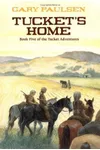
- Tucket’s Home (2000) – The final chapter where Francis seeks to reunite with his family and secure a safe future for the orphans.
Deep Dive: The Tucket Adventures Books
1. Mr. Tucket (1994)
Originally conceived in the late 1960s and later re-released in 1994 under titles like Chance for Escape, this is where the adventure begins. On his fourteenth birthday, Francis Tucket receives a rifle as his family travels along the Oregon Trail in 1848. While practicing, his lack of experience leads to his capture by a Pawnee band. Eventually, he is rescued by Jason Grimes, a rugged, one-armed mountain man. Grimes teaches Francis how to shoot, hunt, track, and think like a true survivor, setting the foundation for the rest of his journey.
2. Call Me Francis Tucket (1995)
Having learned the basics of survival, Francis is determined to find his family wagon train. However, the wilderness is unforgiving. After losing his horse and supplies, Francis must rely entirely on his wits. Along the way, he encounters Lottie and Billy, two young, helpless orphans whose parents died on the trail. Rather than focusing solely on his own survival, Francis decides to protect them, shifting his journey from self-preservation to responsibility and leadership.
3. Tucket’s Ride (1997)
Heading further west and south, Francis, Lottie, and Billy make a wrong turn and find themselves in the midst of the Mexican-American War in 1848. The dangers of nature are replaced by the dangers of armed conflict. They face ruthless desperadoes, military scouts, and freezing mountain passes. Francis is forced to make difficult moral choices, proving that survival is not just about physical strength, but also about character and quick thinking under pressure.
4. Tucket’s Gold (1999)
In the fourth book, Francis and the children escape their pursuers only to end up in a barren desert. Out of food and water, their situation looks dire until they find a hidden canyon and the remains of a Spanish treasure train. Francis discovers gold, but wealth brings a new set of problems. They must evade the greedy outlaws, led by the ruthless Bovey, who will stop at nothing to claim the gold for themselves.
5. Tucket’s Home (2000)
The series reaches its emotional conclusion in Tucket’s Home. Carrying the gold and looking after Lottie and Billy, Francis makes his final push to find his parents' homestead in Oregon. This book ties up all the major plotlines, showing how much Francis has changed from the naive boy in the first chapter to a capable young man ready to face whatever the frontier throws at him.
Publication History and Order Caveats
While the chronological reading order is clear, the publishing history of the series has created some minor confusion among collectors. The first book, Mr. Tucket, has bibliographic entries dating back to 1968, making it one of Gary Paulsen's earliest published efforts. However, the remaining four books were written and published in rapid succession between 1995 and 2000, creating the cohesive five-book series we know today.
Additionally, some library catalogs and online databases list the publication dates or numbering of the last two books differently. For example, some records place Tucket's Home as published in 1998 and Tucket's Gold in 1999, which would reverse their order. Readers should ignore this database quirk: narratively, Tucket's Gold must be read fourth, as it establishes the discovery of the gold and the escape from outlaws that directly leads into the conclusion of Tucket's Home.
For convenience, the entire series was compiled into a single omnibus volume titled Tucket’s Travels: Out of the Dust (or simply Tucket's Travels), published in 2003. If you can find a copy of this omnibus, it contains all five novels in their correct reading order, making it the perfect way to experience the entire saga.
What to Know Before You Start
Before stepping onto the trail with Francis, it is helpful to understand the unique tone Gary Paulsen brings to this series. Best known for his wilderness survival classic Hatchet, Paulsen infuses the Francis Tucket books with the same raw, unsentimental realism. The frontier is depicted as beautiful but deadly. Characters face hunger, injuries, and violence, and Paulsen does not shy away from the moral complexities of the era, including the harsh realities of conflicts between Native Americans, settlers, and soldiers.
Despite these gritty themes, the books are highly accessible, written in a fast-paced, direct style aimed at middle-grade and young adult readers. The short length of each individual book (typically under 150 pages) makes the series an excellent choice for reluctant readers who enjoy historical adventure and action-packed storytelling.