


Recommended Reading Order: How to Tackle Freddy the Pig
If you are planning to visit the Bean Farm in Centerboro, New York, the general consensus among librarians, collectors, and the fan community is that publication order is the best path. While each novel is structured as a self-contained caper or adventure that can technically be read standalone, Walter R. Brooks’ universe shifts significantly as the series progresses. Reading the books in the order they were published allows you to experience the gradual evolution of Centerboro’s talking animal society.
The Evolution of the Bean Farm
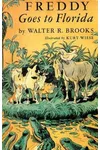
In the earliest volumes, Freddy is not yet the star detective or politician he later becomes. In the debut book, Freddy Goes to Florida (originally To and Again), Freddy is part of an ensemble cast of farm animals. As the series moves forward, Freddy's role expands, and the world grows increasingly complex. The animals establish their own newspaper, run a bank, organize political campaigns, and even manage space travel. Reading chronologically by publication date ensures you see the characters grow, the humor sharpen, and the world-building fall naturally into place.
Original vs. Retitled Editions: A Note for Collectors
If you are searching for physical copies of the books, particularly older library editions or vintage hardcovers, you may encounter different titles for the same books. Walter R. Brooks and his publisher originally used descriptive titles before retroactively branding them around Freddy to capitalize on his popularity. Here are the key title changes to watch for:
- Book 1: Originally published as To and Again (1927), later renamed Freddy Goes to Florida. It was also temporarily re-issued under the title Freddy's First Adventure in 1949.
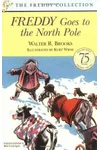
- Book 2: Originally published as More To and Again (1930), later retitled Freddy Goes to the North Pole.
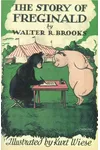
- Book 4: Originally published as The Story of Freginald (1936), later retitled Freddy and Freginald.
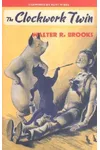
- Book 5: Originally published as The Clockwork Twin (1937), later retitled Freddy and the Clockwork Twin.
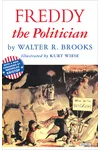
- Book 6: Originally published as Wiggins for President (1939), later retitled Freddy the Politician.
The Complete List of Freddy the Pig Books in Publication Order
Below is the complete list of Freddy's adventures in order of publication, including the core novels, the poetry collection, and the posthumous companion books:
- Freddy Goes to Florida (1927) – Originally published as To and Again. The animals of Bean Farm decide to migrate south for the winter.
- Freddy Goes to the North Pole (1930) – Originally published as More To and Again. The farm animals organize a tour company and head to the Arctic.
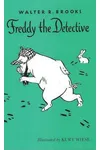
- Freddy the Detective (1932) – Freddy reads Sherlock Holmes and sets up his own detective agency on the farm.
- The Story of Freginald (1936) – Retitled Freddy and Freginald. Introduces Freginald, a talented bear who joins a traveling circus.
- The Clockwork Twin (1937) – Retitled Freddy and the Clockwork Twin. Features an adventurous boy and his mechanical look-alike.
- Freddy the Politician (1939) – Originally published as Wiggins for President. The farm animals set up a democratic election, leading to political satire.
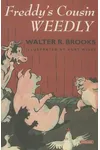
- Freddy's Cousin Weedly (1940) – Introduces Weedly, a shy young pig who needs to learn independence.
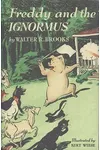
- Freddy and the Ignormus (1941) – Freddy investigates a mysterious beast that is terrifying the local animals.
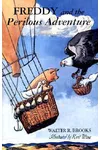
- Freddy and the Perilous Adventure (1942) – Freddy and two ducks end up floating away in a runaway hot air balloon.
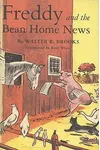
- Freddy and the Bean Home News (1943) – Freddy starts Centerboro's first newspaper run entirely by animals.
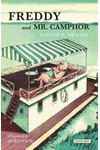
- Freddy and Mr. Camphor (1944) – Freddy takes a job house-sitting a luxury houseboat for a wealthy man.
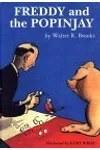
- Freddy and the Popinjay (1945) – Freddy helps a nearsighted robin who is too proud to admit he cannot see well.
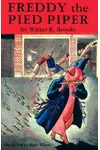
- Freddy the Pied Piper (1946) – Freddy uses his musical talents to save a circus that has fallen on hard times.
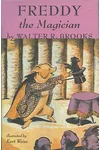
- Freddy the Magician (1947) – Freddy learns magic tricks to expose a fraudulent magician trying to cheat Centerboro.
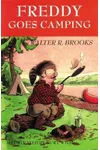
- Freddy Goes Camping (1948) – The animals go camping but end up tracking a local mystery involving a haunted hotel.
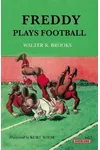
- Freddy Plays Football (1949) – Freddy takes up sports to help the local Centerboro football team win a big match.
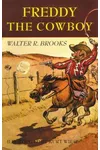
- Freddy the Cowboy (1950) – Freddy gets a horse and takes on a band of outlaws in a classic western setup.
- Freddy Rides Again (1951) – Freddy continues his cowboy adventures to defend the farm's honor.
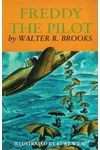
- Freddy the Pilot (1952) – Freddy takes to the skies in an airplane to foil an aerial spy operation.
- Freddy and the Space Ship (1953) – A sci-fi twist where Freddy and his friends construct a rocket to go to Mars.
- The Collected Poems of Freddy the Pig (1953) – Freddy’s official poetry collection, compiling his whimsical verses from the novels along with new poems.
- Freddy and the Men from Mars (1954) – Centerboro is visited by real Martians—or is it a hoax? Freddy is on the case.
- Freddy and the Baseball Team from Mars (1955) – The Martians return and challenge the locals to a game of baseball.
- Freddy and Simon the Dictator (1956) – Simon the rat attempts to lead an animal rebellion and set up a dictatorship on the Bean Farm.
- Freddy and the Flying Saucer Plans (1957) – Freddy tries to protect secret government plans from falling into foreign hands.
- Freddy and the Dragon (1958) – The final novel written by Brooks, featuring a giant mechanical dragon used to fight a crime wave.
- The Wit and Wisdom of Freddy and His Friends (1999) – A posthumous collection compiling the best quotes, jokes, and verses from the series.
- Art of Freddy (2002) – A special commemorative art book showcasing Kurt Wiese’s beloved illustrations.
What to Know Before You Start
The series is set in upstate New York, mirroring the rural surroundings of author Walter R. Brooks' childhood in Rome, NY. While the premise of talking animals is standard for children's books, Brooks' writing stands out for its high-caliber vocabulary, sharp satirical humor, and complex plots. Often compared to the comedic works of P.G. Wodehouse, these books appeal to adult readers just as much as they do to children.
All 26 original books were illustrated by Kurt Wiese, whose black-and-white drawings are central to the charm of the books. When the publisher Knopf let the books go out of print, a dedicated fan organization called the Friends of Freddy lobbied to bring them back. Thanks to their efforts, the books were reprinted by The Overlook Press, ensuring a new generation of readers can access Freddy's adventures.