
Where to Start the Gabriel Allon Series
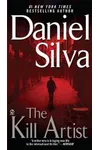
If you are looking to step into the dangerous, double-sided life of Gabriel Allon, there is one piece of advice that veteran readers and the author himself agree on: start at the very beginning with The Kill Artist. Unlike some thriller series where characters remain static and books can be read in any order, the Gabriel Allon saga is a deeply serialized, character-driven journey. Gabriel is not just an unchanging agent of espionage; he ages, suffers profound personal losses, forms complex relationships, rises through the ranks of Israeli intelligence (often referred to simply as "the Office"), and eventually transitions into retirement.
While Daniel Silva constructs each book with enough self-contained plot and backstory to make them readable as standalones, jumping in mid-series means missing the heavy emotional weight of Gabriel's history. His relationships—particularly with his mentor and father figure Ari Shamron, his partner and wife Chiara, and his loyal team of operatives—evolve dramatically. Crucial plot threads, such as his ongoing battle with Russian oligarchs or his quest to avenge personal tragedies, span multiple volumes. Reading in any order other than publication sequence will inevitably spoil major character milestones, deaths, and career changes.
Gabriel Allon Books in Publication Order
Because the chronological events of the series match the order in which the books were released, the publication order serves as the ideal reading path. Below is the complete checklist of all Gabriel Allon novels, including his most recent investigations:
- The Kill Artist (2001) – The novel that introduces Gabriel Allon as a retired agent living in quiet isolation in England, restoring a painting, before being drawn back to track down the terrorist who killed his son and injured his wife.
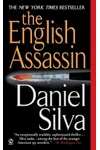
- The English Assassin (2002) – Gabriel travels to Zurich to restore a painting for a millionaire banker, only to find him murdered, plunging him into a web of stolen Holocaust art and Swiss financial secrets.
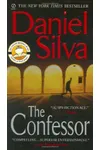
- The Confessor (2002) – The murder of a scholar in Munich leads Gabriel into a conspiracy reaching all the way to the Vatican, dealing with the Catholic Church's actions during the Holocaust.
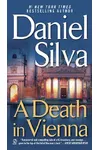
- A Death in Vienna (2003) – A bombing at an office in Vienna that injures a close friend brings Gabriel face-to-face with the lingering ghosts of Nazi war criminals and his own mother's tragic past.
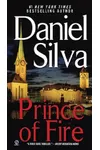
- Prince of Fire (2005) – When a bomb destroys the Israeli embassy in Rome, Gabriel is tasked with hunting down the terrorist mastermind behind it, leading to a journey through his own agency's history.
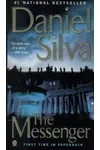
- The Messenger (2006) – Gabriel saves the life of the Pope, leading to a high-stakes hunt for a mastermind funding global terrorism. This novel won the Barry Award for Best Thriller in 2007.
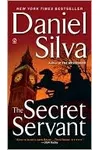
- The Secret Servant (2007) – While in Amsterdam, Gabriel uncovers a plot to kidnap the daughter of the American ambassador to London, sending him on a race against time.
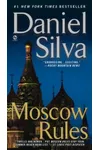
- Moscow Rules (2008) – The start of a major Russian narrative arc. Gabriel goes head-to-head with a ruthless Russian oligarch and arms dealer.
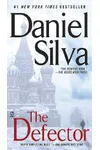
- The Defector (2009) – A direct sequel to Moscow Rules, following the kidnapping of a defector in London and Gabriel's desperate rescue operation in Russia.
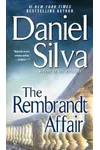
- The Rembrandt Affair (2010) – Gabriel seeks isolation in Cornwall but is drawn back into action when a stolen Rembrandt painting leads to an international conspiracy.
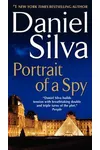
- Portrait of a Spy (2011) – Gabriel is pulled back into active duty to combat a new network of global terrorists planning attacks in major European cities.
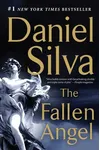
- The Fallen Angel (2012) – While restoring a Caravaggio in the Vatican, Gabriel investigates a woman's fatal fall from the basilica's dome, uncovering a threat to the Holy City.
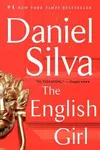
- The English Girl (2013) – A young British political star is kidnapped in Corsica, and Gabriel is quietly hired to locate her before a political scandal erupts.
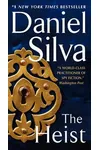
- The Heist (2014) – Gabriel teams up with an art thief to recover a stolen Caravaggio masterpiece, which leads them to a massive hidden fortune.
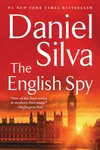
- The English Spy (2015) – Gabriel hunts down a brilliant bombmaker responsible for the death of a member of the British royal family.
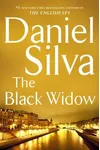
- The Black Widow (2016) – Facing a major threat from ISIS, Gabriel recruits a French-born doctor to infiltrate the terrorist organization.
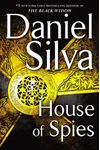
- House of Spies (2017) – A direct continuation of The Black Widow, where Gabriel tracks the mastermind behind a devastating terrorist attack in London.
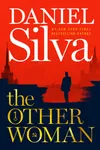
- The Other Woman (2018) – Gabriel uncovers a mole high inside the ranks of British intelligence, threatening the global security network.
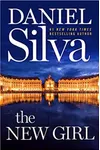
- The New Girl (2019) – The daughter of the Saudi crown prince is kidnapped, forcing Gabriel into an unlikely and dangerous alliance.
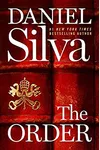
- The Order (2020) – Following the sudden death of his friend Pope Paul VII, Gabriel investigates a conspiracy to influence the next papal conclave and a hidden Gospel.
- The Cellist (2021) – Gabriel targets a Russian state-sanctioned money-laundering scheme using a brilliant musician as an asset.
- Portrait of an Unknown Woman (2022) – Now retired from the intelligence service, Gabriel lives in Venice and investigates a multi-million-dollar art forgery ring.
- The Collector (2023) – A stolen Vermeer masterpiece leads Gabriel into a conspiracy to prevent a devastating nuclear conflict in Europe.
- A Death in Cornwall (2024) – An art dealer is murdered in Cornwall, prompting Gabriel to investigate a stolen Picasso and high-society greed.
- An Inside Job (2025) – Gabriel is hired to restore a painting in Venice, only to find himself unraveling the mystery of a stolen Leonardo da Vinci painting hidden in the Vatican.
- Ransom (2026) – The latest entry in the saga, where Gabriel is drawn out of his retirement in Venice to investigate the kidnapping of a British socialite and the secrets of her billionaire husband.
Understanding Gabriel Allon's Story Arcs
While the series flows as one continuous timeline, certain blocks of books form tighter thematic sub-arcs. Recognizing these can help readers understand the pacing of the narrative:
- The Early Espionage Era (Books 1-5): These novels establish Gabriel's dual identity as a master art restorer and a reluctant Mossad operative. They focus heavily on his personal trauma—specifically the car bombing that killed his son and incapacitated his first wife, Leylah—and his complex relationship with his recruiter, Ari Shamron.
- The Vatican Trilogy (Books 3, 6, and 12): Although spread out, these books focus heavily on Rome, the Vatican, and Gabriel's growing relationship with the Pope and senior Catholic officials. They address historical controversies, secret archives, and theological mysteries.
- The Russian Oligarch Duology (Books 8 and 9): Moscow Rules and The Defector represent a continuous, fast-paced confrontation with Russian oligarch Ivan Kharkov, shifting the series into a darker, modern Cold War atmosphere.
- The Director Era (Books 16-21): Gabriel eventually becomes the Chief of Israel's secret intelligence service. In this era, the focus shifts slightly from solo field missions to high-level organizational maneuvering, fighting ISIS, and countering global disinformation campaigns.
- The Venice Retirement Arc (Books 22-26): After stepping down as director, Gabriel moves back to Venice with Chiara and his children. His adventures in this phase return closer to his roots: art forgery, stolen masterpieces, and localized murders that inevitably spiral into international intrigue.
What to Know Before You Start
Daniel Silva’s background as a journalist covering the Middle East deeply shapes the series. The novels are famous for their geopolitical realism; Silva often anticipates real-world political developments by months or years. The setting is a character in its own right, moving between the restoration studios of Venice, the safe houses of London, the dry heat of Israel, and the cold streets of Moscow.
Readers should be prepared for mature themes, including the psychological trauma of survivors, the moral gray areas of intelligence work, and the harsh realities of international conflict. Gabriel is not a cartoonish superhero; he is a quiet, intellectual, and deeply scarred man who restores art as a way to heal himself from the destruction he is forced to cause in his other life.
Other Daniel Silva Books and Crossovers
Readers often ask if Daniel Silva's other novels connect to the Gabriel Allon universe. Prior to launching this series, Silva wrote two thrillers featuring CIA officer Michael Osbourne: The Mark of the Assassin (1998) and The Marching Season (1999). He also wrote a standalone World War II espionage novel, The Unlikely Spy (1996).
There are no direct crossovers between Michael Osbourne and Gabriel Allon; they exist in separate universes. Silva decided to move on from the Osbourne character because he wanted a protagonist who was more unique than a standard CIA operative. Making Gabriel an Israeli art restorer provided the unique cultural and historical backdrop that has sustained the series for over two decades. You do not need to read Silva's non-Allon books to fully enjoy or understand Gabriel's journey.