







How to Read the Galactic Marines Series
Written by William H. Keith Jr. under the pseudonym Ian Douglas, the Galactic Marines saga (frequently referred to as the Marines in Space series) is one of military science fiction's most expansive epics. The series spans nine novels organized into three sequential trilogies: the Heritage Trilogy, the Legacy Trilogy, and the Inheritance Trilogy.
Because the chronological timeline of the universe aligns perfectly with the order in which the books were published, figuring out where to start is simple. You should read the series in publication order, starting with the Heritage Trilogy. Reading the trilogies out of order is highly discouraged, as the later trilogies build directly on the physical science, alien lore, and geopolitical developments established in the earlier volumes.
The Core Reading Order
Here is the recommended reading path for the entire Galactic Marines timeline:
Phase 1: The Heritage Trilogy
Set in the mid-21st century (spanning the years 2040 to 2067), the Heritage Trilogy introduces a near-future setting where geopolitical rivalries on Earth spill over into the colonization of our solar system. This is the essential starting point that establishes the core mythology of the series—specifically humanity's realization that we are not alone in the universe and that our genetic origins are linked to ancient spacefarers.
- Semper Mars (1998): In the year 2040, a joint United States Marine Corps and civilian expedition uncovers an ancient, artificial chamber buried beneath the Martian sands. The discovery of alien technology triggers an immediate power struggle back on Earth, leading to an armed conflict on Mars.
- Luna Marine (1999): The conflict escalates to Earth's orbit. Marines are deployed to the Moon to secure lunar outposts and safeguard newly uncovered alien artifacts, setting the stage for a broader understanding of the solar system's ancient history.
- Europa Strike (2000): In the icy oceans of Jupiter's moon Europa, deep-sea research teams discover a massive, operational alien spacecraft frozen under the ice. As international tensions explode into war, the Marines must descend into the dark aquatic abyss to protect the artifact, which is ultimately revealed to be a relic from a ancient conflict.
Phase 2: The Legacy Trilogy
Moving forward into the 22nd through 24th centuries, the Legacy Trilogy follows humanity as it takes its first steps beyond the solar system. Using reverse-engineered alien technology, humans have colonized nearby star systems, but this expansion brings them into contact with new alien species and the ominous shadow of a galaxy-spanning threat.
- Star Corps (2003): Set in 2182, the Marines are now the United States Star Marines, serving as the vanguard of humanity's interstellar reach. Sent to a planet in the Sirius system to protect a local alien species from predatory invaders, they discover mysterious ancient ruins that hint at a hostile galactic force.
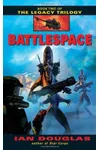
- Battlespace (2006): The conflict intensifies as the Star Marines engage in brutal, relativistic space combat. As human colony worlds are targeted, the military struggles to adapt to the realities of interstellar warfare, and the true threat facing the galaxy begins to crystallize.
- Star Marines (2007): In the mid-24th century, the Marines must make a desperate stand against the "Hunters of the Dawn"—the enigmatic entity that has been orchestrating the destruction of spacefaring civilizations for eons.
Phase 3: The Inheritance Trilogy
Set approximately 500 years after the events of the Legacy Trilogy, the Inheritance Trilogy depicts a highly advanced human civilization. The Marines have evolved into an elite, culturally distinct force who now take the offensive against the ultimate enemy of all biological intelligence.
- Star Strike (2008): When a sentient alien probe destroys a human exploration ship, it becomes clear that the ancient enemy—the Xul—is launching a campaign to eradicate humanity before we can challenge their supremacy.
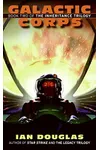
- Galactic Corps (2008): Humanity musters its planetary fleets and sends the Galactic Corps deep into the stars. The Marines confront the reality of cybernetic warfare and the vast, stellar-scale engineering utilized by the Xul.
- Semper Human (2009): The saga reaches its climax as the Marines launch a strike at the Galactic Center, the heart of the Xul empire. Here, the final questions regarding human evolution, post-humanism, and the destiny of the cosmos are resolved.
What to Know Before You Start: Continuity and Themes
While the Galactic Marines series covers a timeline of nearly a thousand years, continuity is maintained through two primary elements: the evolution of the Marine Corps itself, and the generational lineages of specific families. Rather than tracking a single protagonist, readers follow descendants of families like the Garroways, Ramseys, Lees, Alexanders, and Warhursts. These dynasties preserve the traditions and historical memories of the Corps across centuries.
As the centuries progress, the Marines evolve from an Earth-bound branch of the U.S. military into a star-spanning culture with its own calendar—Annum Manus (meaning "Year of the Marine"), which begins its count in 1775 to honor the founding of the USMC.
Ian Douglas is highly regarded for his commitment to hard science fiction details. The books feature realistic depictions of physics, including the consequences of relativistic time dilation (where crews on starships age much slower than the populations back on Earth), kinetic energy weapons, nanotechnology, and the biomechanics of power-armored infantry. Keep in mind that the books contain highly detailed descriptions of military command structures, technical jargon, and planetary physics, which are central to the series' tone.
Related Series and Universe Caveats
A common point of confusion among readers is how the Galactic Marines series relates to Ian Douglas's other popular space opera works, such as the Star Carrier series (which begins with Earth Strike) and the Andromedan Dark series (which begins with Altered Starscape).
Although they share identical military themes, hard-science concepts, and the same author, they do not take place in the same universe. The Star Carrier series is a completely separate timeline with its own unique alien threat (the Sh'Daar) and physical laws. Readers looking to explore the Galactic Marines universe should limit themselves to the Heritage, Legacy, and Inheritance trilogies, which form a closed, self-contained nine-book narrative arc.