

Where to Start with George Smiley
Created by John le Carré (the pen name of former British intelligence officer David Cornwell), George Smiley is the ultimate anti-James Bond. He is short, mild-mannered, quiet, and frequently cuckolded, yet he possesses an unmatched intellect and a razor-sharp memory. Navigating the murky, bureaucratic, and morally ambiguous waters of Cold War espionage, Smiley’s saga is widely considered the gold standard of realistic spy fiction.
With novels spanning from 1961 to 2017, deciding where to begin your journey can be challenging. There are two primary paths you can take depending on your reading style:
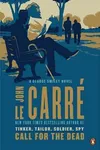
- The Publication Order (Chronological Path): Start at the very beginning with 1961's Call for the Dead. This lets you watch the character, the British Secret Service (famously dubbed "the Circus"), and le Carré’s prose style develop organically. Keep in mind, however, that the first two books are more traditional murder mysteries than classic Cold War thrillers.
- The Espionage Essentials: Jump straight into the masterpiece, Tinker, Tailor, Soldier, Spy (1974), which begins the famous "Karla Trilogy." This is George Smiley at his absolute peak and introduces the most iconic elements of the series. If you choose this route, you can treat the earlier works as prequels to circle back to later.
The Complete George Smiley Book List
Here is the breakdown of the books featuring George Smiley in publication order, highlighting his role in each novel to help you navigate the series:
1. Call for the Dead (1961)
This is Smiley’s debut. The story begins when a civil servant apparently commits suicide shortly after a routine security clearance interview. Smiley, suspecting foul play, investigates and uncovers a dangerous East German spy ring. This slim, tight novel sets up Smiley’s troubled marriage to Lady Ann and introduces his unassuming but brilliant analytical mind.
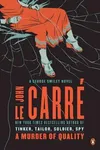
2. A Murder of Quality (1962)
The anomaly of the series. Smiley temporarily leaves the intelligence sector to investigate the murder of a schoolmaster's wife at Carne, a prestigious public school. This is a classic English schoolhouse murder mystery in the style of Agatha Christie rather than a spy thriller, but it provides fantastic character development and highlights Smiley’s deep understanding of human nature.
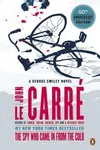
3. The Spy Who Came in from the Cold (1963)
Widely hailed as one of the greatest spy novels ever written, this book focuses on Alec Leamas, a burnt-out field agent sent on a dangerous deception mission into East Germany. Smiley is not the main protagonist here; instead, he exists in the shadows, orchestrating parts of the operation behind the scenes alongside Control. It is a masterpiece of moral gray areas and betrayal that defined the Cold War tone of the series.
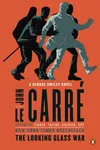
4. The Looking Glass War (1965)
A cynical, tragic look at a military intelligence department separate from the Circus. Attempting to reclaim their World War II glory, the department launches a poorly planned espionage mission into East Germany. Smiley plays a minor supporting role, acting as a liaison and advisor who appears near the end. It serves as a stark commentary on the absurdity and danger of bureaucratic nostalgia.
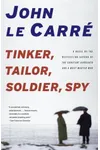
5. Tinker, Tailor, Soldier, Spy (1974)
The absolute crown jewel of the series and the beginning of the "Karla Trilogy." Forced into early retirement, Smiley is secretly brought back to uncover a Soviet mole who has burrowed into the highest ranks of the Circus. Smiley must rely on files, interviews, and his own memories to outwit his Soviet counterpart, Karla. It is a dense, cerebral masterpiece of suspense.
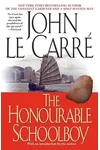
6. The Honourable Schoolboy (1977)
The second installment of the Karla Trilogy. Smiley is now the head of the Circus, tasked with rebuilding the devastated agency. He focuses on a money-laundering operation in Hong Kong to put pressure on Karla. Smiley remains behind the desk, while field agent Jerry Westerby takes center stage in Southeast Asia during the final days of the Vietnam War.
7. Smiley's People (1979)
The final chapter of the Karla Trilogy. An old contact is murdered on English soil, drawing Smiley out of retirement once more. The investigation leads Smiley into a final, deeply personal psychological chess match against Karla. It is a satisfying and melancholic conclusion to the primary Cold War arc.
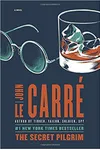
8. The Secret Pilgrim (1990)
An episodic novel where Ned, a veteran agent teaching at the training school, invites Smiley to speak to a class of recruits. Smiley’s presence and anecdotes trigger a series of flashbacks, recounting various spy missions from the past. Smiley acts as a framing device, providing philosophical reflections on the history of the Cold War and the human cost of espionage.
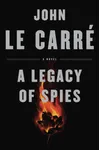
9. A Legacy of Spies (2017)
Le Carré's final novel featuring these characters. Peter Guillam, Smiley's loyal lieutenant, is summoned back to the Circus to face interrogation about past operations, particularly those from The Spy Who Came in from the Cold. Smiley makes a memorable, emotional cameo appearance near the end, wrapping up the themes of the entire saga.
The Authorized Expansion: Karla's Choice
In 2024, Nick Harkaway—the son of John le Carré and an established novelist in his own right—published Karla's Choice. Authorized by the le Carré estate, this novel is set in 1963, placing it chronologically between the events of The Spy Who Came in from the Cold and Tinker, Tailor, Soldier, Spy. Smiley, attempting to live a quiet life after leaving the Circus, is pulled back by Control to investigate a Soviet defector. For readers looking for a complete chronological experience, this book fits perfectly into the decade-long gap in Smiley's career, exploring his early encounters with Karla's agents.
What to Know Before You Start
Reading John le Carré is a marathon, not a sprint. His prose is dense, filled with jargon (like "the Circus" for the secret service, "lamplighters" for surveillance, "scalphunters" for dirty operations, and "babysitters" for bodyguards) that he largely invented but presented so realistically that many believed it was actual intelligence slang. There are no high-speed car chases or miraculous gadgets; instead, the conflict is fought in smoke-filled rooms, through filing cabinets, and within the troubled consciences of lonely men. If you are starting the series, keep a list of characters handy, particularly for Tinker, Tailor, Soldier, Spy, where the web of suspects is complex and highly detailed.