
The Recommended Reading Path
To experience the full weight of this alternate history saga, you should read the core Gettysburg trilogy in its strict chronological and publication order. Because the narrative forms a continuous story where the actions of one battle directly shape the subsequent campaigns, jumping ahead will cause you to miss key character developments and tactical shifts.
Gettysburg Civil War Publication & Chronological Order
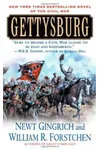
- Gettysburg: A Novel of the Civil War (2003) – The series opener begins during the fateful days of July 1863. General Robert E. Lee rejects the disastrous charge on the Union center and instead implements a flanking maneuver suggested by James Longstreet. This tactical shift leads to a dramatic Confederate victory at Union Mills, Maryland, setting the stage for a completely rewritten war.
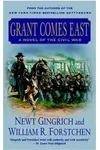
- Grant Comes East (2004) – Following the Union defeat at Gettysburg, President Abraham Lincoln brings Ulysses S. Grant from the Western theater to take command of the Army of the Potomac. Grant must defend a vulnerable Washington, D.C., while Lee seeks a decisive victory to force a peace treaty.
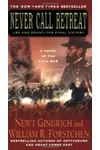
- Never Call Retreat: Lee and Grant: The Final Victory (2005) – The trilogy reaches its climax as Grant and Lee engage in a war of maneuver and attrition across Maryland and Virginia. This volume concludes the alternate history arc with a final resolution to the modified Civil War.
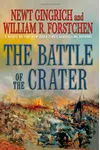
- The Battle of the Crater (2011) (Also published as To Make Men Free) – A standalone novel focusing on the July 1864 Siege of Petersburg. Note that this book is not set in the alternate timeline of the Gettysburg trilogy.
Alternate History vs. Historical Fact
A common point of confusion for new readers is the relationship between the first three books and the fourth. The Gettysburg trilogy (composed of Gettysburg, Grant Comes East, and Never Call Retreat) is a purely speculative alternate history work. It operates on a counter-factual premise: if Lee had successfully flanked the Union forces at Gettysburg, how would the war have proceeded?
By contrast, The Battle of the Crater (later re-released as To Make Men Free) is a work of traditional historical fiction. It takes place in the real-world timeline of the Civil War. It tells the story of the 48th Pennsylvania Infantry (consisting of coal miners) who dug a mine shaft under the Confederate lines at Petersburg, detonating a massive explosion that created a giant crater, leading to a disastrous Union assault. The narrative is heavily detailed and historically accurate, written to highlight the bravery of the United States Colored Troops (USCT), specifically the 28th USCT.
Practical Reader Advice and Starting Points
If you want the alternate history experience, start with Gettysburg and read through to Never Call Retreat. The trilogy cannot be read out of order, as the events flow directly from one volume to the next. The books are heavily focused on military tactics, logistical realism, maps, and command-level decision-making, which will appeal greatly to fans of Jeff Shaara's Civil War novels or Michael Shaara's classic The Killer Angels.
If you are looking for a historically accurate account of trench warfare and the political complexities of the Siege of Petersburg, you can read The Battle of the Crater / To Make Men Free entirely as a standalone. You do not need to have read the alternate history trilogy to understand it, and reading it will not spoil the trilogy (nor will the trilogy spoil it, since they occupy different timelines).
What to Know Before You Start
The series benefits from a unique collaborative dynamic. Newt Gingrich, a former Speaker of the House who holds a Ph.D. in European History, worked alongside William R. Forstchen, a military historian with a Ph.D. in history whose dissertation specifically focused on the 28th United States Colored Troops. For The Battle of the Crater, they also collaborated with Albert S. Hanser, the founder of the Civil War Education Association. The result is a series that, whether speculative or factual, is deeply researched, technically accurate regarding 19th-century military logistics, and highly respectful of the historical figures depicted.