


The Recommended Reading Order for The Giver Quartet
If you are planning to read The Giver Quartet, the absolute best way to experience it is in publication order. Although the first two books seem completely unrelated at first, the third and fourth books tie the characters, settings, and storylines together into a single, cohesive narrative. Reading them out of order will spoil key reveals and dilute the impact of the ending.
1. The Giver (1993)
This is where it all begins. We are introduced to Jonas, a 12-year-old boy living in a highly controlled, seemingly utopian community where "Sameness" has eliminated pain, war, and color. When Jonas is selected as the Receiver of Memory, he begins training with an old man known as the Giver. As Jonas receives the memories of the world's past, he discovers the horrific cost of his society's peace and realizes he must escape to save himself and a baby named Gabriel.
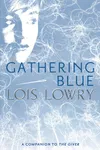
2. Gathering Blue (2000)
Instead of continuing Jonas's story directly, this second installment introduces a completely new setting and protagonist. Kira is a young orphan with a twisted leg living in a harsh, feudalistic village that usually discards the disabled or weak. Kira’s survival depends on her extraordinary skill as a weaver, which catches the attention of the village's ruling Guardians. As she works on the ceremonial Singer's Robe, she discovers dark truths about how her society maintains control and suppresses creativity.
3. Messenger (2004)
Set about six years after the events of Gathering Blue, this book serves as the bridge between the different communities. The protagonist is Matty, the young boy from Kira's village who now lives in Village—a sanctuary for refugees that values openness and democracy. However, a dark, sinister force begins to corrupt the minds of the citizens, leading them to vote to close their borders. Matty, who possesses a mysterious healing power, must embark on a dangerous journey through a hostile forest to bring Kira to safety before it is too late.
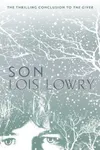
4. Son (2012)
The epic conclusion to the quartet is divided into three distinct parts, spanning several years and linking all the characters from the previous books. It begins by taking us back to Jonas's original community, but this time from the perspective of Claire, a fourteen-year-old birthmother. When her child (who is revealed to be Gabriel) is taken from her, she becomes consumed by the need to find him. Her desperate search leads her out of the community and across dangerous lands, eventually bringing her into conflict with a dark force to secure her son's freedom.
Understanding the Complex Timeline and Chronological Caveats
While the publication order is straightforward, the chronological timeline of the series is much more intricate, especially due to how Son is structured. If you want to understand how the events overlap, here is a breakdown of the three-part timeline within the final book:
- Part I: Before – Runs parallel to the events of The Giver. It takes place in Jonas’s community, showing the training of birthmothers and Claire giving birth to Gabriel, up until the night Jonas escapes with the baby.
- Part II: Between – Follows Claire’s shipwreck and recovery in a rugged, isolated seaside village, where she trains to climb a massive cliff to escape. This occurs while the events of Gathering Blue and Messenger are taking place elsewhere in the world.
- Part III: Beyond – Takes place several years after the end of Messenger. It is set in the Village, where an adult Gabriel and a matured Jonas live. Claire finally arrives, and the ultimate resolution of the series unfolds.
Because of this overlapping timeline, a strict chronological reading order is not recommended for first-time readers. Reading Son first would completely ruin the mystery, world-building, and emotional payoff of the first three novels.
The Graphic Novel Adaptation
For fans who want to experience the story in a visual medium, The Giver Graphic Novel was published in 2019. Adapted and illustrated by the legendary comic book artist P. Craig Russell (with contributions from Galen Showman and Scott Hampton), this adaptation beautifully translates Lois Lowry's minimalist prose into stunning sequential art. Notably, the artwork uses a limited, atmospheric color palette of black and blue lines to represent the monochrome world of the community, gradually introducing vibrant colors as Jonas receives memories and begins to see the world as it truly is.
What to Know Before You Start
Before diving into The Giver Quartet, here are a few key things that will help set your expectations:
- The Shift in Settings: Do not be alarmed when you start Gathering Blue and realize Jonas is nowhere to be found. The first two books function as companion novels set in different corners of the same world. The connection between them will become clear in Messenger.
- Science Fiction vs. Fantasy: While The Giver reads like a classic, soft science-fiction dystopian story, the sequels—especially Messenger and Son—introduce more overt magical and fantasy elements, such as supernatural gifts (Matty's healing, Kira's foresight, and the Trade Mart's sinister bargaining).
- Standalone Readability: The Giver was originally written as a standalone novel and works perfectly well as one. You can read it and stop there if you wish. However, if you choose to move on to Gathering Blue, you should commit to finishing the entire quartet to get the full resolution of the story.
Practical Reader Advice
The series is widely praised for its accessibility to younger readers while remaining deeply engaging for adults. When reading the quartet, keep in mind that the tone shifts from the clinical, sterile environment of Jonas's home to the medieval, impoverished village of Kira, before settling into the mystical woodland atmosphere of Village. This variety keeps the series fresh, but it can be jarring if you are expecting four identical books. Stick with it, as the ultimate payoff in Son brings all these disparate worlds together beautifully.