
Where to Start Your Galactic Journey
Isaac Asimov's Greater Foundation universe is one of the most celebrated and expansive sagas in science fiction history, spanning dozens of novels and short stories. Because Asimov did not originally write these books as a single, unified series, readers often struggle to figure out where to begin. There are three primary paths you can take to explore the galaxy, each offering a distinct storytelling experience.
Option 1: The Original Foundation Trilogy (The Core Experience)
If you want to experience the heart of the saga without committing to over a dozen books, starting with the original 1950s trilogy is highly recommended. This is the core story of psychohistory, Hari Seldon, and the plan to save humanity from a 30,000-year dark age.
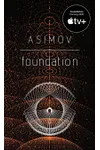
- Foundation (1951)
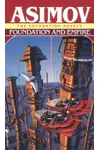
- Foundation and Empire (1952)
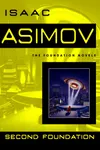
- Second Foundation (1953)
Reading these three books first gives you a complete, self-contained story arc. If you love them, you can easily branch out into the prequels, sequels, and connecting series later.
Option 2: The Extended Publication Order (The Recommended Path)
For first-time readers looking for the full experience, reading the books in publication order is widely considered the best approach. This path mirrors how Asimov himself conceived and expanded his universe, slowly weaving his standalone Robot and Galactic Empire books into the grand tapestry of the Foundation. It also ensures that plot twists and mysteries in the later novels are preserved, as the prequels assume you already know the events of the original trilogy.
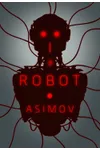
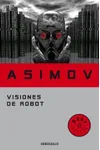
- I, Robot (1950) — A collection of foundational short stories introducing the Three Laws of Robotics.
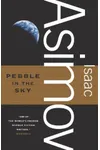
- Pebble in the Sky (1950) — The first Galactic Empire novel, set on a radiation-scarred Earth.
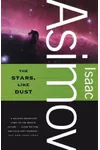
- The Stars, Like Dust / The Rebellious Stars (1951) — The second Galactic Empire novel, exploring early interstellar politics.
- Foundation / The 1,000 Year Plan (1951)
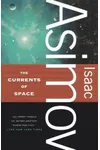
- The Currents of Space (1952) — The third Galactic Empire novel, centering on a threat to the planet Florina.
- Foundation and Empire / The Man Who Upset the Universe (1952)
- Second Foundation (1953)
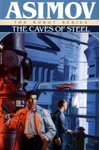
- The Caves of Steel (1954) — Introduces detective Elijah Baley and robot R. Daneel Olivaw.
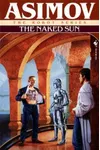
- The Naked Sun (1957) — Baley and Olivaw investigate a murder on the spacer world Solaria.
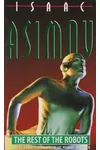
- The Rest of the Robots (1964) — A collection of short stories expanding on robot history.
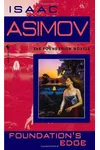
- Foundation's Edge (1982) — A sequel to the original trilogy that begins linking the universes.
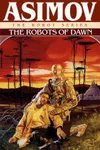
- The Robots of Dawn (1983) — The third Elijah Baley novel, exploring the spacer world Aurora.
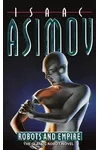
- Robots and Empire (1985) — The final Robot novel, bridging the gap to the Galactic Empire.
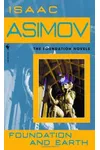
- Foundation and Earth (1986) — The chronological conclusion of the main series.
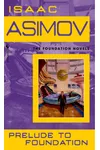
- Prelude to Foundation (1988) — The first prequel novel, following a young Hari Seldon on Trantor.
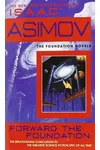
- Forward the Foundation (1993) — The second prequel novel, detailing the completion of Seldon's work.
Option 3: The Chronological Timeline (The In-Universe Order)
If you prefer to follow the story in the exact sequence the events occur in-universe, you can follow the chronological path. Asimov himself recommended a version of this order in the Author's Note of Prelude to Foundation. Note that reading chronologically will jump between writing styles across four decades of Asimov's career, and the prequels will spoil major revelations of the sequels.
- I, Robot (1950) / The Complete Robot (1982)
- The Caves of Steel (1954)
- The Naked Sun (1957)
- The Robots of Dawn (1983)
- Robots and Empire (1985)
- The Stars, Like Dust / The Rebellious Stars (1951)
- The Currents of Space (1952)
- Pebble in the Sky (1950)
- Prelude to Foundation (1988)
- Forward the Foundation (1993)
- Foundation / The 1,000 Year Plan (1951)
- Foundation and Empire / The Man Who Upset the Universe (1952)
- Second Foundation (1953)
- Foundation's Edge (1982)
- Foundation and Earth (1986)
The Three Pillars of the Greater Foundation
Asimov's grand universe is divided into three distinct subseries, which were originally written as independent projects before being retroactively connected in the 1980s.
1. The Robot Series
This series focuses on the relationship between humanity and artificial intelligence, beginning with short story collections like I, Robot on Earth and progressing to murder mysteries set on advanced "Spacer" worlds. The core novels follow Detective Elijah Baley and his humanoid robot partner, R. Daneel Olivaw, as they investigate crimes that threaten the fragile political balance of the galaxy. Daneel eventually becomes the crucial bridge connecting these early stories to the far future of the Foundation.
2. The Galactic Empire Trilogy
Set thousands of years after the Robot series, these three novels—Pebble in the Sky, The Stars, Like Dust, and The Currents of Space—explore a galaxy where humanity has colonized thousands of worlds under the early stages of a single central authority. These books are loosely connected standalone stories rather than a continuous narrative, focusing on political intrigue, espionage, and the mysterious origin of Earth as a radioactive planet. They are often considered the weakest of the three subseries but offer valuable context on how the Galactic Empire rose to power.
3. The Foundation Series
The climax of Asimov's universe, the Foundation series, is set at the end of the Galactic Empire's reign. Mathematician Hari Seldon uses the science of psychohistory to predict the empire's collapse and establishes two Foundations to preserve knowledge and guide humanity through the dark age. The series spans centuries, following various leaders, traders, and scientists as they navigate Seldon's crises and protect the plan against unexpected variables, such as a telepathic mutant known as the Mule.
Authorized Spin-offs: The Second Foundation Trilogy
Following Asimov's death, his estate authorized a trilogy of novels written by prominent science fiction writers Gregory Benford, Greg Bear, and David Brin, collectively known as the "Killer B's." These books are midquels that fit between Prelude to Foundation and Forward the Foundation, fleshing out Hari Seldon's life and the secret history of the robot civil war.
- Foundation's Fear (1997) by Gregory Benford
- Foundation and Chaos (1998) by Greg Bear
- Foundation's Triumph (1999) by David Brin
While officially authorized, these novels are not considered strictly canonical by all fans due to their differences in tone, style, and complex additions to the lore. They are best read after completing Asimov's original works if you are looking for further depth.
What to Know Before You Start
Before diving into this massive universe, keep in mind that Asimov was writing over a span of five decades. His style evolved significantly, moving from the dialogue-heavy, mystery-focused puzzle stories of the 1950s to the more reflective, philosophical, and character-driven narratives of the 1980s and 1990s. Because he retroactively connected these works, some minor continuity errors exist. Accept these small contradictions as part of the charm of a retrofitted universe, and enjoy the monumental scale of the journey.