
The Recommended Reading Order
For first-time visitors to the ancient manor of Green Knowe, the best approach is to follow the original publication order. Reading the series in this sequence allows you to experience the house and its resident spirits just as the author introduced them. The narrative unfolds naturally, beginning with the gentle introduction of the manor's friendly ghosts and building toward deeper, more complex themes of displacement, conservation, and ancient magic.
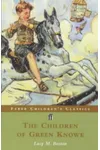
- The Children of Green Knowe (1954)
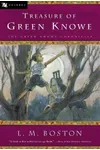
- The Chimneys of Green Knowe (1958) – Also published in the US as "Treasure of Green Knowe"
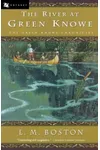
- The River at Green Knowe (1959)
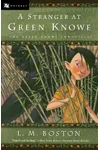
- A Stranger at Green Knowe (1961)
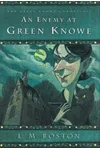
- An Enemy at Green Knowe (1964)
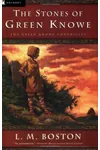
- The Stones of Green Knowe (1976)
Publication Order vs. Chronological Order
While publication order is highly recommended, there is a fascinating chronological alternative. The final book in the series, The Stones of Green Knowe, acts as a historical prequel. It centers on Roger d'Aulneaux, a Norman boy who watches his family build the stone manor house in the year 1120. Using a pair of magical stone thrones, Roger travels forward in time to interact with the children from the other books.
If you choose to read the series chronologically, the list looks like this:
- The Stones of Green Knowe (1976) – Set in 1120, depicting the house's construction.
- The Children of Green Knowe (1954) – Set in the mid-20th century; introduces Tolly and the 17th-century spirits Toby, Alexander, and Linnet.
- The Chimneys of Green Knowe (1958) – Tolly returns and learns the stories of late-18th-century residents, including the blind Susan Oldknow and Jacob.
- The River at Green Knowe (1959) – Set during a summer when the house is rented to new characters; features three children exploring the river.
- A Stranger at Green Knowe (1961) – Set during a summer focusing on Ping and the escaped gorilla Hanno.
- An Enemy at Green Knowe (1964) – Tolly and Ping team up to defend the house from a modern-day practitioner of dark magic.
Why you should stick to publication order: Although The Stones of Green Knowe takes place earliest, it was written decades after the original five books. It serves as a beautiful capstone that connects all the characters you've grown to love. Reading it first spoils the wonder of discovering the house's history alongside Tolly, and the cameos will lose their emotional resonance.
The Books in Detail
1. The Children of Green Knowe (1954)
Young Toseland, nicknamed Tolly, is sent to live with his great-grandmother, Mrs. Oldknow, at her ancient, flood-bound manor house. There, he discovers that the house is alive with the spirits of children who lived there during the reign of King Charles II—Toby, Alexander, and Linnet. Rather than a scary haunting, the ghosts are playful companions in a warm, comforting winter landscape.
2. The Chimneys of Green Knowe (1958)
Published in the United States as Treasure of Green Knowe, this second visit sees Tolly return for the summer. As Mrs. Oldknow repairs the house, she tells stories of the late-18th-century occupants: a blind girl named Susan and a young black boy named Jacob, who was rescued from slavery. Tolly must solve a family mystery involving lost jewels and a devastating historical fire.
3. The River at Green Knowe (1959)
This entry is the most episodic and divergent in the series, shifting away from Tolly and Grandmother Oldknow. The manor is rented for the summer by two eccentric older women, Dr. Maud Biggin and Miss Sybilla Bun. They host three children: Ida, Oskar, and Ping (a young refugee who returns in subsequent books). The children explore the river and local canals in a canoe, encountering magical elements like a friendly giant and flying horses.
4. A Stranger at Green Knowe (1961)
Awarded the prestigious Carnegie Medal, this book is unique because it contains no supernatural or magical occurrences. Instead, it is a realistic, deeply moving story about the bond between the young Chinese refugee Ping and Hanno, an escaped gorilla from the London Zoo. Hanno hides in the bamboo gardens of Green Knowe, where Ping tries to protect him from recapture.
5. An Enemy at Green Knowe (1964)
The fifth book returns to the core characters, uniting Tolly and Ping as best friends staying with Mrs. Oldknow. The tone shifts to dark fantasy when Dr. Melanie Powers, a sinister new neighbor, arrives searching for the lost spellbooks of a 17th-century alchemist and black magician who once resided at the manor. The trio must defend the ancient house from her plague of shadows and black magic.
6. The Stones of Green Knowe (1976)
Published twelve years after the fifth book, this final installment brings the series full circle. It tells the story of Roger, the son of the original Norman builder of the house. Roger discovers magical stepping stones that allow him to step out of the 12th century and visit the children of Green Knowe's future—including Tolly, Ping, Susan, and Toby.
What to Know Before You Start
The Real-Life Manor: The defining feature of the Green Knowe series is the house itself. It is based directly on The Manor in Hemingford Grey, Cambridgeshire, which Lucy M. Boston purchased and restored in 1939. Built around 1130, it is one of the oldest continuously inhabited houses in Britain. Boston's son, Peter Boston, illustrated the books, basing his artwork directly on the rooms, topiary gardens, and toys in their actual home. Readers wishing to explore this connection further can read Boston's 1973 memoir, Memory in a House.
Stand-alone Appeal: While there is an overarching progression, most of the books can be enjoyed as stand-alone stories. The Children of Green Knowe is essential reading, and An Enemy at Green Knowe relies heavily on the friendship established between Tolly and Ping. However, books like The River at Green Knowe and A Stranger at Green Knowe feature their own self-contained adventures and can be picked up independently.
Adaptations: The haunting atmosphere of the books translated well to the screen. The BBC adapted The Children of Green Knowe into a beloved television serial in 1986. More recently, in 2009, Julian Fellowes directed the film From Time to Time, which adapted the events of The Chimneys of Green Knowe.