

Where to Start Your Journey in the Hainish Cycle
Unlike most science fiction series, Ursula K. Le Guin’s Hainish Cycle does not follow a linear, continuous narrative. Instead, it is a loose collection of standalone novels, novellas, and short stories set in a shared universe. Because of this, there is no single "correct" starting point. Where you begin depends entirely on what kind of reading experience you are looking for.
Option 1: The Masterpieces (Recommended)
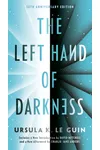
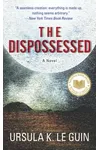
If you want to dive straight into Le Guin's most celebrated and influential work, start with either The Left Hand of Darkness (1969) or The Dispossessed (1974). Both are self-contained masterpieces that won both the Hugo and Nebula Awards. Starting here allows you to experience Le Guin at the height of her literary powers. The Left Hand of Darkness explores themes of gender, friendship, and diplomacy on the icy planet Gethen, following an envoy trying to convince a world of ambisexual inhabitants to join the galactic coalition. The Dispossessed is a brilliant sociological study contrasting an anarchist utopia with a capitalist planet. It serves as a conceptual prequel to the entire universe by detailing the invention of the ansible—the instantaneous communication device that makes the galactic union possible.
Option 2: The Early Trilogy (Chronological Evolution)
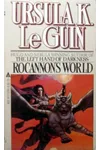
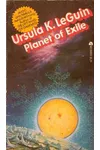
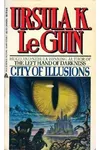
If you prefer to see how Le Guin’s writing style and her universe evolved over time, start at the very beginning with her early trilogy: Rocannon's World (1966), Planet of Exile (1966), and City of Illusions (1967). These early works are shorter, more action-oriented, and lean closer to science-fantasy than her later sociological masterpieces. Reading these first gives you a grounding in the "League of All Worlds" era before the confederation matures into the "Ekumen." These three novels are often collected together in a single omnibus titled Worlds of Exile and Illusion.
The Publication Order
Following the publication order allows you to experience the Hainish universe exactly as Le Guin constructed it over nearly four decades. This path highlights the author's stylistic evolution from traditional space adventure to deep, anthropological inquiry. Here is the order in which the major novels and core collections were published:
- Rocannon's World (1966) – Le Guin's debut novel, combining space travel with fantasy elements like telepathic communication, castles, and mythological beasts on a primitive world.
- Planet of Exile (1966) – Set on a planet with long seasons, focusing on the struggle of human colonists trying to survive alongside the native population as a bitter winter approaches.
- City of Illusions (1967) – Takes place on a post-apocalyptic Earth, serving as a direct sequel to the events of Planet of Exile and preparing the way for the rebuilding of human connection.
- The Left Hand of Darkness (1969) – The classic novel introducing the Ekumen’s envoy Genly Ai and the gender-shifting inhabitants of Gethen. It is widely considered a foundational work of feminist science fiction.
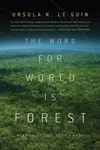
- The Word for World Is Forest (1972) – A powerful Hugo-winning novella focusing on colonialism, militarism, and environmental destruction on the forest planet Athshe.
- The Dispossessed (1974) – Subtitled "An Ambiguous Utopia," this novel explores political systems and introduces Shevek, the physicist who invents the ansible.
- Four Ways to Forgiveness (1995) – A collection of four interconnected novellas set on the slave-holding twin worlds of Werel and Yeowe, exploring liberation, revolution, and personal transformation.
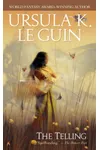
- The Telling (2000) – The final novel of the cycle, following an envoy from Earth who visits a planet where the local history and culture have been outlawed by a corporate state.
The Chronological Timeline of the Ekumen
While the books were not designed to fit a tight timeline, fans and scholars have mapped out a general chronological order based on the development of technology (specifically the ansible) and the political stages of the interstellar union. If you want to follow the rise, fall, and resurrection of humanity's galactic network, you can read them in this order:
- The Dispossessed – Set earliest in the timeline, before the interstellar union is fully formed, explaining the origin of the ansible and the early isolation of the seeded worlds.
- The Word for World Is Forest – Set during the era of the League of All Worlds, showing Earth's early, destructive expansion.
- Rocannon's World – Set later in the League era, with established faster-than-light communication but limited interstellar cohesion.
- Planet of Exile – Takes place during a time of crisis as the League is threatened by an external enemy.
- City of Illusions – Set generations after Planet of Exile, depicting Earth under the control of the mysterious Shing.
- The Left Hand of Darkness – The dawn of the Ekumen era, focusing on peaceful diplomatic integration and cultural exchange.
- The Telling – The mature Ekumen era, highlighting advanced anthropological observation and cultural preservation.
- Four Ways to Forgiveness – Set during the later stages of the Ekumen timeline, focusing on social revolution, gender dynamics, and liberation.
The Critical Short Story Collections
Le Guin wrote several essential short stories and novellas that flesh out the Hainish universe. They are interspersed across her general collections, but several are crucial reading for completeness:
- The Wind's Twelve Quarters (1975) – Contains "Semley's Necklace" (which serves as the prologue to Rocannon's World) and "The Day Before the Revolution" (a direct prologue to The Dispossessed).
- A Fisherman of the Inland Sea (1994) – Contains the "churten" stories, which explore experimental instantaneous space travel and its psychological effects.
- The Birthday of the World and Other Stories (2002) – Features several Hainish tales, including "The Matter of Seggri" (exploring extreme gender imbalance) and "Coming of Age in Karhide" (returning to the world of Gethen).
- Five Ways to Forgiveness (2017 Library of America release) – An expanded edition of the 1995 collection that adds a fifth connected novella, "Old Music and the Slave Women."
What to Know Before You Start
To fully enjoy the Hainish Cycle, keep these three key points in mind:
- Strict Continuity Doesn't Exist: Le Guin did not work from a master world bible. She often changed details between books—such as the nature of space travel or historical dates—to fit the themes of the specific story she wanted to tell. Treat each book as a standalone window into a shared mythos rather than a piece of a puzzle.
- It's Anthropological, Not Military Sci-Fi: Do not expect space battles, laser dogfights, or galactic wars. Le Guin’s parents were anthropologists, and she approaches her alien worlds with the same curiosity. The stories focus on language, social structures, gender, religion, and ecology.
- The Role of the Ansible: The most important piece of technology in the cycle is the "ansible," a device that allows instantaneous communication across light-years, though physical travel remains slow. This setup allows planets to share information and cultures without being under a centralized military empire.
Co-authored Books, Spin-offs, and Adaptations
The Hainish Cycle is written entirely by Ursula K. Le Guin; there are no co-authored books in the main canon. However, the influence of the series has spawned adaptations and comprehensive collections. The Library of America published a definitive two-volume set, Ursula K. Le Guin: The Hainish Novels & Stories, which collects every novel and short story in the cycle, making it the perfect choice for readers seeking the complete, authoritative edition.