
How to Read the Half-Elf Chronicles
Step into the Dwemhar Realms, an expansive, lore-rich fantasy universe created by USA Today bestselling author J.T. Williams. At the heart of this universe is the Half-Elf Chronicles (now commonly published under the banner The Rogue Elf). The series follows Kealin, a half-elf warrior outcast who must navigate a world of prejudice, uncover his ancient Dwemhar heritage, and master dark, forgotten magic to protect those he loves. Inspired by classic high fantasy like J.R.R. Tolkien, the fast-paced action of R.A. Salvatore, and the immersive world-building of RPGs like The Elder Scrolls, this gritty sword-and-sorcery saga has captured a dedicated following.
Because the series spans multiple books and has been partially rebranded and revised, new readers often wonder where to start. Below is the recommended reading path, along with a detailed breakdown of the subseries, companion stories, and broader universe connections.
The Recommended Reading Order
For the best reading experience, you should follow the publication order of the main novels. While there is a prequel short story available, starting with the first full-length novel is widely considered the best way to immerse yourself in Kealin's journey. Here is the direct reading sequence:
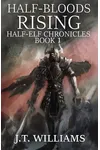
- Half-Bloods Rising (2016) – The essential starting point. Note: Make sure to read the revised and expanded edition, which Williams released to improve prose quality and flesh out early world-building.
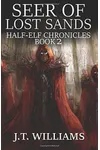
- Seer of Lost Sands (2016)
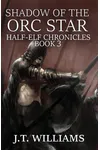
- Shadow of the Orc Star (2016)
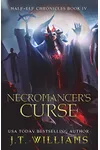
- Necromancer's Curse (2017)
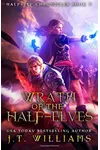
- Wrath of the Half-Elves (2018)
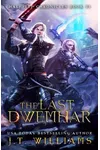
- The Last Dwemhar (2018)
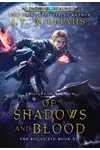
- Of Shadows and Blood (2021)
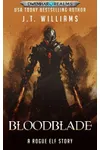
- Bloodblade (2021) – A prequel novella. While published later in this position in some omnibus listings, it acts as a standalone prequel detailing Kealin's early encounters. It can be read first as an introduction or here as a flashback companion.
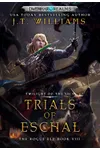
- Trials of Eschal (2021)
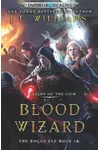
- Blood Wizard (2021)
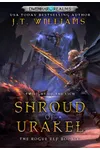
- Shroud of Urakel (2022)
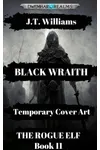
- Black Wraith (2024)
Understanding the Story Arcs
The Half-Elf Chronicles is not just one continuous run; it is broken into distinct narrative arcs that make the long series highly digestible. Understanding these arcs helps readers know what to expect as Kealin evolves from an outcast into a powerful figure of legend.
The Core Rogue Elf Arc (Books 1–6)
This initial six-book sequence forms the foundational narrative arc for Kealin. The adventure begins in Half-Bloods Rising, where Kealin and his siblings cross the treacherous Glacial Seas to escape a dark prophecy. Throughout these six books, Kealin discovers his connection to the ancient Dwemhar—a powerful, long-lost race—and clashes with deadly threats, including the necromancer Veora and the god of death, Vankou. The arc reaches a definitive, high-stakes conclusion in The Last Dwemhar.
The Twilight of the Lich Arc (Books 7–9)
After the dramatic climax of the core series, the saga transitions into the Twilight of the Lich trilogy, which comprises Of Shadows and Blood, Trials of Eschal, and Blood Wizard. In this arc, the stakes shift as Kealin faces the emerging threat of powerful liches. These books lean heavily into dark fantasy, featuring necromantic cults, ancient crypts, and a deeper exploration of the darker facets of Dwemhar magic.
The Continuing Legend (Books 10–12+)
Kealin's story continues to expand with Shroud of Urakel and Black Wraith. In these installments, the consequences of Kealin's past choices catch up to him, and he must confront legacy magic and new factions rising in the power vacuums left by defeated gods and liches. Author J.T. Williams has continued to expand this universe with subsequent titles like The Dwarven Dyad and God Bane Hunter, showing that the Dwemhar Realms remain active and growing.
The Prequel Placement: Where Does Bloodblade Fit?
One common source of confusion for readers is the placement of Bloodblade. Originally written as a prequel novella (often designated as Book 0.5), it was compiled into later editions and digital collections alongside the main series. In some publication sequences and retail bundles, it is positioned between Of Shadows and Blood (Book 7) and Trials of Eschal (Book 9).
If you prefer strict chronological order, you can read Bloodblade before Half-Bloods Rising to get an early taste of the world's gritty tone. However, because it is a shorter, standalone piece focusing on a localized conflict, most readers find it more satisfying to start with the grander scope of Half-Bloods Rising and read Bloodblade later as a companion story.
What to Know Before You Start
Before diving into the books, there are a few practical elements to keep in mind:
- Rebrandings: The series was originally published as the Half-Elf Chronicles, but J.T. Williams later rebranded the main listings on Amazon and Audible to The Rogue Elf series to distinguish it from spin-offs. The titles of the individual books remain the same.
- Revised Editions: Because J.T. Williams is an independent author, early editions of the first few books had minor editing issues. To address this, Williams systematically revised and expanded the early books (especially the first book). Ensure you acquire the updated editions for the best reading experience.
- The Dwemhar Realms Universe: The Half-Elf Chronicles is part of a larger shared universe. While Kealin's story is entirely self-contained, it shares history, lore, and geography with the Stormborn Saga and the Shadow Elf Chronicles. You do not need to read these other series to understand Kealin's journey, but they offer excellent follow-up reading.