

The Best Reading Paths for Hammer's Slammers
Because the series consists of a mix of novels, novellas, and episodic short stories written over decades, there is no single, strictly linear plotline. Instead, you have two primary options to start your campaign with Colonel Alois Hammer's elite tank regiment.
Option 1: The Complete Omnibus Collections (Recommended)
Author David Drake himself recommended reading the series via The Complete Hammer's Slammers omnibus editions. These three massive volumes collect all of the short fiction, novellas, and main novels in a structured format, complete with background essays and maps. It is by far the most convenient and comprehensive way to read the series.
- Volume 1: Gathers the original 1979 short stories, along with the novellas later collected in The Tank Lords. It sets the baseline for the universe's technology, politics, and core cast.
- Volume 2: Collects four of the major full-length novels: At Any Price, Counting the Cost, Rolling Hot, and The Warrior, alongside the short story A Day of Glory.
- Volume 3: Concludes the collection with the final two novels, The Sharp End and Paying the Piper, plus the novelette The Darkness.
Option 2: The Classic Publication Order
If you are collecting the original standalone paperbacks, reading them in publication order allows you to see how Drake's writing style and the Hammerverse evolved. This path focuses on the core military campaigns of the Slammers:
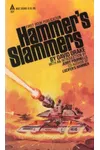
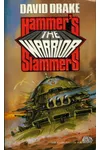
- Hammer's Slammers (1979): The seminal short story collection that introduces Colonel Hammer, the cold-blooded marksman Joachim Steuben, and the regiment's supertanks.
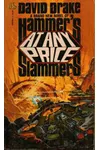
- At Any Price (1985): The first full-length novel, focusing on the cultural clash and brutal realities of fighting a counter-insurgency on a foreign colony.
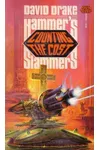
- Counting the Cost (1987): A gritty depiction of urban combat, politics, and the terrifying cost of military operations where contract terms dictate survival.
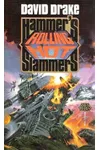
- Rolling Hot (1989): Heavily inspired by Drake's own experiences during the Tet Offensive, this novel follows a desperate fighting march to defend a besieged capital.
- The Warrior (1991): A deep dive into the psychological toll of combat and the dangerous line between a professional soldier and a bloodthirsty killer.
- The Sharp End (1993): A shift in style, following a small survey team of Slammers veterans on a non-combat mission to investigate a chaotic, low-tech world.
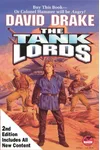
- The Tank Lords (1997): A collection focusing on the legend of the Slammers' supertanks and how they are perceived by the populations of isolated colony worlds.
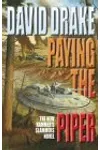
- Paying the Piper (2002): The final novel in the main sequence, returning to the core mercenary structure as the Slammers are caught between rival factions on a swamp planet.
The Hammerverse: Spin-offs and Thematic Retellings
David Drake used the setting of the Hammerverse to write several novels that are not directly about the campaigns of the main regiment, but are set in the same universe. Many of these are futuristic retellings of classical myths:
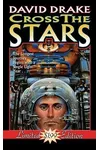
- Cross the Stars (1984): A space-opera retelling of Homer's Odyssey. It follows Don Slade, a veteran Slammer trying to navigate his way back home across hostile star systems after his contract expires.
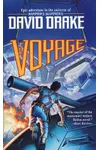
- The Voyage (1994): A military sci-fi retelling of Jason and the Argonauts. It follows a crew on a dangerous expedition into uncharted space to retrieve a high-tech artifact.
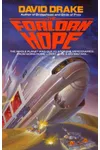
- The Forlorn Hope (1984): Though often grouped with Hammerverse books in older lists due to its release date and thematic focus on mercenaries, this is a standalone novel set in an entirely separate universe. It should not be read as part of the Slammers continuity.
Chronological Caveats and Continuity
New readers often search for a chronological order, but attempting to read the stories in order of in-universe dates is not recommended. The early short stories jump back and forth in the regiment's history, and many events overlap. Reading by publication order or through the omnibus editions is far superior, as it allows you to gradually learn the complex technical jargon—like powerguns, iridium armor, and blower tanks—as Drake slowly built the universe.
What to Know Before You Start
David Drake served as an enlisted man in the U.S. Army's 11th Armored Cavalry Regiment during the Vietnam War. His experiences in Cambodia and Vietnam directly inspired the gritty, unromanticized tone of the series. The Slammers are not clean-cut heroes; they are professional mercenaries driven by binding contract authorities, operating in a fragmented future where interstellar governments are corrupt and colonies are treated as chess pieces. The battles are loud, chaotic, and heavily focused on the devastating power of armored vehicle warfare, making it a cornerstone text for the military science fiction genre.