

The Recommended Reading Order for the Hangman’s Daughter Series
If you want to step into the muddy, superstitious streets of 17th-century Bavaria, the best way to read the Hangman’s Daughter series is in its original publication order. Fortunately, the publication order matches the chronological storyline perfectly, allowing you to follow the characters as they age, marry, raise families, and navigate the shifting politics of the Holy Roman Empire.
However, modern English readers face one major caveat: while the series is a global phenomenon with ten volumes in its original German, only the first seven books have been translated into English. Below is the complete reading path, indicating both the English translations and the German-only releases.
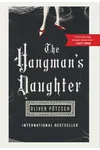
1. The Hangman's Daughter (2008 / English: 2010)
Setting Year: 1659
The novel that started it all introduces Jakob Kuisl, the hangman of the Bavarian town of Schongau. Jakob is a giant of a man—feared and shunned by the townspeople, yet secretly sought after for his deep knowledge of herbal medicine and healing. When a dying boy is pulled from the river with a mysterious mark branded on his shoulder, the town immediately blames a local midwife and demands a witch trial. To save the innocent woman from his own torture chamber, Jakob teams up with his headstrong daughter Magdalena and the local physician’s son, Simon Fronwieser, to uncover the real killer.
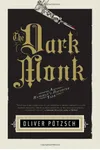
2. The Dark Monk (2009 / English: 2012)
Setting Year: 1660
Set during a freezing Bavarian winter, the second adventure begins with the murder of a priest at a nearby monastery. Jakob, Magdalena, and Simon are drawn into a web of ancient secrets involving the Knights Templar, hidden treasure, and cryptic codes. The story deepens the romantic tension between Magdalena and Simon, whose class differences make a formal union nearly impossible in their rigid society.
3. The Beggar King (2010 / English: 2013)
Setting Year: 1662
The setting shifts from Schongau to the imperial city of Regensburg. Jakob Kuisl travels to visit his dying sister, only to find her murdered. Jakob is arrested and accused of the crime. Facing execution himself, he must rely on Magdalena and Simon to navigate the city's dangerous underworld of beggars, corrupt officials, and street gangs to clear his name and expose a conspiracy that reaches the highest levels of power.
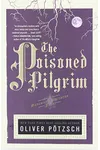
4. The Poisoned Pilgrim (2012 / English: 2014)
Setting Year: 1666
The year is 1666, and Jakob accompanies a group of pilgrims to the remote monastery of Andechs. Along the way, they witness bizarre occurrences, and soon, a wealthy merchant is found murdered. The plot weaves together religious fanaticism, early scientific discovery, and local superstitions. Simon's medical curiosity and Jakob's practical skepticism are put to the test as they investigate a series of mysterious poisonings.
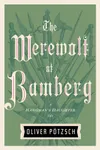
5. The Werewolf of Bamberg (2014 / English: 2015)
Setting Year: 1668
Jakob and his family travel to Bamberg to visit his brother Bartholomew. However, they arrive to find the city gripped by terror. A series of gruesome murders has convinced the locals that a werewolf is on the loose. The Kuisls must unravel the mystery amidst the city's dark history of witch trials, proving that the real monsters are very human.
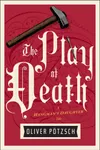
6. The Play of Death (2016 / English: 2017)
Setting Year: 1670
The family travels to the alpine village of Oberammergau to watch the famous Passion Play. When the actor playing Christ is found dead on the cross, Jakob and his companions must investigate. The murder threatens to cancel the play, which the villagers believe protects them from a plague curse. The story explores the theater world, religious drama, and local rivalries.
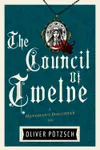
7. The Council of Twelve (2017 / English: 2018)
Setting Year: 1672
This is the final book currently available in English. Jakob travels to Munich to attend a rare assembly of Bavarian executioners—the Council of Twelve. But when several young women go missing and executioners themselves are targeted, Jakob must hunt a serial killer operating in the shadows of the ducal court, while Magdalena and Simon deal with their own domestic challenges.
8. Die Henkerstochter und der Fluch der Pest (2020)
Setting Year: 1679 (German Edition Only)
The eighth installment takes place during the summer of 1679, when the plague sweeps through the region. Jakob and Magdalena face a dual crisis: fighting the outbreak of the disease and investigating a string of murders that locals blame on the "Plague Queen" or supernatural forces.
9. Die Henkerstochter und die schwarze Madonna (2022)
Setting Year: 1681 (German Edition Only)
Set during a pilgrimage to Altötting, this book drops the Kuisl family into high-stakes diplomacy. As Kaiser Leopold I and Bavarian Kurfürst Max Emanuel meet to negotiate an alliance against the Ottoman Empire, a series of mysterious deaths threatens to derail the peace talks.
10. Die Henkerstochter und das Vermächtnis des Henkers (2024)
Setting Year: 1683 (German Edition Only)
The tenth novel takes place in 1683. An aging Jakob Kuisl receives a letter from a former companion in arms, Nepomuk, asking for help finding a legendary treasure in Passau. When Jakob arrives, he finds Nepomuk murdered and must team up with other veteran soldiers to find the killer and the treasure.
Chronological Continuity and Tone
The series is highly praised for its meticulous historical accuracy. The author, Oliver Pötzsch, is a direct descendant of the real-life Kuisl executioner dynasty, which held offices across Bavaria for centuries. This personal connection shines through in the gritty, realistic descriptions of 17th-century life. Pötzsch avoids romanticizing the period; readers are treated to detailed accounts of early medical treatments, the harsh realities of the post-Thirty Years' War era, and the pervasive fear of witchcraft and the devil.
Because the characters grow older and their relationships evolve significantly from one book to the next, reading them out of order will spoil major plot points. For example, Simon and Magdalena's long struggle to marry due to Simon's father's disapproval is a major subplot in the early books, and their eventual marriage and children shape the narrative of the later novels.
Practical Reader Advice
If you are planning to start the series, here are the most important things to keep in mind:
- Start at the beginning: You should definitely start with the first book, The Hangman's Daughter. It sets up the core dynamics, explains the low social status of executioners, and establishes the relationships between Jakob, Magdalena, and Simon.
- Can they be read standalone? Yes, the main mystery in each book is self-contained and resolved by the final chapter. However, the recurring characters and family dynamics build upon previous entries.
- The English Translation Status: Readers who do not read German should be prepared to pause after The Council of Twelve (Book 7). As of mid-2026, there is no official word on English translations for books 8, 9, or 10.
Related Works and Historical Thrillers by Oliver Pötzsch
If you finish the translated volumes of the Hangman's Daughter series and want to read more by Oliver Pötzsch, he has written several other historical thrillers in a similar style:
- The Faustus Series: A dark historical fantasy retelling of the classic Faust legend, following Johann Georg Faustus. It includes The Master's Apprentice (2020) and its sequel The Devil's Pawn (2021).
- The Gravedigger Series: Set in 1890s Vienna, this historical mystery series features Leopold von Herzfeldt, a young police inspector who uses early forensic techniques. The books include The Gravedigger's Almanac (2025) and The Girl and the Gravedigger (2026).
- Standalone Novels: Pötzsch has also penned independent historical mysteries like The Castle of Kings (2016), set during the German Peasants' War of 1524, and The Ludwig Conspiracy (2011), which links a modern mystery to the mysterious death of King Ludwig II of Bavaria in the 19th century.