










The Recommended Reading Path
For the best experience, we recommend reading the Hardcastle series in publication order. Although the timeline jumps back and forth during the First World War, reading them in the order they were written allows you to appreciate Graham Ison's development of the characters, his evolving style, and the recurring relationships between Whitehall Division investigators. The series culminates in a generational shift that only makes sense if you have followed the entire journey from the beginning.
Hardcastle Series in Publication Order
Below is the complete list of Hardcastle books in the order they were published, which also serves as the recommended reading sequence:
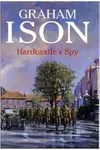
- Hardcastle's Spy (2004) – London, 1916. Inspector Ernest Hardcastle investigates the murder of a woman whose secrets lead directly to German espionage and a clash with MI5.
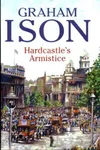
- Hardcastle's Armistice (2005) – Brighton and London, 1918. As the war nears its end, Hardcastle investigates a murder under Brighton's Palace Pier.
- Hardcastle's Conspiracy (2005) – London, 1914. Set on the eve of the Great War, Hardcastle tackles a case involving political intrigue and high-level conspiracies.
- Hardcastle's Airmen (2006) – London, February 1915. Hardcastle is called to investigate the suspicious deaths of Royal Flying Corps officers.
- Hardcastle's Actress (2007) – London, Christmas 1914. The murder of a beloved music-hall star exposes the dark secrets of London's theater scene.
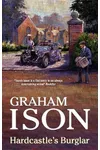
- Hardcastle's Burglar (2008) – London, June 1916. A seemingly simple burglary case turns deadly, drawing Hardcastle into a web of blackmail.
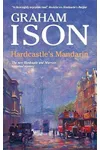
- Hardcastle's Mandarin (2009) – London, June 1917. Hardcastle investigates a murder with connections to Chinese laborers brought to the home front.
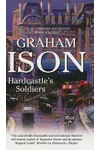
- Hardcastle's Soldiers (2010) – London, July 1917. The death of a soldier on leave leads Hardcastle into the military hierarchy and the grim realities of the front line.
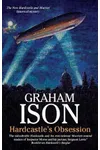
- Hardcastle's Obsession (2011) – London, September 1916. Hardcastle is obsessed with catching a killer who is targeting young women during the Zeppelin raids.
- Hardcastle's Frustration (2012) – London, 1918. Facing staffing shortages and bureaucratic hurdles, Hardcastle fights to solve a challenging homicide in a war-weary city.
- Hardcastle's Traitors (2013) – London, New Year's Eve 1915. Hardcastle works through the holidays to uncover a ring of domestic saboteurs.
- Hardcastle's Quartet (2014) – London, Summer 1918. Hardcastle tracks down a clever killer responsible for four seemingly unrelated murders.
- Hardcastle's Collector (2016) – Hampshire and London, August 1917. The murder of a young girl in a quiet village forces Hardcastle out of the city to investigate.
- Hardcastle's Runaway (2017) – London, March 1919. In the immediate aftermath of the Armistice, Hardcastle searches for a missing girl amidst post-war social chaos.
- Hardcastle's Quandary (2019) – London, 1920s. Hardcastle navigates a changing police force and a traumatized post-war society in the early 1920s.
- Hardcastle's Secret Agent (2021) – London, August 1939 to 1940. The focus shifts to Walter Hardcastle, Ernest's son, who must solve wartime espionage cases at the dawn of the Second World War.
The Chronological Timeline of Cases
If you are a historical stickler, you might be tempted to read the series chronologically. Graham Ison wrote these books out of chronological order so he could explore different phases of the First World War without running out of historical space too quickly. Here is how the books fit into the actual historical timeline of the characters' lives:
- Hardcastle's Conspiracy (2005) – Set in 1914 (Eve of the Great War)
- Hardcastle's Actress (2007) – Set in December 1914 (Christmas)
- Hardcastle's Airmen (2006) – Set in February 1915
- Hardcastle's Traitors (2013) – Set in December 1915 (New Year's Eve)
- Hardcastle's Spy (2004) – Set in 1916
- Hardcastle's Burglar (2008) – Set in June 1916
- Hardcastle's Obsession (2011) – Set in September 1916
- Hardcastle's Mandarin (2009) – Set in June 1917
- Hardcastle's Soldiers (2010) – Set in July 1917
- Hardcastle's Collector (2016) – Set in August 1917
- Hardcastle's Armistice (2005) – Set in 1918
- Hardcastle's Frustration (2012) – Set in 1918
- Hardcastle's Quartet (2014) – Set in Summer 1918
- Hardcastle's Runaway (2017) – Set in March 1919
- Hardcastle's Quandary (2019) – Set in the 1920s
- Hardcastle's Secret Agent (2021) – Set in August 1939 to 1940
While the chronological order is fascinating, we still recommend sticking to publication order. Reading chronologically can make the changes in writing style feel uneven, as the author wrote the 1914 stories later in his career when his plotting had become tighter and his dialogue more polished.
Meet the Sleuths: Ernest and Walter Hardcastle
For fifteen books, the heart of the series is Divisional Detective Inspector Ernest Hardcastle of Whitehall's V Division. Hardcastle is a classic old-school detective: blunt, practical, slightly cynical, but driven by a strict sense of justice. Operating in an era before computer databases, DNA profiling, or even widespread fingerprinting, Hardcastle relies on old-fashioned police methods: interviewing witnesses, chasing leads on foot, and understanding human nature.
Hardcastle is assisted throughout his career by the reliable Detective Sergeant Charles Marriott. Together, they navigate the unique challenges of policing London during the Great War. This includes dealing with blackout restrictions, Zeppelin raids, severe personnel shortages (as younger officers are sent to the front), and constant interference from military authorities, MI5, and the Special Branch.
In the sixteenth and final book, Hardcastle's Secret Agent, the series undergoes a generational shift. The story is set at the outbreak of the Second World War in 1939. Ernest Hardcastle is now retired, and the spotlight shines on his son, Walter Hardcastle, who has risen to the rank of Detective Inspector. As Walter investigates spy rings and subversion during the Blitz, he encounters the exact same bureaucratic frustrations with military intelligence that his father faced a quarter-century earlier.
What to Know Before You Start
Before you dive into the gaslit streets of WWI London, keep these details in mind:
- Unmatched Realism: Author Graham Ison was a real-life Scotland Yard detective who served for 30 years, including a long stint in the Special Branch. His real-world experience shines through in the procedural details of the books. You won't find flashy thriller tropes here; instead, you get a realistic depiction of police work, complete with paperwork, jurisdictional battles, and realistic interrogation techniques.
- Standalone Mysteries: Each book is designed as a standalone investigation. While character relationships progress, you can technically read them out of order without ruining the plot of other novels.
- A Window to the Home Front: The series does a wonderful job of depicting how ordinary Londoners lived during the Great War. From rationing and air raids to the social changes brought on by women entering the workforce, the historical backdrop is just as interesting as the mysteries themselves.