

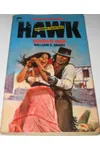
Where to Start Reading the Hawk Series
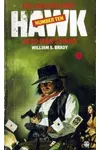
If you are looking for a gritty, fast-paced, and action-packed Western experience, the Hawk series is an exceptional place to start. Written under the house pseudonym William S. Brady, the series follows Jared Hawk, a cold, morally ambiguous gunfighter for hire. Armed with his signature weapon—a cut-down Meteor single-barrel shotgun—Hawk navigates the dangerous, lawless paths of the post-Civil War American frontier.
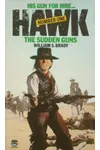
Because the series follows a linear progression in Jared Hawk’s life, the recommended way to read the series is in its original publication order. Starting with the first book, The Sudden Guns, is essential. This debut novel establishes Hawk's deadly reputation, his code of survival, and the harsh realities of his world. Read in order, the books show a gradual unfolding of Hawk's history, detailing the losses and hard choices that shaped his lethal career.
Hawk Books in Publication and Chronological Order
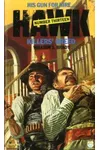
The Hawk series consists of 15 novels published in quick succession between 1979 and 1983. Because the chronological narrative closely tracks the order in which the books were released, you don't have to worry about jumping around a complex timeline. Here is the complete list of Hawk books in order:
- The Sudden Guns (1979) – Jared Hawk is hired to hunt down a gang of ruthless outlaws, setting the tone for the entire series.
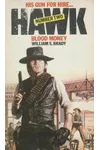
- Blood Money (1979) – Hawk takes a job to rescue a kidnapped woman, only to uncover a complex web of deceit and betrayal.
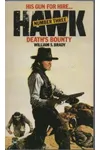
- Death's Bounty (1979) – A high-stakes hunt puts Hawk on the trail of a fugitive with a massive price on his head.
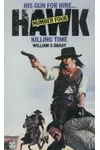
- Killing Time (1980) – Hawk finds himself trapped in a deadly game of survival in a hostile town.
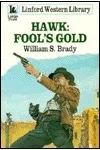
- Fool's Gold (1980) – A classic tale of greed and blood where Hawk is caught between rival factions searching for lost treasure.
- Blood Kin (1980) – Hawk's past catching up with him makes this installment one of the more personal stories in the saga.
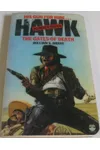
- The Gates of Death (1980) – Hired to escort a man and his niece through hostile territory, Hawk faces relentless attacks.
- Desperadoes (1980) – Hawk goes head-to-head with a gang of desperate killers who rule a local community.
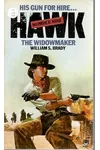
- The Widowmaker (1981) – A gripping entry that matches Hawk against a rival shooter with an equally deadly reputation.
- Dead Man's Hand (1981) – High-stakes gambling and gunplay collide as Hawk investigates a suspicious death.
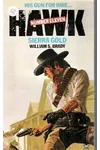
- Sierra Gold (1982) – Set against the rugged Sierra mountains, Hawk is caught in the middle of a violent mining dispute.
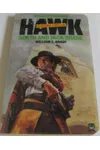
- Death and Jack Shade (1982) – Hawk crosses paths with Jack Shade, leading to a tense, psychological battle of survival.
- Killer's Breed (1982) – A deeper look at the origins of violence on the frontier as Hawk faces a family of ruthless killers.
- Border War (1983) – Hawk finds himself embroiled in a violent clash along the Mexican border.
- Killer! (1983) – The final book in the original run, wrapping up Jared Hawk’s saga with explosive, high-stakes action.
The Men Behind the Mask: Who Was William S. Brady?
While the name "William S. Brady" adorns the covers of these novels, he did not actually exist. Instead, Brady was a joint house pseudonym used by two highly prolific British authors: John Harvey and Angus Wells. Both writers were prominent figures in the "Piccadilly Cowboys"—a group of London-based writers who dominated the UK paperback Western market in the 1970s and 1980s.
Remarkably, many of these writers had never even set foot in the American West. They drew their inspiration from Spaghetti Western films, the cinematic violence of directors like Sam Peckinpah, and classic frontier folklore. Gathering in pubs around Piccadilly, London, they traded ideas and churned out gritty, violent, "R-rated" paperbacks at a breakneck pace, sometimes writing 50,000 words in just a few weeks. Harvey and Wells shared the writing duties on Hawk, alternating books to keep up with the intense publishing schedule. Angus Wells wrote the odd-numbered books (including the first, third, and fifth entries), while John Harvey handled the even-numbered books and penned the final novel, Killer!.
The Peacemaker Crossover Connection
For readers who want to experience the full depth of William S. Brady's Western universe, the Hawk series is closely connected to a companion series: Peacemaker. Spanning 9 novels published between 1981 and 1984, the Peacemaker series focuses on John T. McLain, a Civil War veteran and lawman trying to bring order to Garrison, Texas.
Within the lore, John T. McLain is the mentor who taught a young Jared Hawk how to handle weapons. Crucially, it was McLain who gave Hawk his signature cut-down Meteor shotgun. While the two protagonists never officially teamed up in a crossover novel, reading the Peacemaker books adds significant world-building context for Hawk fans. The best approach is to read the first few Hawk books to get a feel for the character, and then explore the Peacemaker series to see how his mentor's story unfolds in a slightly more localized, community-focused Western setting.
Practical Tips for Readers
Here are a few things to keep in mind before you start your ride with Jared Hawk:
- Standalone vs. Serialized: Like most pulp Westerns of the era, the Hawk books are highly episodic. You can read them as standalone adventures without getting terribly confused, but reading them in order is recommended to fully appreciate Jared's character development and his evolving moral code.
- A Different Kind of Hero: Unlike traditional, clean-cut Western heroes, Jared Hawk lives by a brutal rule: kill first and ask questions later. The series features graphic violence and grit that reflected the shifting tastes of late-20th-century readers.
- Watch Out for Name Confusion: When searching for these books, make sure you don't confuse them with the modern spy thriller series Brady Hawk written by R.J. Patterson. Always look for the author name "William S. Brady" or the publisher Piccadilly Publishing to ensure you are getting the classic Westerns.