
How to Read the High-Tech Crime Solvers Series
The High-Tech Crime Solvers series is a unique collaborative project created by a group of thriller and mystery authors. Launched in 2018 and running through 2020, this eight-book series functions as a shared universe where each novel stands alone as an individual mystery, yet they are loosely interconnected through a recurring cast of characters, shared settings, and a consistent focus on the dangers of emerging technology. Because there is no complex, overarching chronological narrative that splits from the release dates, the publication order is the most logical and rewarding way to read the series.
By reading the books in order, you can enjoy the subtle evolution of the shared universe, follow the recurring secondary characters, and watch how different authors play off each other's tech-driven concepts, from virtual reality and lethal gaming to DNA tracking and cyber-scams.
High-Tech Crime Solvers Books in Publication Order
Here is the recommended reading path for the series, following their original release order:
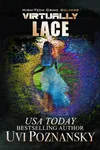
1. Virtually Lace by Uvi Poznansky (2018)
The series kicks off with this sensory-rich, atmospheric thriller set in Laguna Beach. The story follows Michael, a brilliant virtual reality developer who stumbles upon the body of a beautiful dancer named Lace. When he accidentally drops his phone in the ocean, losing his photos of the scene, he realizes he could easily become the prime suspect. To clear his name, Michael uses his programming skills to recreate the crime scene in VR. As he reconstructs the night of the murder, he must protect his lover, Ash—a fellow programmer suffering from memory loss after a violent attack—from a killer who is still watching.
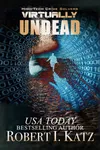
2. Virtually Undead by Robert I. Katz (2020)
Written by Robert I. Katz, this second installment shifts focus to a deadly digital hazard. The plot centers on a brand-new virtual reality video game called Virtually Undead. When players begin suffering fatal heart attacks while playing the game, it becomes clear that someone is using cyberspace to commit untraceable murders. The investigation features characters like Michael and Ralph Guthrie, a gamer and musician, who must navigate the blurred lines between virtual gameplay and lethal real-world consequences.
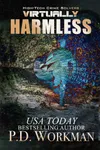
3. Virtually Harmless by P.D. Workman (2020)
In this thriller, the focus turns to forensic technology and DNA profiling. Micah is a law enforcement professional who typically spends her days drawing composite sketches. However, her quiet career is disrupted when she begins investigating the mystery of an abandoned infant in the Sweetgrass Hills. Utilizing advanced DNA databases and national law enforcement networks, Micah gets dangerously close to exposing a professional killer—only to find herself targeted by a sophisticated and deadly covert operation.
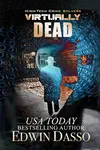
4. Virtually Dead by Edwin Dasso (2020)
Written by medical thriller author Edwin Dasso, this book tackles corporate espionage and cutting-edge VR gear. Wes Watley, a former Army CID investigator and FBI agent, is hired to look into the suspicious death of a marketing executive at a major gaming corporation. Partnering with Cameron, a highly skilled IT specialist, Wes discovers a strange physical clue: faint, diagnostic indentations of gaming goggles on the faces of multiple deceased tech employees. Together, they trace a new breed of serial killer operating through virtual reality tech.
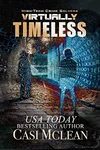
5. Virtually Timeless by Casi McLean (2020)
This entry introduces a mix of mystery, family secrets, and high-tech investigative tools. Sydney and Noah Monaco are twins who inherit an unexpected estate in Connecticut from an aunt they never knew existed. When Noah travels to inspect the property, he discovers a woman in distress in the nearby woods. Her rescue pulls the twins into a complex conspiracy involving a hidden underground chamber, a decade-old crime, an ancient Celtic amulet, and a tech-based cover-up that puts both of their lives at risk.
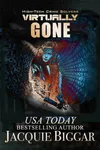
6. Virtually Gone by Jacquie Biggar (2020)
Set in a cold, suspenseful Canadian backdrop, this novel focuses on investigative journalism and predatory tech. Julie Crenshaw is a reporter researching a series of local crimes when she lands squarely on the radar of a serial offender. Detective Matthew Roy tries to keep Julie safe, but her determination to uncover the truth leads her to conduct a highly dangerous, independent investigation. The story explores how predators use digital footprints to stalk their victims and how investigators use technology to hunt them back.
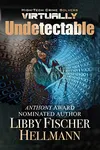
7. Virtually Undetectable by Libby Fischer Hellmann (2020)
This novel is a notable crossover, serving as both a High-Tech Crime Solvers book and the sixth installment of Libby Fischer Hellmann's popular Ellie Foreman mystery series. The story follows Ellie's daughter, Rachel Foreman, a bank manager who is fired after falling victim to an incredibly sophisticated cyber-scam. To save Rachel's reputation and find the criminals, mother and daughter team up to trace a digital money trail and uncover a plot targeting a major corporate CEO.
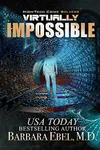
8. Virtually Impossible by Barbara Ebel (2020)
The final book in the series is a fast-paced medical thriller. The narrative follows a cured cancer survivor who makes choices that put them on a collision course with danger. A detail-oriented lab technician becomes the key to solving the mystery, carefully analyzing the medical and digital evidence left behind by sloppy perpetrators. The book wraps up the series with a deep dive into the ethics of modern medicine and patient data security.
What to Know Before You Start
Because the High-Tech Crime Solvers books are written by a rotating cast of authors, the tone, style, and pacing shift from book to book. Uvi Poznansky's Virtually Lace is atmospheric and character-focused, while Edwin Dasso's Virtually Dead leans heavily into classic detective procedures and hard science. P.D. Workman's Virtually Harmless focuses on forensics, and Libby Fischer Hellmann's entry brings a seasoned private investigator feel.
Readers do not need to worry about strict continuity locking them out of individual books. If a particular premise—such as cyber-scams in Virtually Undetectable or VR gaming hazards in Virtually Dead—catches your eye, you can easily jump in there. However, starting with Virtually Lace is recommended if you want to experience how the concept of high-tech crimes was originally framed for this shared universe.