



The Recommended Reading Order
For the best experience, readers should follow the Hildegard of Meaux series (also known as the Abbess of Meaux mysteries) in its publication order. Cassandra Clark designed each novel to progress chronologically through the late 14th century, matching the turbulent reign of King Richard II. Reading in order allows you to follow the subtle evolution of Hildegard’s personal life, her complex relationships, and the shifting political landscape of medieval England.
However, there is one notable exception: the prequel novella, Ten Weeks That Changed England Forever. While written and published later in the series (2016), it takes place in 1381 during the dramatic events of the Peasants' Revolt. For readers who want to understand the exact events that led to Hildegard choosing the veil, this can be read first. For those who prefer to meet Hildegard at the height of her sleuthing powers and unravel her mysteries alongside her, starting with the debut novel, Hangman Blind, is highly recommended.
Hildegard of Meaux Books in Order
Here is the complete list of Cassandra Clark's Hildegard of Meaux novels in their chronological order of events, which closely mirrors their publication history:
- Book 0.5: Ten Weeks That Changed England Forever (2016) – A prequel novella set in 1381. It details the chaos of the Peasants' Revolt and explains why Hildegard, a wealthy widow, decided to enter the Cistercian order.
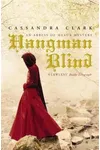
- Book 1: Hangman Blind (2008) – Set in 1382. Hildegard rides out from Meaux Abbey to secure her priory’s future but stumbles upon five corpses and a brutally murdered youth, thrusting her into political conspiracies.
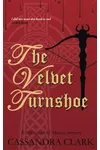
- Book 2: The Red Velvet Turnshoe (2009) – Set in 1383. Hildegard travels across a famine-struck and plague-ravaged Europe to recover a sacred relic, the Cross of Constantine.
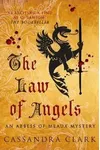
- Book 3: The Law of Angels (2011) – Set in the historic city of York, where Hildegard investigates a deadly conspiracy aimed at the Archbishop of York.
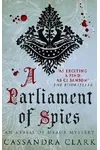
- Book 4: A Parliament of Spies (2012) – Sent to London by her Abbot on what seems to be a diplomatic mission, Hildegard is quickly entangled in a web of espionage surrounding the Parliament.
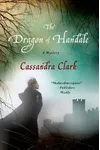
- Book 5: The Dragon of Handale (2013) – Hildegard is sent to the remote Handale Priory in Yorkshire, where she must investigate rumors of a mythical beast and a series of very real murders.
- Book 6: The Butcher of Avignon (2014) – Taking Hildegard far from home to the Papal Court in Avignon, France, during the heights of the Western Great Schism.
- Book 7: The Scandal of the Skulls (2016) – Hildegard investigates suspicious, grisly deaths in a remote Cistercian valley.
- Book 8: The Alchemist of Netley Abbey (2017) – Set on the Hampshire coast, Hildegard encounters French spies, alchemical secrets, and a threat to the king's treasury.
- Book 9: Murder at Meaux (2018) – Upon returning to Yorkshire, Hildegard and Abbot Hubert discover a secret burial, leading to a locked-room mystery in the abbey's own scriptorium.
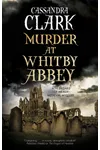
- Book 10: Murder at Whitby Abbey (2019) – Set at the clifftop Whitby Abbey, Hildegard probes the mysterious death of a monk and a dispute over a holy relic.
- Book 11: Murder at Beaulieu Abbey (2021) – Hildegard travels south to Hampshire, resolving a murder entangled with high-level royal intrigue.
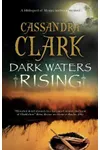
- Book 12: Dark Waters Rising (2022) – The atmospheric conclusion to the series. As severe storms threaten the Yorkshire coast and Meaux Abbey, Hildegard investigates the murder of a young novice.
What to Know Before You Start
Cassandra Clark was inspired to write the series after discovering the historical 1395 Chronicle of Meaux in a dusty archive. The Abbey of Meaux was a real Cistercian monastery in Yorkshire, and Clark uses its history to ground her fiction in authentic detail. Unlike many medieval mystery sleuths, Hildegard is a mature protagonist—a wealthy widow who chose the relative independence of the convent over a forced second marriage. This gives her a unique status that allows her to travel, interact with various social classes, and act as an agent for both church and crown.
A major draw of the series is the slow-burn relationship between Hildegard and the charismatic Abbot Hubert de Courcy. Their mutual respect, political alliances, and underlying romantic tension form a key emotional arc throughout the twelve books. While each book features a self-contained mystery that is resolved by the final page, the character dynamics and political plots build directly from one book to the next, making a chronological read highly rewarding.
Practical Reader Advice
If you are new to the series, start with Hangman Blind. It does a fantastic job of introducing Hildegard, the Abbey of Meaux, and her core allies, such as the loyal Brother Thomas and the militant monks Gregory and Egbert. The prequel novella, Ten Weeks That Changed England Forever, is best read after you have completed at least the first two or three books, as it provides a satisfying backstory to questions you will naturally have about Hildegard's past.
The tone of the series is gothic, atmospheric, and deeply immersive. Clark avoids gratuitous violence, focusing instead on the psychological and social pressures of the era. If you enjoy the Brother Cadfael mysteries by Ellis Peters or the historical realism of Umberto Eco's The Name of the Rose, Hildegard’s adventures will feel right at home on your bookshelf.