
How to Read The Hitchhiker’s Guide to the Galaxy: The Recommended Path
When diving into Douglas Adams' legendary cosmic satire, the best path forward is also the simplest: read the books in order of their publication. The narrative tracks the direct, continuous adventures of Arthur Dent, Ford Prefect, Trillian, and Zaphod Beeblebrox. Because Adams wrote the novels sequentially, jumping out of order will leave you thoroughly confused by the sudden changes in galactic status, character locations, and the occasional destruction of Earth.
While the series is famously dubbed a "trilogy in five parts" (later expanded with a sixth book by Eoin Colfer), it is best treated as a single, sprawling story. Start with the self-titled first book and read straight through to the fifth. Prequel short stories, live readings, and biographical companions should be saved for after you finish the main sequence to avoid disrupting the comedic flow and narrative continuity.
The Main Series: The "Trilogy in Five Parts"
The core of the franchise consists of the five novels penned by Douglas Adams between 1979 and 1992. These books represent the heart of the series and are essential reading for any sci-fi fan:
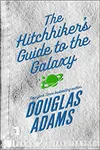
- The Hitchhiker's Guide to the Galaxy (1979): The book that started the phenomenon. Arthur Dent is rescued from Earth seconds before it is demolished by a Vogon constructor fleet to make way for a hyperspace bypass. Along with his alien friend Ford Prefect, Arthur hitches a ride into the cosmos, learns about the usefulness of towels, and discovers the legendary electronic guidebook.
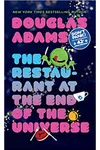
- The Restaurant at the End of the Universe (1980): Continuing directly from the first book, our crew travels to Milliways, the restaurant situated at the literal end of time, where they dine while watching the universe collapse. This entry features some of the series' most iconic philosophical jokes and introduces the shadowy rulers of the galaxy.
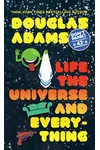
- Life, the Universe and Everything (1982): Originally conceived as a Doctor Who story, this book follows Arthur and Ford as they attempt to save the universe from the xenophobic, cricket-obsessed robots of the planet Krikkit.
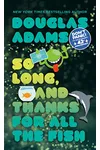
- So Long, and Thanks for All the Fish (1984): Arthur returns to an Earth that somehow seems to have survived its demolition. He falls in love with Fenchurch, a woman who holds the key to the universe's ultimate message, and the pair search for God's Final Message to His Creation.
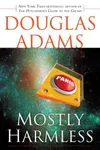
- Mostly Harmless (1992): The darkest and final book written by Adams. It explores alternate dimensions, parallel universes, and the fate of Arthur's daughter, Random Dent. It concludes the original run on a notoriously somber and chaotic note.
Prequels, Sequels, and Authorised Continuations
Beyond the core five novels, the Hitchhiker's universe has expanded with short fiction, external continuations, and biographical history. Here is how they fit into the broader reading order:
Young Zaphod Plays It Safe (1986)
This short story serves as a prequel to the main series, focusing on a younger Zaphod Beeblebrox as he works as a salvage ship operator and encounters a crashed ship containing dangerous cargo. While chronologically first, it is best read after Life, the Universe and Everything or as a fun post-series bonus. It has been published in several anthologies, including The Wizards of Odd and the omnibus collection The Ultimate Hitchhiker's Guide to the Galaxy.
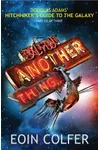
And Another Thing... (2009) by Eoin Colfer
Written by Eoin Colfer (creator of the Artemis Fowl series) with the permission of Adams' estate, this is the official sixth book. It picks up immediately after the cliffhanger ending of Mostly Harmless, providing a lighter, more optimistic resolution to the saga. While it captures much of the original's absurd spirit, it is generally considered optional for readers who prefer to stick to Adams' original vision.
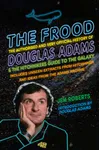
The Frood (2014) by Jem Roberts
For readers who want to understand the history of the Guide, this authorized biography of Douglas Adams is an essential companion. Roberts compiled years of research and previously unpublished archival material from Adams' estate, offering a deep look into the chaotic creative process that shaped the books, radio plays, and television adaptations.
Spoken Word, Radio, and Collectors' Editions
The Hitchhiker's Guide did not start as a novel; it began as a BBC radio comedy in 1978. Because of this, audio and live performances are deeply embedded in the series' DNA. Two notable releases are often listed alongside the books:
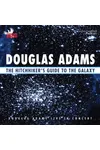
- Live in Concert (1994/1995): This is an audio recording of a live event at London's Almeida Theatre in August 1995. Douglas Adams performed solo dramatic readings of key segments from his novels for an invited audience. It is a fantastic companion for fans who want to hear the author perform his own classic material.
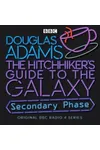
- Secondary Phase (2018): While the "Secondary Phase" originally aired on the radio in 1980, the year 2018 marked its landmark deluxe debut on vinyl. This collector's box set featured episodes 7 through 12 of the radio series on heavyweight colored vinyl, accompanied by exclusive sleeve notes by biographer Jem Roberts.
What to Know Before You Start
Before you begin your journey, it is helpful to keep a few things in mind. First, don't worry too much about strict continuity. Adams was notorious for rewriting and contradicting his own lore across different mediums. The radio show, the TV series, the computer game, the novels, and the 2005 film all tell slightly different versions of the same events. The books are their own distinct timeline, but they embrace a philosophy of cosmic absurdity where logic takes a back seat to comedy.
Second, the tone shifts as the series progresses. The first three books are fast-paced, joke-dense adventures. The fourth book, So Long, and Thanks for All the Fish, has a stronger romantic and grounded focus, while Mostly Harmless is significantly more cynical. Embracing these shifts is part of the joy of reading Douglas Adams' masterwork.