
The Recommended Reading Order
The Homecoming Saga follows a strictly linear narrative tracking a single family's exodus across the stars. Unlike Orson Scott Card's expansive Ender's Game universe, which contains complex spin-offs, prequels, and parallel timelines, the Homecoming Saga is a self-contained story. The publication order perfectly mirrors the chronological progression of the plot. There are no side novels, short stories, or co-authored prequels to navigate. To experience the story as intended, you should read the books in the order they were published:
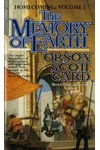
- The Memory of Earth (1992)
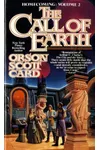
- The Call of Earth (1993)
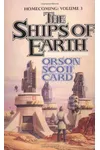
- The Ships of Earth (1994)
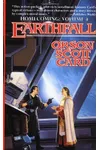
- Earthfall (1995)
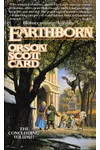
- Earthborn (1995)
What to Know Before You Start
Set forty million years in the future, the Homecoming Saga takes place primarily on the planet Harmony, where humans were resettled after ruining Earth. To prevent humanity from destroying itself again, creators installed the Oversoul—a massive, orbital artificial intelligence system. The Oversoul gently monitors and controls human thoughts, inducing sudden memory loss, distractions, or feelings of revulsion whenever anyone begins to develop advanced technologies that could lead to mass warfare. Consequently, the civilizations on Harmony have remained in a stable, low-tech state for millions of years.
However, the series begins at a critical turning point: the Oversoul is breaking down. Its memory banks are corrupting, its physical systems are degrading, and it can no longer maintain its control. To prevent humanity from plunging back into destructive global wars, the Oversoul selects Nafai, a young man from the matriarchal city-state of Basilica, along with his father, Wetchik. The AI commands them to construct a spacecraft and return to a long-forgotten Earth to find the ancient computer system capable of repairing the Oversoul.
The Book of Mormon Parallels
Orson Scott Card, a practicing member of the Church of Jesus Christ of Latter-day Saints (LDS), intentionally structured the Homecoming Saga as a futuristic retelling of the first part of the Book of Mormon, specifically the book of 1 Nephi. While the theological parallels are deep, Card designed the series to stand on its own as an accessible science-fiction adventure that explores faith, family dynamics, and human nature. Understanding the scriptural equivalents can enrich the reading experience:
- Basilica represents Jerusalem, the corrupt city that must be abandoned before its destruction.
- Wetchik represents the prophet Lehi, the visionary father who warns the citizens of impending doom and is forced to flee with his family.
- Nafai represents Nephi, the youngest son who obeys the divine voice of the Oversoul and is chosen to lead, despite the anger of his older brothers.
- Elemak and Mebbekew represent Laman and Lemuel, the bitter, rebellious older brothers who resent Nafai's leadership and long for the comforts and wealth they left behind.
- Issib represents Sam, the supportive and faithful brother.
- The trek across the deserts of Harmony represents the Israelite trek through the wilderness.
- The index of Basilica represents the Plates of Brass, containing the histories and laws that the travelers must retrieve before leaving their home planet.
Book-by-Book Breakdown
1. The Memory of Earth (1992)
The story opens in the matriarchal city of Basilica. We are introduced to Nafai, a teenager who begins hearing the voice of the Oversoul in his mind. As political tensions mount and the threat of war looms, Wetchik receives instructions from the Oversoul to take his family and flee into the wilderness. This initial volume establishes the family dynamics, the nature of the Oversoul, and the initial resistance of Nafai's older brothers to their father's visions.
2. The Call of Earth (1993)
While hiding in the wilderness, the family realizes they cannot complete their mission without the index—a comprehensive repository of human knowledge kept in Basilica. Nafai and his brothers must return to the dangerous city to retrieve it. This volume focuses heavily on the politics of Basilica, the machinations of local factions, and the brothers' struggle to obtain the index from the city's powerful leaders.
3. The Ships of Earth (1994)
With the index secured, the family and a small group of allies begin their long, grueling trek across the deserts of Harmony toward a hidden, ancient spaceport. This book shifts the focus to survival, family conflicts, and the marriages arranged between the travelers to ensure the future of their colony. The psychological toll of the desert trek and the growing division between Nafai and Elemak take center stage.
4. Earthfall (1995)
The travelers board the ancient starship and make the journey to Earth. Upon arrival, they find that Earth has slowly healed, and two new intelligent, non-human species have evolved: the subterranean 'diggers' and the flying 'angels'. As the humans establish their colony, the long-simmering rivalry between Nafai and Elemak explodes, dividing the colony into two opposing factions and setting the stage for future generations.
5. Earthborn (1995)
The final book jumps forward approximately 500 years. Nafai and the original travelers have long since passed away, leaving behind a divided world. The descendants of Nafai's faction and Elemak's faction have developed distinct cultures, prejudices, and mythologies. The story explores the interaction between these societies, the role of the Oversoul in their development, and the final resolution of the journey that began on the planet Harmony.
Chronological Transitions and Tone Caveats
Readers should be prepared for significant shifts in tone and pacing as the series progresses. The first three books function as a cohesive trilogy focused on the escape from Basilica and the desert survival trek. The fourth book introduces alien biology and planetary colonization, while the final book shifts into a philosophical, sociological study of generational legacy, prejudice, and theological debate. Because of the massive 500-year time skip between Earthfall and Earthborn, some readers find the final book polarizing, as it features a completely new cast of characters and focuses heavily on philosophical themes rather than the adventure of the original characters.
Omnibus Collections
If you are looking to purchase physical copies of the series, you may encounter two omnibus collections on bookseller sites. These compilations simply group the original five novels together and do not contain any new text or story details:
- Harmony collects the first three books of the saga: The Memory of Earth, The Call of Earth, and The Ships of Earth.
- Earth collects the final two books: Earthfall and Earthborn.