



The Best Reading Path: Where to Begin with Homer Kelly
When diving into Jane Langton’s delightful 18-book mystery series, you have two primary options for how to begin your reading journey. Because the series timeline progresses in real time alongside the characters’ lives, reading them in order is highly rewarding, though the episodic nature of the mysteries means you can also jump around to follow your personal interests.
Option 1: The Publication Path (Recommended)
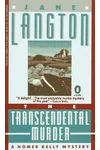
To experience the series exactly as it developed, start at the very beginning with The Transcendental Murder (1964), which was also published under the alternative title The Minuteman Murder. Beginning here is essential if you want to follow character continuity. This is the book where Homer Kelly—then a homicide detective before he transitions to academia—first meets Mary Morgan, a skeptical librarian in Concord, Massachusetts. Watching their initial, spark-filled clash evolve into a lifelong marriage and collaborative investigative partnership across the next 17 books is one of the greatest joys of the series.
Option 2: The Award-Winning Entry Point
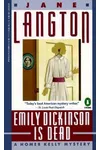
If you prefer to test the waters with the series at its absolute critical peak, start with Emily Dickinson Is Dead (1984). As the fifth book in the series, it does not require deep knowledge of the previous books to enjoy. This entry won the prestigious Nero Award, was nominated for an Edgar Award, and perfectly showcases Langton’s ability to weave academic satire, real literary history, and cozy crime. Once hooked by this masterpiece, you can easily circle back to the beginning.
Homer Kelly Books in Publication and Chronological Order
Fortunately, there are no complicated prequel timelines or chronological shifts to worry about here. The chronological order of Homer Kelly’s life and investigations matches the publication order exactly. Below is the complete list of the 18 main novels:
- The Transcendental Murder / The Minuteman Murder (1964) – Homer investigates a Concord killing tied to Emerson, Thoreau, and scandalous letters.
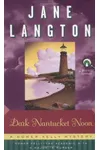
- Dark Nantucket Noon (1975) – Set during a solar eclipse on Nantucket, exploring whaling history and local environmental tensions.
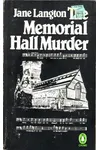
- The Memorial Hall Murder (1978) – A body is found beneath Harvard’s Memorial Hall, drawing Homer into the university’s music scene.
- Natural Enemy (1982) – Set in a changing Massachusetts countryside, tackling themes of land development and family greed.
- Emily Dickinson Is Dead (1984) – Homer attends a Dickinson centennial symposium in Amherst that turns deadly.
- Good and Dead (1986) – A darker cozy focusing on a series of mysterious deaths in a small parish church in Massachusetts.
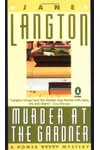
- Murder at the Gardner (1988) – A clever art heist and murder mystery set inside Boston’s famous Isabella Stewart Gardner Museum.
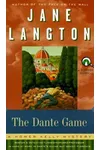
- The Dante Game (1991) – Homer travels to Florence, Italy, where he gets caught up in a game of murder inspired by Dante’s Divine Comedy.
- God in Concord (1992) – Homer returns to his beloved Concord to defend Walden Pond from commercial developers and solve a murder.
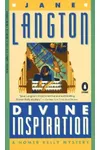
- Divine Inspiration (1993) – A mystery involving a church organ, a suspicious fire, and a missing child in Boston.
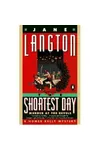
- The Shortest Day (1995) – Set during the winter solstice, involving a theatrical production of the Christmas Revels in Cambridge.
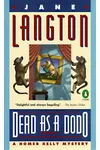
- Dead as a Dodo (1996) – A academic caper that takes Homer to Oxford, England, to investigate the Oxford Museum of Natural History.
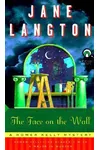
- The Face on the Wall (1998) – Homer’s niece, children’s book illustrator Annie Swann, calls for help when a mysterious face appears on her mural.
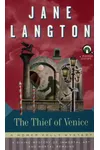
- The Thief of Venice (1999) – A flood-swept Venice, Italy, serves as the backdrop for a mystery involving rare books and manuscript theft.
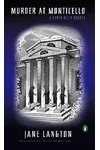
- Murder at Monticello (2001) – Homer explores Thomas Jefferson’s estate in Virginia to solve a modern crime tied to historical secrets.
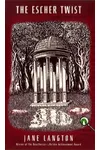
- The Escher Twist (2002) – A Cambridge-centric mystery that weaves the mathematical, mind-bending art of M.C. Escher into the plot.
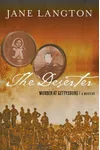
- The Deserter (2003) – Homer and Mary travel to Gettysburg, Pennsylvania, to investigate whether Mary’s ancestor was a Civil War deserter.
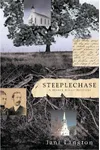
- Steeplechase (2005) – The final mystery brings Homer back to New England to investigate a local dispute over a historic carousel.
Thematic Reading Paths: Choose Your Destination
Because Jane Langton was an art historian, astronomer, and avid traveler, the settings of her mysteries are as important as the plots. If you don't want to read the series strictly in order, you can curate your reading experience based on these atmospheric groupings:
The Massachusetts Historic Core
If you love New England history, local folklore, and Transcendentalist philosophy (like Ralph Waldo Emerson and Henry David Thoreau), focus on the local Massachusetts books. These novels capture the crisp air, historical landmarks, and academic rivalries of Boston, Concord, Cambridge, and Nantucket. Key books in this subseries include The Transcendental Murder, The Memorial Hall Murder, Emily Dickinson Is Dead, God in Concord, and The Escher Twist.
The European Grand Tours
For readers who enjoy a cozy mystery mixed with travelogue charm, Langton wrote three books set in Europe. In these stories, Homer travels abroad and gets caught up in localized crimes. The real highlights here are Langton’s detailed descriptions of European architecture and local history. Read The Dante Game (set in Florence), Dead as a Dodo (set in Oxford), and The Thief of Venice (set in Venice) as a mini-trilogy of academic travel mysteries.
The American Heritage Mysteries
If you are a fan of wider American history, two late-series books stand out for their deep dives into national historical puzzles. Murder at Monticello explores the complicated legacy of Thomas Jefferson, while The Deserter shifts the focus to Civil War history and the Battle of Gettysburg.
What to Know Before You Start
Jane Langton’s books are not your average gritty detective stories. Before you crack open the first page, keep these practical points in mind:
- Line Art and Illustrations: One of the most unique aspects of the Homer Kelly series is that Langton illustrated them herself. Every book is filled with her elegant, crisp line drawings of local buildings, historic monuments, and maps. They aren't just decorative; they serve as visual aids that help readers picture the exact settings and architecture where the clues are hidden.
- Tone and Pace: The tone is highly literary, whimsical, and gently satirical of academic life. While they are cozy mysteries, they often deal with serious themes like environmental preservation, the preservation of historic landmarks, and moral philosophy.
- Standalone Flexibility: Don't feel pressured to track down all 18 books in sequence immediately. If you stumble across a copy of Murder at the Gardner or The Dante Game at a used bookstore, you can comfortably read and enjoy them on their own. Just keep in mind that Homer and Mary’s relationship status will reflect how far along the series is.