
What to Know Before You Start
Set 10,000 years before the main timeline of the Warhammer 40,000 tabletop wargame, the Horus Heresy is a monumental space opera that details the fall of humanity from its golden age. It chronicles a galaxy-spanning civil war sparked by Warmaster Horus, the Emperor of Mankind's most trusted and favored genetically engineered son, who falls under the corrupting influence of the Gods of Chaos. What follows is a brutal conflict that pits brother against brother, Legion against Legion, and shapes the grimdark future of the 41st Millennium.
First launched by Games Workshop's publishing arm, Black Library, in 2006, the series has grown into a massive shared universe written by a rotating roster of talented science fiction authors, including Dan Abnett, Graham McNeill, Aaron Dembski-Bowden, Guy Haley, and James Swallow. The core storyline contains 54 numbered books (a mix of full-length novels and anthologies), followed by the 10-volume Siege of Terra climax. Because the narrative is told from multiple perspectives and non-linear timelines, reading it from cover to cover isn't always the best approach. Instead, most readers follow key narrative arcs or rely on community-curated tracks to reach the grand finale.
The Recommended Starting Path
For any newcomer, the opening sequence is non-negotiable. While the series eventually branches out into dozens of parallel storylines, the first four books establish the essential setting, the relationship between the Primarchs, and the initial tragedy of the Warmaster's betrayal. You should read these in order:
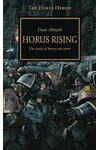
- Horus Rising (2006) by Dan Abnett – Introduces the charismatic Warmaster Horus at the peak of the Great Crusade.
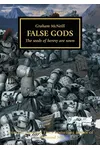
- False Gods (2006) by Graham McNeill – Chronicles the corruption of Horus on the moon of Davin. (Note: Some local database listings might sort this before Horus Rising due to sorting anomalies, but Horus Rising is universally recognized as the true starting point).
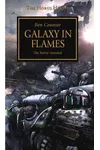
- Galaxy in Flames (2006) by Ben Counter – The betrayal explodes into open war with the tragic events at Isstvan III.
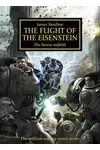
- The Flight of the Eisenstein (2007) by James Swallow – Follows Nathaniel Garro's desperate escape to warn the Emperor on Terra of the treason.
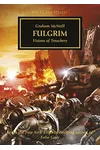
After these four, the next logical step is Fulgrim (2007) by Graham McNeill, which covers the tragic corruption of the Emperor's Children Legion and the devastating Drop Site Massacre at Isstvan V. Once you finish Fulgrim, the series branches wide open, and you are free to follow the Legions and stories that interest you most.
Publication Order vs. Chronological Order
Faced with a massive catalog, readers generally debate three main approaches to tackling the series:
1. The Publication Order Path
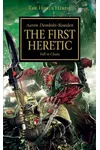
This is the simplest way to collect and read the series, following the order in which Black Library released the books. The advantage of publication order is that you experience the lore exactly as the authors developed and revealed it. The primary drawback is that the timeline jumps around. For example, Book 14 (The First Heretic) travels back in time to decades before Book 1 to explain the origin of the Heresy, which can disrupt the momentum of the immediate post-Isstvan war if you are reading strictly in order.
2. The Chronological Path
Attempting a strict chronological read is highly complex and generally discouraged for beginners. Because many books overlap or contain flashbacks that span centuries, trying to read the series in a chronological line requires jumping mid-book or sorting through a labyrinth of short stories and novellas. It is best reserved for a re-read once you already know the major spoilers.
3. The Storyline & Legion Path (Recommended)
Most veteran readers suggest treating the Horus Heresy as a tree trunk with branching limbs. The trunk is the opening trilogy plus Fulgrim. From there, you follow specific branches (such as the fall of the Thousand Sons, the Shadow Crusade, the defense of Imperium Secundus, or the journey of the White Scars) before converging back to the main trunk for the final act. To do this, readers utilize popular community visual flowcharts, such as the spoiler-free Black Librarium Flowchart or Kyle's Adeptus Ars Timeline, which group the books by narrative connection rather than publication date.
Major Subseries and Collections
To help organize your library, the Horus Heresy brand is divided into several distinct components:
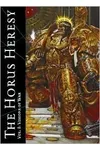
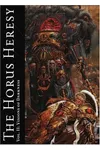
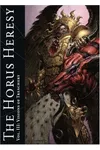
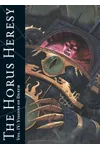
- The Visions Art Books: Books like Visions of War (2004), Visions of Darkness (2005), Visions of Treachery (2005), and Visions of Death (2006) are art and background volumes that predated or accompanied the early novels. They were later compiled into Collected Visions and Visions of Heresy. They are excellent companion pieces but are not required reading for the narrative.
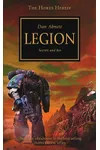
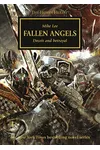
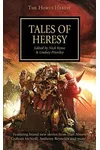
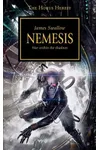
- The Main Sequence (Books 1–54): This spans from Horus Rising to The Buried Dagger (2019). It includes full novels and 16 anthologies that gather vital novellas and short stories first published as audio dramas or limited editions (e.g., Tales of Heresy, Shadows of Treachery, and Heralds of the Siege).
- The Primarchs Subseries: A separate sequence of character-focused novels (such as Leman Russ: The Great Wolf and Magnus the Red: Master of Prospero) detailing the histories and personalities of the Emperor's sons before and during the Heresy. They are optional but add fantastic depth to your favorite characters.
- The Siege of Terra: The 10-volume grand finale of the entire Heresy. It is a continuous narrative that must be read in order, beginning with The Solar War and culminating in the three-part epic The End and the Death.
Practical Reader Advice and Caveats
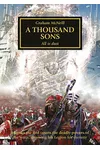
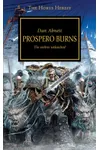
Do you need to read all 54 books to understand the ending? Absolutely not. While completing the entire series is a badge of honor for hardcore Warhammer enthusiasts, you can easily skip the weaker entries or Legions you find uninteresting. For a streamlined path to the Siege of Terra, focus on the 'spinal cord' books: the opening trilogy, The First Heretic, Know No Fear, Betrayer, A Thousand Sons, Prospero Burns, The Master of Mankind, and Slaves to Darkness.
Be prepared for minor inconsistencies. Because this universe was built by a large team over two decades, minor details, character voices, and power levels can shift slightly between authors. Accept these as the nature of a vast, collaborative space opera and enjoy the ride through one of science fiction's most ambitious tragedies.