




The Recommended Reading Order
For the best experience, the Incarnations of Immortality series should be read in publication order. While the series deals with complex timelines and immortal beings who jump across eras, the narrative structure, character relationships, and overarching conflict with Satan build directly from one book to the next. The publication sequence is as follows:
- On a Pale Horse (1983) – Follows Zane, who becomes the Incarnation of Death.
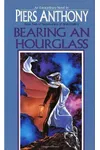
- Bearing an Hourglass (1984) – Follows Norton, who becomes the Incarnation of Time.
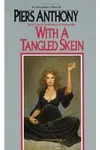
- With a Tangled Skein (1985) – Follows Niobe, who becomes an aspect of the Incarnation of Fate.
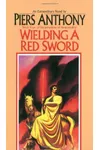
- Wielding a Red Sword (1986) – Follows Mym, who becomes the Incarnation of War.
- Being a Green Mother (1987) – Follows Orb, who becomes the Incarnation of Nature.
- For Love of Evil (1988) – Follows Parry, who becomes the Incarnation of Evil (Satan).
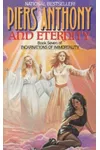
- And Eternity (1989) – Follows Orlene, who becomes the Incarnation of Good (God).
- Under a Velvet Cloak (2007) – Follows Kerena, who becomes the Incarnation of Night (Nox).
Chronological Overlaps and Timeline Caveats
Attempting a strictly chronological reading order is not recommended for first-time readers due to the non-linear structure of the series' lore. Several books overlap significantly in time:
- For Love of Evil (Book 6): This novel spans centuries, charting the life of Parry from the Middle Ages through his rise to the office of Satan. Because it runs parallel to the events of the first five books, reading it early would spoil major character twists and plot revelations that Anthony carefully sets up.
- Under a Velvet Cloak (Book 8): Written nearly two decades after the original seven-book run, this installment starts around 500 A.D. near Camelot and details Kerena's path to becoming Nox. Although it functions partially as a prequel, it features heavy references to later-series events and character arcs, making it much more satisfying as a concluding piece.
The Offices of Immortality: Book by Book
On a Pale Horse (Death)
The series begins with Zane, a desperate man who accidentally kills Death (Thanatos) and is forced to take over the office. Riding a shape-shifting pale horse named Mortis that can transform into a limousine or motorboat, Zane must weigh souls on a balance scale to determine if they go to Heaven or Hell, all while drawing the attention of Satan.
Bearing an Hourglass (Time)
Norton accepts the office of Chronos, the Incarnation of Time. Chronos lives life backward, moving from the future toward the past. Equipped with the Hourglass, Norton handles the flow of time and faces complex traps set by Satan, who aims to manipulate the timeline for his own gains.
With a Tangled Skein (Fate)
Niobe takes on the mantle of Clotho, one of the three aspects of Fate (alongside Lachesis and Atropos). She spins, measures, and cuts the threads of human life. Her primary motivation is personal vengeance and safeguarding her family line against the Devil's calculated schemes.
Wielding a Red Sword (War)
Mym, an Indian prince with a severe stutter, accepts the role of Ares, the Incarnation of War. Armed with a sword that can trigger conflicts or pacify battlefields, Mym attempts to reduce global suffering and bring a more structured, honorable peace to the world, resisting Satan's attempts to incite total destruction.
Being a Green Mother (Nature)
Orb, Niobe's daughter, is a gifted musician who discovers the Songs of Nature. She eventually ascends to become Gaia, the Incarnation of Nature. Orb must balance the earth's ecological forces while dealing with personal heartbreak and preparing for the final confrontation against the forces of Hell.
For Love of Evil (Evil)
This pivotal book shifts the perspective to Satan himself. We follow Parry, a medieval sorcerer who suffers tragic losses and gradually rises to run the office of Evil. By showing the Devil's perspective, the book recontextualizes the events of the previous five novels, showing that the global threat was far more complex than a simple fight against absolute malice.
And Eternity (Good)
Orlene, a mortal woman linked to previous protagonists, becomes the Incarnation of Good (God) after the office is left vacant. Working alongside the other Incarnations, she seeks to establish a fairer system of divine justice and settle the ultimate cosmic balance between Good and Evil once and for all.
Under a Velvet Cloak (Night)
The final book centers on Kerena, a young woman in the Dark Ages who undergoes numerous trials and eventually claims the office of Nox, the Incarnation of Night. Clad in a cloak of night and mist, she guards secrets and witnesses the background events of the preceding books, tying up loose ends in the series.
What to Know Before You Start
Piers Anthony crafts a unique alternate Earth where magic is treated as a scientific branch (a "fifth fundamental force" alongside gravity, electromagnetism, and the strong and weak nuclear forces) and coexists alongside high technology. The setting features magic carpets that obey traffic laws and dragons flying alongside airplanes.
The lore is grounded in a Judeo-Christian framework blended with classical mythology (such as the Greek Fates and Ares). Power in this universe is directly tied to human belief; the strength of the offices waxes and wanes based on how many mortals believe in them. Readers should also note that the series was written primarily in the 1980s, and reflects some of the era's dated tropes regarding gender and relationships.
Practical Reading Advice
If you are new to the series, start with On a Pale Horse. The first five novels function reasonably well as standalone stories centering on individual offices, but they gradually build an interconnected web of family relationships and overarching plotlines that culminate in the double-header climax of For Love of Evil and And Eternity. Skipping around is not recommended, as you will miss the subtle ways the lives of the Incarnations interlace before the final battle.