
How the Infinite Timeline Works
Jeremy Robinson’s Infinite Timeline is one of the most ambitious undertakings in modern indie sci-fi. Rather than a standard linear series, Robinson created a shared universe—often described by fans as a literary equivalent to the Marvel Cinematic Universe. The timeline is divided into three distinct stages, beginning with nine standalone novels that span multiple genres (from deep-space sci-fi and techno-thrillers to horror and mythology). Each book introduces unique characters and storylines that gradually reveal interconnected threads, eventually colliding in Stage Two crossover novels before culminating in the grand Stage Three finale, Singularity.
The Official Recommended Reading Order
While the Stage One books can technically be read as standalone novels, reading them in publication order is highly recommended by the author and fans alike. Doing so allows you to catch the subtle Easter eggs, recurring organizations, and MCU-style epilogues that build toward the crossover payoff. Here is the definitive reading order for the Infinite Timeline:
Stage One: The Standalone Foundations
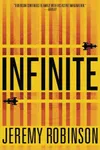
- Infinite (2017): The foundational novel. It follows William Chanokh, a hacker aboard the colony ship Galahad, who awakens from cryo-sleep to find himself immortal and alone in deep space. This book establishes the fundamental existential and technological rules of the universe.
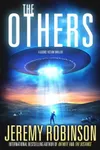
- The Others (2018): A shift in genre toward the paranormal thriller. Private investigator Dan Delgado searching for a missing girl stumbles into a reality-bending conspiracy.
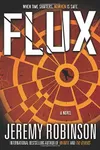
- Flux (2019): A mind-bending, time-dilated thriller centering on Owen Vance, a test subject caught in a localized space-time anomaly where physics and time break down.
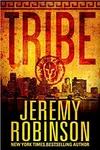
- Tribe (2019): An action-packed story that blends Greek mythology with modern thriller elements, following Henry and a group of modern-day descendants of the gods fighting to survive against ancient killers.
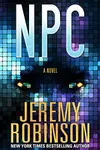
- NPC (2020): A cyberpunk-tinged mystery focusing on Silas, a man who discovers that his reality may be a simulation and that he might just be a Non-Playable Character in someone else's game.
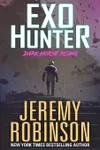
- Exo-Hunter (2020): A high-octane space-opera rescue mission set in a distant, post-apocalyptic future, introducing Dark, a soldier sent to retrieve a mysterious package on a hostile alien world.
- The Dark (2021): A supernatural horror-survival novel where a sudden, global darkness envelops Earth, unleashing nightmarish creatures that feast on light and life.
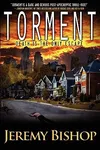
- Torment (2010 / Re-integrated): Originally written by Robinson in 2010 under the pen name Jeremy Bishop, this graphic survival horror novel was retroactively pulled into the timeline via connections made in Infinite 2.
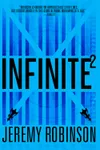
- Infinite 2 (2021): The direct sequel to Infinite, picking up William Chanokh's story as he navigates virtual realities, multiverse travel, and the consequences of his immortality.
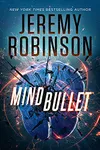
- Mind Bullet (2021): A fast-paced, humorous action-thriller following Jonas, a telekinetic assassin who kills targets with his mind, and his quirky AI companion, Bubble.
Stage Two: The Crossovers Begin
- The Order (2022): The first major crossover event. It directly merges the characters and plotlines of The Others, Flux, and Exo-Hunter as they team up to combat an extradimensional threat.
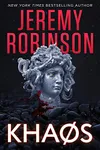
- Khaos (2022): The second major crossover event. This story unites the cast of Tribe, The Dark, and Mind Bullet to confront a mythological and cosmic apocalypse.
Stage Three: The Ultimate Culmination
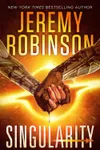
- Singularity (2023): The grand finale. Every single major character and surviving cast member from the previous eleven novels converges to face a reality-destroying entity on the planet Torment, bringing the entire Infinite Timeline to a spectacular conclusion.
Chronological and Order Caveats
Because the Infinite Timeline utilizes simulation theory, dimensional travel, and time anomalies, attempting to read the books in chronological order is highly impractical. For instance, parts of Infinite stretch across billions of years, while Exo-Hunter takes place in a far-future setting. The publication order is the only order that guarantees a logical thematic progression and ensures that crossover revelations land with their intended impact.
The biggest caveat in the reading order is Torment. Because it was originally written as a standalone horror novel in 2010, long before Robinson envisioned the Infinite Timeline, you do not need to read it early on. However, because its mythology is explicitly integrated during Infinite 2, and the planet Torment serves as the setting for Singularity, it should be read before diving into the crossovers to understand the deep lore of the final books.
What to Know Before You Start
For readers diving in, the biggest asset of the Infinite Timeline is its diversity of tone. If you do not enjoy the hard sci-fi of Infinite, you might love the mythological action of Tribe or the dark thriller vibes of The Others. Do not feel discouraged if a specific book isn't your style; the overarching narrative is worth pushing through to reach the team-up payoffs.
Additionally, the audiobooks narrated by R.C. Bray are highly celebrated within the sci-fi community. Bray performs distinct voices for all the characters, which makes the massive crossovers in The Order, Khaos, and Singularity particularly entertaining as the characters meet and interact.