
The Recommended Reading Path
For the most rewarding experience, readers should follow the original publication order of the Inspector Alan Grant series. While each mystery is largely self-contained and can technically be read as a standalone, reading them in the order they were written allows you to appreciate Josephine Tey's evolving narrative style and the gradual psychological development of Grant himself. You will witness him transform from a relatively standard Scotland Yard investigator in the late 1920s into a deeply introspective, sometimes burned-out detective who wrestles with the moral complexities of justice and historical truth in the early 1950s.
Inspector Alan Grant Books in Publication Order
The series consists of six main novels published between 1929 and 1952. Here is the complete list of books in their original order of release:
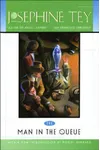
- The Man in the Queue (1929) – Originally published under Tey's other pseudonym, Gordon Daviot (and sometimes retitled Killer in the Crowd), this debut novel introduces Inspector Alan Grant. The case begins when a man is stabbed to death while waiting in a crowded line outside a London theatre. Grant must untangle a web of suspects and motives with very few clues to find the culprit.
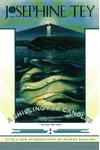
- A Shilling for Candles (1936) – This second novel marked the first time the author used the pseudonym Josephine Tey for a mystery. When a glamorous young film actress is found drowned off the coast of Kent, the local authorities suspect suicide, but Grant is called in to investigate what is quickly revealed to be murder.
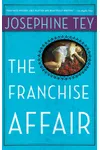
- The Franchise Affair (1948) – Although officially the third book in the series, Inspector Grant plays a very minor, secondary role here. The story focuses on Robert Blair, a local solicitor who defends a mother and daughter accused of kidnapping a young girl. Grant appears briefly as the Scotland Yard investigator overseeing the official case.
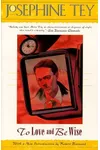
- To Love and Be Wise (1950) – Grant returns to the center stage when a handsome and charming young American photographer suddenly disappears from an artistic, close-knit English village. As Grant digs into the village's secrets, he realizes that nothing and no one are quite who they seem.
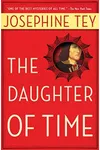
- The Daughter of Time (1951) – The crown jewel of the series and widely considered one of the greatest mystery novels ever written. Bedridden in a hospital with a broken leg, a bored Inspector Grant decides to apply his detective skills to a historical cold case: did King Richard III actually murder his nephews, the Princes in the Tower? Guided by historical portraits and old records, Grant challenges centuries of accepted history.
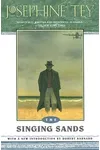
- The Singing Sands (1952) – Published posthumously following Tey’s death, this final novel finds Grant on sick leave in the Scottish Highlands, struggling with severe claustrophobia and mental exhaustion. When he discovers a young man dead on a train, the mystery follows him into his retreat, forcing him to solve the crime to find his own peace.
Chronological Caveats and Character Development
Unlike many Golden Age detective series that freeze their characters in time, the Alan Grant novels respect the passage of years. Reading the books chronologically (which matches the publication order) helps clarify Grant’s personal arc. His physical and mental state in the later books is directly influenced by his past cases and career. For example, the physical injuries and trapdoor accident that lead to his confinement in The Daughter of Time explain his intense mental weariness and claustrophobia in The Singing Sands. Skipping around too much can make his psychological struggles feel disconnected from their roots.
Where to Start Reading
If you want to experience the traditional growth of the character and the writer's style, start with the first book, The Man in the Queue. However, because it was Tey's first novel, some readers find it less polished than her later works.
For those who want a strong taste of Tey’s mature mystery style right away, A Shilling for Candles is an excellent alternative starting point. If you are looking for the absolute peak of the series and don't mind a highly unconventional setup, you can jump straight to The Daughter of Time, though keeping in mind that its bedridden, dialogue-heavy historical analysis is very different from a traditional police procedural.
We strongly recommend avoiding The Franchise Affair as your entry point if you are looking for an active Inspector Grant mystery, as his involvement is minimal and he acts purely as an background figure to the main legal drama.
Fictional Spin-offs and Tributes: Nicola Upson’s Series
While Josephine Tey only wrote six novels featuring Inspector Grant, her legacy lives on through the works of contemporary crime writer Nicola Upson. Upson has penned a highly acclaimed historical mystery series that features a fictionalized version of Josephine Tey (using her real name, Elizabeth MacKintosh) as the main sleuth.
Instead of featuring Alan Grant, Upson’s series introduces Detective Inspector Archie Penrose, a close friend of Tey who serves as her fictional inspiration for the character of Alan Grant. This series is a wonderful companion read for fans of Tey's work, blending real historical events, theatrical backdrops, and golden-age style mysteries. The series begins with An Expert in Murder (2008), which is set during the run of Tey's famous play, Richard of Bordeaux.
What to Know Before You Start
Josephine Tey was the pen name of Elizabeth MacKintosh, a fiercely private Scottish author and playwright. Her background in the theatre heavily influenced her writing, resulting in rich dialogues, vivid scene-setting, and an interest in disguises and hidden identities.
Unlike contemporaries like Agatha Christie or Dorothy L. Sayers, Tey was less interested in the mechanics of the puzzle and more focused on character psychology and human behavior. Her books often subvert typical genre tropes of the era, making them feel surprisingly modern to readers today. Be prepared for a slower, more literary pace that rewards patience and attention to character detail rather than fast-paced action sequences.