

How to Read the Inspector Espinosa Books
If you want to experience the evolution of Inspector Espinosa and his atmospheric Rio de Janeiro, the best path is to follow the publication order. Luiz Alfredo Garcia-Roza wrote his novels as standalone psychological procedurals, meaning you can pick up almost any book without getting lost in complex multi-book plots. However, reading them in order allows you to appreciate the subtle changes in Espinosa’s life, his evolving relationships with his colleagues at the 12th Precinct, and his shifting romances.
For English-speaking readers, the series is uniquely bounded. Out of the twelve books written by Garcia-Roza in the Espinosa universe, only the first seven have been translated into English. These translations were published in the United States by Henry Holt and Picador. If you are reading in English, your journey will begin with the award-winning The Silence of the Rain and conclude with Alone in the Crowd. For readers fluent in Portuguese, the journey continues with four additional novels and one spin-off mystery that takes place in the same universe.
Inspector Espinosa Books in Publication Order
Here is the chronological order of the Inspector Espinosa novels as they were published. The dates below reflect their original Brazilian publication, which closely aligns with the narrative timeline of Espinosa's career.
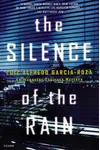
1. The Silence of the Rain (1996)
Originally published as O Silêncio da Chuva, this debut novel introduces readers to Chief Inspector Espinosa. The story begins with the apparent suicide of Ricardo Carvalho, a wealthy executive found shot in his car in a Rio parking garage. When Carvalho’s secretary and others associated with him begin to vanish or turn up dead, Espinosa is drawn into a labyrinth of insurance fraud, betrayal, and dark secrets. This book won the prestigious Jabuti and Nestlé prizes, launching Garcia-Roza's literary career.
2. December Heat (1998)
Originally titled Achados e Perdidos, this novel finds Espinosa investigating a chaotic case in the heart of Copacabana. When a retired, alcoholic cop named Vieira loses his wallet containing his police ID badge, it is found by a street kid. Soon after, Vieira's former lover—a prostitute named Magali—is brutally murdered. Espinosa must navigate the underbelly of Rio's street life, dealing with corrupt officers, hired killers, and his own moral boundaries to piece together what happened.
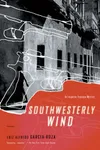
3. Southwesterly Wind (1999)
Published in Portuguese as Vento Sudoeste, this entry begins with a chilling premise: a young man named Gabriel arrives in Copacabana claiming that a psychic predicted he would commit a murder. Shortly after, a real murder takes place that matches the psychic's vision. As Espinosa investigates, he struggles with the boundaries of psychology and fate, trying to determine if Gabriel is a victim of a self-fulfilling prophecy, a manipulator, or a pawn in a larger game.
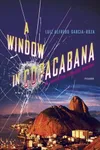
4. A Window in Copacabana (2001)
Originally titled Uma Janela em Copacabana, this novel centers on police corruption and internal affairs. Three police officers are executed in quick succession under mysterious circumstances. The only link between them appears to be their mistresses. As Espinosa digs deeper into the victims' private lives, he uncovers a web of bribery and lawlessness within the police force itself, making him a target of the very system he serves.
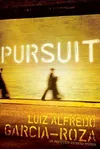
5. Pursuit (2003)
Originally published as O Perseguido, this psychological thriller shifts focus to a psychiatrist who believes he is being stalked by one of his patients. The situation escalates dramatically when both the doctor’s daughter and the patient go missing. When the patient is found dead, Espinosa is called in to unravel a complex web of sanity, obsession, and murder, where the line between the stalker and the victim is heavily blurred.
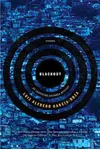
6. Blackout (2006)
Published in Brazil as Espinosa sem Saída, this installment plunges the Copacabana precinct into darkness. The discovery of a murdered woman in an abandoned building leads Espinosa into a case where witnesses are unreliable and the crime scene itself seems to shift. Espinosa must rely on his razor-sharp instincts to solve a murder where everyone has something to hide, and the heat of Rio only heightens the tension.
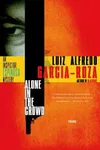
7. Alone in the Crowd (2007)
Originally titled Na Multidão, this is the final book in the series to be translated into English. An elderly woman visits Espinosa's precinct but leaves before speaking to him. Two hours later, she is struck and killed by a bus. While it initially looks like an accident, conflicting witness accounts suggest she may have been pushed. Espinosa’s investigation leads him to Hugo Breno, a solitary bank teller whose life mirrors Edgar Allan Poe's classic tale of isolation, forcing Espinosa to reflect on his own past.
The Portuguese-Only Novels and Spin-Offs
For readers who can read the original Portuguese, Luiz Alfredo Garcia-Roza wrote four more novels featuring the detective before his passing in 2020. These books continue Espinosa's journey through Rio:
- Céu de Origamis (2009): Espinosa investigates a murder linked to a complex web of origami art and psychological trauma.
- Fantasma (2012): A mystery involving a suspect who seems to vanish like a ghost, challenging Espinosa's rational worldview.
- Um Lugar Perigoso (2014): Espinosa deals with a missing person case that leads him into the dangerous, hidden corners of Rio's social elite.
- A Última Mulher (2019): The final Espinosa novel written by Garcia-Roza, wrapping up the inspector's long career with a deeply personal case.
Additionally, Garcia-Roza wrote a standalone mystery novel in 2005 titled Berenice Procura. While Inspector Espinosa does not appear in this book, it takes place in the same gritty Rio de Janeiro setting and follows a taxi driver named Berenice as she investigates a murder. The book was adapted into a Brazilian film in 2018.
What to Know Before You Start
Espinosa is not your typical hard-boiled detective. He is an introspective everyman, a public servant who loves books, eats simple meals, and takes long, contemplative walks through the Copacabana neighborhood. Because Garcia-Roza was a former professor of psychology and philosophy, the novels place a heavy emphasis on character psychology, motivation, and the social contrasts of Rio de Janeiro rather than action-packed shootouts.
The books are also famous for their open-ended resolutions. Garcia-Roza often leaves minor subplots or psychological motivations ambiguous, reflecting the real-life complexities of police work. If you prefer mysteries where every single loose thread is neatly tied up at the end, Espinosa's philosophical approach might take some getting used to, but it offers a rewarding and authentic look at Rio's soul.
Screen Adaptations of Espinosa
The success of the books has led to several high-profile adaptations in Brazil. In 2015, the Brazilian cable channel GNT produced an eight-episode television series titled Romance Policial – Espinosa, starring Domingos Montagner as the inspector. The series was primarily adapted from the novel A Window in Copacabana. More recently, in 2021, a feature film adaptation of O Silêncio da Chuva was released. Directed by Daniel Filho, the film features Lázaro Ramos as Inspector Espinosa and moves the setting to a sleek, modern, yet rain-drenched Rio.