



How to Read the Inspector Ghote Series
If you are planning to dive into H.R.F. Keating's classic mystery series featuring Inspector Ganesh Ghote of the Bombay Police, you have two primary options: reading by publication order or following the chronological timeline of Ghote's life. Spanning over four decades, the series benefits greatly from being read in the order it was written, allowing you to witness the development of both the character and the author's voice.
1. Publication Order (Recommended)
Reading the books as they were originally published is highly recommended. This sequence allows you to experience H.R.F. Keating’s evolving writing style and his deepening relationship with India. When Keating wrote the first books, he had never actually visited the country, relying instead on maps, travel guides, and rumors. Experiencing the series in this order highlights how his depiction of Bombay transitioned from a brilliantly imagined fantasy into a richly textured, firsthand reality after his first visit in 1971.
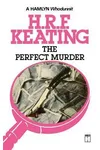
- The Perfect Murder (1964)
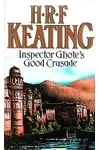
- Inspector Ghote's Good Crusade (1966)
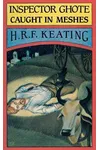
- Inspector Ghote Caught in Meshes (1967)
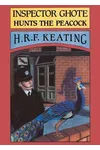
- Inspector Ghote Hunts the Peacock (1968)
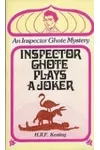
- Inspector Ghote Plays a Joker (1969)
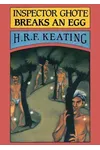
- Inspector Ghote Breaks an Egg (1970)
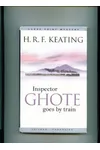
- Inspector Ghote Goes By Train (1971)
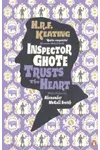
- Inspector Ghote Trusts the Heart (1972)
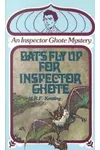
- Bats Fly Up for Inspector Ghote (1974)
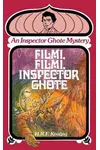
- Filmi, Filmi, Inspector Ghote (1976)
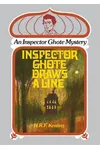
- Inspector Ghote Draws a Line (1979)
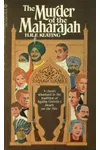
- The Murder of the Maharajah (1980)
- Go West, Inspector Ghote (1981)
- The Sheriff of Bombay (1984)
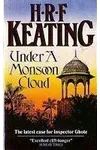
- Under a Monsoon Cloud (1986)
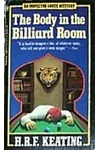
- The Body in the Billiard Room (1987)
- Dead on Time (1988)
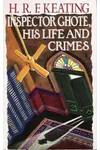
- Inspector Ghote, His Life and Crimes (1989)
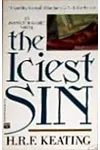
- The Iciest Sin (1990)
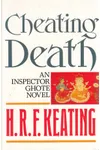
- Cheating Death (1992)
- Doing Wrong (1993)
- Asking Questions (1996)
- Bribery, Corruption Also (1999)
- Breaking and Entering (2000)
- Inspector Ghote's First Case (2008)
- A Small Case for Inspector Ghote? (2009)
2. Chronological Reading Order
For readers who prefer to follow Ganesh Ghote's personal and professional timeline from the very beginning of his career, the chronological order shifts the final two books written by Keating to the very start of the reading list. In his final years, Keating chose to revisit Ghote's youth in the early 1960s, deliberately avoiding the modern, rapid expansion of Mumbai to capture the nostalgic, gentler era of the early novels.
- Inspector Ghote's First Case (2008): Set in the early 1960s, this prequel finds a newly promoted Ghote on leave before taking up his post in the Bombay Criminal Investigation Department (CID), investigating a suspicious suicide at the behest of a retired Police Commissioner.
- A Small Case for Inspector Ghote? (2009): Set shortly after his promotion to the prestigious Crime Branch, Ghote is relegated to paperwork until he discovers a severed head in his office wastebasket. He must conduct an unauthorized investigation at a Zen Buddhism retreat.
- The Main Sequence: From The Perfect Murder (1964) through Breaking and Entering (2000), the books progress roughly in real-time, following Ghote as he navigates marriage, raises his son, and slowly grows older in the service of the Bombay Police.
Key Milestones and Reading Caveats
While the Inspector Ghote novels are primarily cozy, episodic police procedurals, there are several key milestones and unusual entries in the bibliography that readers should be aware of before starting.
The Case of "The Murder of the Maharajah"
Published in 1980, The Murder of the Maharajah is often listed as the twelfth book in the series, but it does not feature Ganesh Ghote as the primary investigator. Instead, the story is a classic closed-circle whodunit set in 1930 within the princely state of Bhopore, featuring District Superintendent Howard. However, it is an essential read for Ghote fans: it features Ghote's father in a supporting role, and a clever connection on the very last page explicitly ties the book directly to Inspector Ghote's universe. It won the prestigious CWA Gold Dagger Award in 1980.
The Turning Point: "Under a Monsoon Cloud"
Most Inspector Ghote books can be read as standalones, but Under a Monsoon Cloud (1986) is a massive exception that permanently alters the continuity of the series. Instead of a traditional mystery, this "problem novel" focuses on an ethical dilemma. Ghote witnesses a respected superior officer accidentally kill a subordinate in a fit of rage and agrees to help cover up the death out of loyalty. The psychological fallout, the subsequent investigation, and Ghote's eventual suspension from the police force have heavy, direct repercussions in the immediately following books, such as The Body in the Billiard Room (1987) and Dead on Time (1988). For the best experience, these books must be read in order.
A Closer Look at the Key Early Novels
If you are looking to dip your toes into the early era, a few titles stand out as excellent representation of H.R.F. Keating's style:
- The Perfect Murder (1964): The award-winning debut that introduces Ganesh Ghote. He is tasked with solving the murder of a tycoon's secretary (named, ironically, Mr. Perfect) and the mysterious theft of a single rupee.
- Inspector Ghote Hunts the Peacock (1968): This novel takes Ghote out of his native element and sends him to London to investigate the disappearance of a young girl, showcasing his endearing modesty in the face of British society.
- Filmi, Filmi, Inspector Ghote (1976): A vibrant and chaotic dive into the world of Bollywood, where Ghote is sent to investigate the murder of a massive film star on a crowded movie set.
Short Story Collections
To celebrate the 25th anniversary of the character, Keating published Inspector Ghote, His Life and Crimes in 1989. This volume contains an introductory biography of the detective alongside fourteen short stories, offering quick, delightful vignettes of Ghote's life that fit neatly into any point of the reading order, though they are best enjoyed after you have read at least a few of the early novels to familiarize yourself with his character.
What to Know Before You Start
Inspector Ghote is not a flashy, brilliant Sherlock Holmes or Hercule Poirot. He is a humble, hard-working, and often anxious detective who succeeds through sheer dogged persistence, moral integrity, and an innate understanding of human nature. He frequently finds himself squeezed between corrupt superiors, demanding bureaucrats, and his well-meaning but strong-willed wife, Protima.
The tone of the series is warm, gently humorous, and deeply humane, yet Keating does not shy away from the stark social inequalities, bureaucracy, and poverty of India. It is a fantastic snapshot of 20th-century Bombay, making it a must-read for fans of classic, international crime fiction.