


The Recommended Reading Path: Why Publication Order Wins
When diving into the atmospheric, post-World War I mysteries of Inspector Ian Rutledge, your best path forward is to read the books in publication order. While the central mystery of each book is resolved by the final page, the true core of this series is Rutledge's psychological evolution and his grueling road to recovery. Set in the early 1920s, the books follow a detective who returned from the trenches of the Great War with severe shell shock—what we now call PTSD. Crucially, he is haunted by the voice of Corporal Hamish MacLeod, a young Scotsman Rutledge was forced to execute for refusing an order during the war.
If you read the books out of order, you will spoil the delicate progression of Rutledge's mental state, his changing relationship with Hamish's voice, his professional status at Scotland Yard, and his shifting romantic and familial ties. The character growth is slow and cumulative; reading them as they were published ensures you experience the heavy emotional weight of his journey exactly as the authors intended.
The Prequel Exception: A Fine Summer's Day
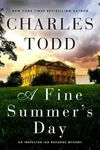
The only major chronological deviation in the series is the seventeenth novel, A Fine Summer's Day, published in 2015. This book is a prequel set in the summer of 1914, immediately before the outbreak of World War I. It shows Rutledge as a happy, engaged man and a rising star at Scotland Yard, investigating a case before the horrors of the trenches—and the ghost of Hamish MacLeod—change him forever.
For new readers, it is still best to save A Fine Summer's Day until you have read at least the first few novels. Seeing the contrast between the healthy, pre-war Rutledge and the shattered veteran of A Test of Wills is far more impactful after you have spent time with his haunted post-war self. However, if you are planning a complete re-read or prefer a strictly historical timeline, starting here is a viable alternative.
The Complete Inspector Ian Rutledge Reading Order
Here is the complete list of Inspector Ian Rutledge novels and major short stories, structured in their recommended publication sequence:
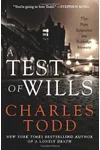
- A Test of Wills (1996) – The iconic debut. Rutledge is sent on a near-impossible case in Warwickshire to test if his shell shock will break him.
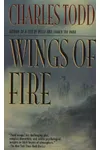
- Wings of Fire (1998) – Rutledge travels to Cornwall to investigate the mysterious deaths of a family of poets.
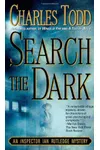
- Search the Dark (1999) – The search for a missing woman and two children leads Rutledge to a shell-shocked veteran who may be innocent.
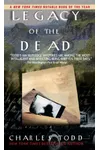
- Legacy of the Dead (2000) – A case in Scotland forces Rutledge to confront Hamish's family and the shadows of the past.
- Watchers of Time (2001) – A dying priest's confession in a Norfolk village sparks an investigation into a long-hidden secret.
- A Fearsome Doubt (2002) – A woman from Rutledge's pre-war past resurfaces, seeking to clear her late husband's name.
- A Cold Treachery (2005) – In the snow-bound mountains of Westmorland, Rutledge searches for a missing boy who witnessed his family's massacre.
- A Long Shadow (2006) – Rutledge is sent to a small village in Northamptonshire where he is stalked by a mysterious archer.
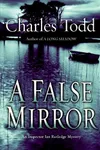
- A False Mirror (2007) – A murder in Hampton, a town Rutledge knows well, forces him to investigate an old friend.
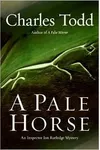
- A Pale Horse (2007) – Rutledge travels to Yorkshire, where a body found in a historic ruin leads to secrets of the Great War.
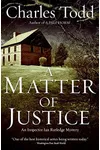
- A Matter of Justice (2008) – A businessman's murder in Somerset reveals links to a tragic battlefield event from decades prior.
- The Red Door (2009) – Two seemingly unrelated cases—a missing woman in Lancashire and a murder in London—collide.
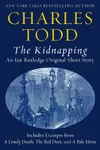
- The Kidnapping (2010) – A short story detailing a challenging early case in Rutledge's career.
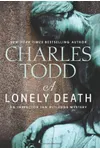
- A Lonely Death (2011) – Rutledge investigates the murders of three soldiers from the same platoon in Sussex.
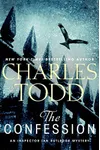
- The Confession (2011) – A guilt-ridden man confesses to a murder that occurred years ago, but the details do not match the official records.
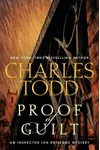
- Proof of Guilt (2013) – A hit-and-run in London leads Rutledge into the complex, deceitful world of a family-owned glass business.
- Cold Comfort (2013) – A war-era novella set in 1915, showing Rutledge's time serving alongside the sappers in France.
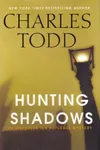
- Hunting Shadows (2014) – A sniper is targeting guests at a high-society wedding in Cambridgeshire, and Rutledge must stop them before they strike again.
- A Fine Summer's Day (2015) – The prequel novel set in 1914, providing essential backstory to Rutledge's pre-war life and engagement.
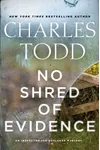
- No Shred of Evidence (2016) – Rutledge is sent to Cornwall to investigate when four young women are accused of murder.
- Racing the Devil (2017) – A fatal car crash on a rainy night in East Sussex reveals a deeper conspiracy dating back to the war.
- The Piper (2017) – A standalone short story exploring the backstory of Hamish MacLeod.
- The Gate Keeper (2018) – Rutledge stumbles upon a murder victim on a lonely road, leading him into a web of family secrets.
- The Black Ascot (2019) – Rutledge seeks to locate a notorious thief who escaped justice years before, drawing him back to a famous pre-war case.
- A Divided Loyalty (2020) – When a fellow detective is accused of framing a suspect, Rutledge is sent to verify the investigation.
- A Fatal Lie (2021) – A body washed ashore in Wales leads Rutledge to trace the victim's identity back through a series of elaborate lies.
- A Game of Fear (2022) – Rutledge is sent to Essex to investigate a woman's claim that she saw the ghost of a murdered man.
- A Christmas Witness (2025) – A seasonal mystery novella set in December 1921.
- A Day of Judgment (2026) – The latest novel, where Chief Inspector Rutledge travels to the Northumberland coast to investigate a murder near the holy island of Lindisfarne.
What to Know Before You Start
The Inspector Ian Rutledge books are historical mysteries written by the mother-and-son duo Caroline and Charles Todd, writing under the joint pen name Charles Todd. Caroline Todd passed away in 2021, but Charles Todd has continued to write and release books in the series. The collaboration resulted in a series that is exceptionally well-researched, capturing the melancholy, grief, and societal upheaval of Britain in the years immediately following the Armistice of 1918.
Unlike many cozy mysteries of the era, the Rutledge series has a dark, introspective tone. The character's internal dialogue with Hamish MacLeod serves as a haunting Greek chorus, representing Rutledge's conscience, his guilt, and his fractured sanity. This psychological device makes the books stand out in the historical crime genre, appealing to fans of Jacqueline Winspear's Maisie Dobbs and Anne Perry's historical series.