

The Recommended Reading Order: Where to Begin
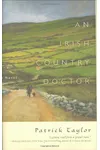
For the best reading experience, it is highly recommended to read the Irish Country series in publication order. Starting with the landmark novel An Irish Country Doctor (originally published in Canada as The Apprenticeship of Dr. Laverty) allows you to enter the fictional village of Ballybucklebo through the eyes of the young, newly qualified Dr. Barry Laverty. You will experience the eccentricities of the senior partner, Dr. Fingal Flahertie O'Reilly, and the warm domestic sanctuary kept by their housekeeper, Mrs. Kinky Kincaid, exactly as the author introduced them. Reading in publication order ensures that you follow the natural evolution of the characters' relationships, marriages, and community standing without spoiling major milestones.
If you prefer a strict chronological progression, you could technically begin with the prequel A Dublin Student Doctor, which focuses on Barry's medical training at Trinity College, followed by the novella Home Is the Sailor, which documents O'Reilly's early solo years in the village. However, these prequels are much more rewarding when read later, as they provide satisfying context to characters you have already grown to love.
The Complete Publication Order of Irish Country Books
Below is the complete sequence of the Irish Country series, including all novels, novellas, and short story collections in their order of release:
- An Irish Country Doctor (2004) – Introduces Dr. Barry Laverty as he arrives in Ballybucklebo to assist the irascible but kind-hearted Dr. Fingal Flahertie O'Reilly. (First published as The Apprenticeship of Dr. Laverty).
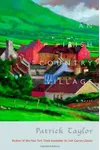
- An Irish Country Village (2008) – Barry settles into his role, facing professional doubts and rallying the villagers to save the local pub from developers.
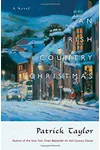
- An Irish Country Christmas (2008) – A festive look at Ballybucklebo, dealing with local holiday struggles and Barry's long-distance romance.
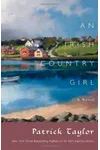
- An Irish Country Girl (2009) – Explores the rich backstory, folklore, and youthful romances of the doctors' beloved housekeeper, Mrs. Kinky Kincaid.
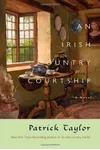
- An Irish Country Courtship (2010) – Focuses on Fingal O'Reilly's attempts to court the lovely Kitty O'Halloran, alongside various village matchmaking antics.
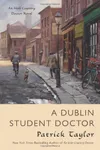
- A Dublin Student Doctor (2011) – A prequel novel that steps back in time to chronicle Barry Laverty's university days and early romances in Dublin.
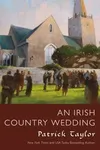
- An Irish Country Wedding (2012) – The long-awaited nuptials of Fingal O'Reilly and Kitty O'Halloran, bringing the entire village together.
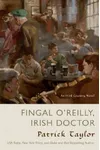
- Fingal O'Reilly, Irish Doctor (2013) – Explores Dr. O'Reilly's early years in the 1930s as a student and young practitioner, alongside modern storylines.
- Home Is the Sailor (2013) – A novella set shortly after O'Reilly first arrives in Ballybucklebo, showing how he won over the skeptical villagers.
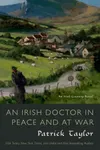
- An Irish Doctor in Peace and at War (2014) – Features extensive flashbacks to Fingal O'Reilly's service as a naval surgeon aboard HMS Warspite during World War II.
- The Wily O'Reilly: Irish Country Stories (2014) – A collection of Patrick Taylor's original columns and medical humor vignettes from Stitches magazine.
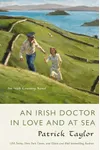
- An Irish Doctor in Love and at Sea (2015) – Continues O'Reilly's World War II naval surgeon memories, focusing on his wartime duties and lost loves.
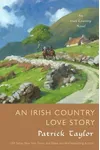
- An Irish Country Love Story (2016) – Follows the changing fortunes, autumn romances, and community challenges in mid-1960s Ballybucklebo.
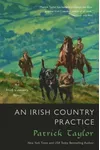
- An Irish Country Practice (2017) – Tracks new medical challenges, Barry's domestic life, and O'Reilly's ongoing efforts to protect his patients.
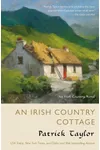
- An Irish Country Cottage (2018) – Focuses on home life, the complexities of village disputes, and the support systems of the local community.
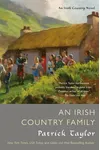
- An Irish Country Family (2019) – Centers on the joys and tribulations of raising the next generation in a changing Northern Ireland.
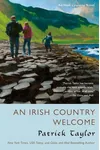
- An Irish Country Welcome (2020) – Set in the closing months of the 1960s, capturing the village preparing for a brand new decade.
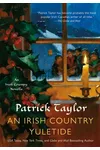
- An Irish Country Yuletide (2021) – A heartwarming holiday novel that serves as the latest original installment in the main series.
Chronological and Historical Timelines
Patrick Taylor frequently uses dual-narrative structures, blending the "present day" timeline of Ballybucklebo in the 1960s with flashbacks to earlier decades. To understand the chronological milestones, keep these periods in mind:
The 1930s (Medical School and Early Career)
Featured prominently in Fingal O'Reilly, Irish Doctor, this era covers O'Reilly's training at Trinity College, Dublin, his residency, and his initial encounters with his first love, Kitty O'Halloran. These chapters detail the foundations of his medical philosophy and his eventual decision to move to the countryside.
The World War II Years (HMS Warspite and Naval Service)
The novels An Irish Doctor in Peace and at War and An Irish Doctor in Love and at Sea dive deep into O'Reilly's wartime career. Serving as a surgeon lieutenant in the Royal Navy, O'Reilly survives the Battle of Narvik, performs emergency surgeries under fire, and struggles with the emotional trauma of war. This backdrop explains his gruff demeanor and hidden philanthropy in the main timeline.
The late 1950s (Barry's Student Years)
A Dublin Student Doctor is a linear prequel focusing entirely on Barry Laverty's university experiences, his clinical work at the Richmond Hospital, and his relationship with Patricia Spence before he ever sets foot in Ballybucklebo.
Practical Reader Advice
While the books are written to be self-contained—meaning each novel resolves its immediate medical dramas and village events by the final page—the overarching personal relationships build directly on previous volumes. Reading them out of order can lead to confusion regarding who is married, who has children, and how local conflicts were resolved.
Readers should also be prepared for the changing tone of the series. The earliest books are lighthearted, cozy, and highly reminiscent of James Herriot’s Yorkshire memoirs. However, as the series progresses into the late 1960s, Patrick Taylor begins to incorporate the looming shadow of the Troubles in Northern Ireland. While the tone remains fundamentally warm and community-focused, the novels acknowledge the historical reality of rising social tensions, making the later books slightly more dramatic and reflective.