
Recommended Reading Path: Where to Start
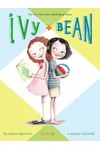
If you are introducing young readers to the wonderful world of Pancake Court, the best starting point is undoubtedly the very first book, Ivy & Bean (2006). This introductory story establishes the foundation of their entire relationship. It explains how two seven-year-old girls who initially seemed like polar opposites—Bean, the loud and adventurous troublemaker, and Ivy, the quiet, bookish aspiring witch—overcame their initial dislike and teamed up to pull a legendary prank on Bean's bossy older sister, Nancy.
While the books are designed as self-contained adventures and can theoretically be read in any order without losing track of a major overarching plot, reading them in order of publication allows children to watch their friendship deepen organically. Seeing how they transition from suspicious neighbors to inseparable partners-in-mischief makes the subsequent stories much more rewarding.
Ivy & Bean Books in Publication Order
Written by Annie Barrows and illustrated by Sophie Blackall, the main series consists of 12 chapter books published between 2006 and 2021. Below is the complete list of the books in their order of publication:
- Ivy & Bean (2006) – The two girls meet, realize they are kindred spirits, and join forces to cast a spell on Bean's sister, Nancy.
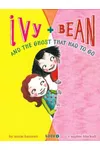
- Ivy & Bean and the Ghost That Had to Go (2006) – The girls must cleanse the school bathroom of a supposed ghost, testing their problem-solving and bravery.
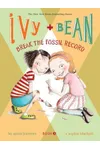
- Ivy & Bean Break the Fossil Record (2007) – Inspired to become the world's youngest paleontologists, Ivy and Bean dig up Bean's backyard in search of prehistoric bones.
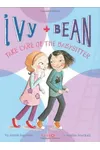
- Ivy & Bean Take Care of the Babysitter (2008) – The duo tries to prove they are mature enough to be left unsupervised, leading to backyard schemes to thwart Bean's sister, who is babysitting them.
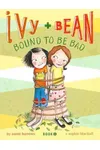
- Ivy & Bean: Bound to Be Bad (2008) – The girls decide to be purely good, which ironically leads them into all sorts of mischief and trouble.
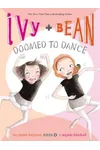
- Ivy & Bean: Doomed to Dance (2009) – After begging their parents to let them take ballet classes, the girls quickly regret it and search for a creative way out of the big recital.
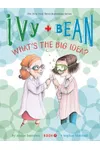
- Ivy & Bean: What's the Big Idea? (2010) – Pancake Court’s science fair is coming up, and the girls search for a global warming solution that will blow their classmates away.
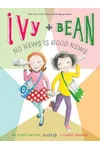
- Ivy & Bean: No News Is Good News (2011) – To raise money to buy expensive Low-Fat Belldeloon Cheese, Ivy and Bean decide to start their own local newspaper, reporting on Pancake Court's secrets.
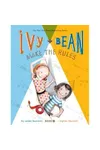
- Ivy & Bean Make the Rules (2012) – When Bean's sister goes off to Camp Wildness, Ivy and Bean decide to host their own backyard camp, setting up their own wild rules.
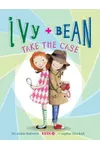
- Ivy & Bean Take the Case (2013) – Inspired by classic detectives, the girls set up a private investigator agency to solve mysteries around the neighborhood.
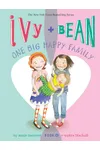
- Ivy & Bean: One Big Happy Family (2018) – Bean discovers that only children might end up spoiled, so she and Ivy set out to find Bean a new sibling or build a giant family.
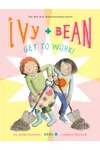
- Ivy & Bean: Get to Work! (2021) – The final book in the series takes the girls through a chaotic Career Day where treasure-hunting and big dreams collide.
Chronological Order and Continuity Caveats
Unlike some epic fantasy series or complex serial mysteries, there is no separate chronological reading order for Ivy & Bean. The events of the books follow a linear sequence, taking place over a relatively condensed period in the girls' lives. Throughout the entire 12-book run, Ivy and Bean remain seven years old, meaning time moves slowly in Pancake Court. Continuity is light, but subtle details—such as their established friendship, interactions with recurring neighborhood kids, and Bean's ongoing rivalry with her sister Nancy—persist from book to book. Therefore, adhering to the publication order remains the simplest and most satisfying route for readers.
What to Know Before You Start: Reading Levels and Tone
Ivy & Bean is highly regarded as a transitional chapter book series, perfect for early readers who are moving past simple picture books but are not yet ready for dense middle-grade novels. Here are the key reading metrics to keep in mind:
- Target Age: 6 to 10 years old. Younger children will also thoroughly enjoy the books as read-alouds.
- Lexile Measure: Average of 580L, making the language accessible but engaging.
- Guided Reading Level (GRL): M.
- DRA Level: 20–24.
- Accelerated Reader (AR) Level: 3.2.
The tone of the series is warm, humorous, and delightfully rebellious without being mean-spirited. Annie Barrows presents the girls' logic with respect and authenticity, capturing the way kids actually think, speak, and negotiate with one another. Sophie Blackall’s expressive black-and-white illustrations appear on almost every page, providing visual context clues that help build reading stamina and keep young minds fully engaged.
Netflix Adaptations and Other Media
The success of the books led to a series of live-action film adaptations produced by Kindle Entertainment and directed by Elissa Down. On September 2, 2022, Netflix released a trilogy of family-friendly, hour-long films starring Keslee Blalock as Ivy and Madison Skye Validum as Bean. The three movies correspond to specific books in the series:
- Ivy + Bean – Based on the first book, establishing how the girls meet and their first neighborhood pranks.
- Ivy + Bean: The Ghost That Had to Go – Based on the second book, focusing on the haunted school bathroom.
- Ivy + Bean: Doomed to Dance – Based on the sixth book, detailing the girls' struggle to escape their ballet recital.
The movies are highly faithful to the spirit of the books and make excellent companion viewing for children who have read the corresponding titles. In addition to the Netflix films, the series has also been adapted into a popular children's stage musical, highlighting the enduring appeal of the duo's Pancake Court antics.
Practical Reader Advice
If you are deciding how to integrate Ivy & Bean into a child's reading routine, keep these practical points in mind:
Can they be read as standalones? Yes. If a child picks up Book 5 or Book 9 first, they will have no trouble understanding the characters or the setting. Each story is fully self-contained. However, reading Book 1 first is strongly encouraged to understand the origin of their friendship.
Comparisons to other series: Fans of Beverly Cleary’s Ramona, Barbara Park’s Junie B. Jones, or Sara Pennypacker’s Clementine will find themselves right at home with Ivy & Bean. The series shares a similar focus on everyday neighborhood adventures, school situations, and the humorous misunderstandings of childhood.
Read-aloud potential: Because the chapters are short and the dialogue is witty, Ivy & Bean makes an excellent bedtime read-aloud for kids as young as four or five, helping them bridge the gap to chapter books before they can read them independently.